

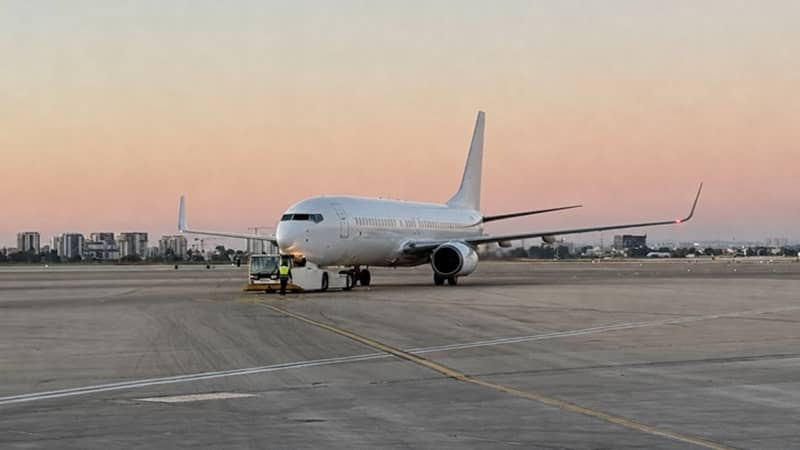
Egypt’s tourism engine is racing ahead. Its airlines now face a simple question with a costly answer: how many aircraft will they really need?
The country welcomed about 19 million international tourists in 2025. That was a record and roughly 21 per cent above 2024. Egypt now wants 30 million visitors a year by 2030. The target is bold. It will require more hotel rooms, better airports and, above all, far more airline seats.
But this is not simply a case of buying every available aircraft with wings attached.
Fleet planning moves slowly. Airlines order aircraft years ahead. They also plan finance, crews, maintenance and routes well before the first passenger boards.
Tourism demand can move much faster.
A strong European winter season, a new beach market or a sudden charter boom can change the picture within months. That difference between long-term fleet planning and short-term passenger demand is putting a familiar aviation tool back in the spotlight: ACMI wet leasing.
Under an ACMI arrangement, an operator supplies the aircraft, crew, maintenance and insurance for an agreed period. In plain English, an airline gains extra flying capacity without making every additional seat a permanent commitment.
Justinas Bulka, chief executive of KlasJet, argues that temporary capacity should sit alongside permanent fleet expansion.
“Egypt’s airlines have strong reasons to grow, but not every increase in demand requires a permanent aircraft. Fleet ownership and long-term leases provide the foundation for sustained growth, while ACMI gives airlines the flexibility to respond to seasonal peaks, launch new routes or cover short-term capacity gaps. The two should form part of the same fleet strategy,” Bulka said.
Tourism growth becomes an airline capacity story
The numbers explain the pressure.
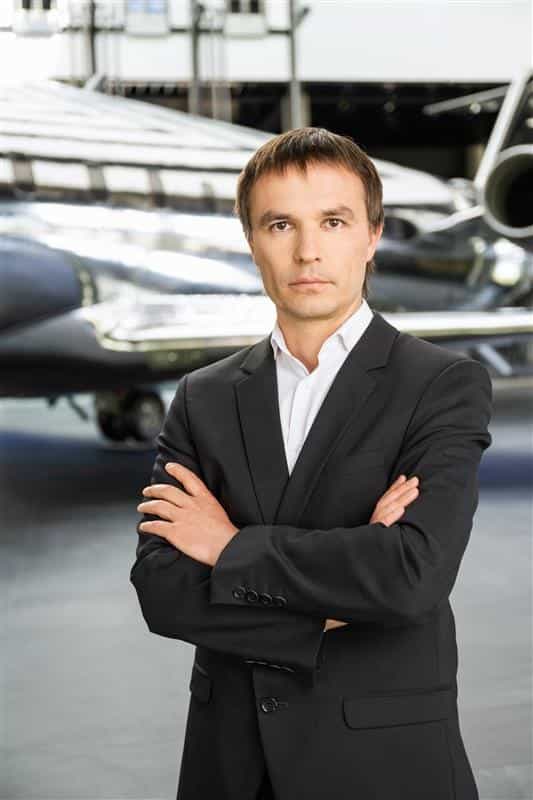
Justinas Bulka_KlasJet CEO
Egypt recorded about 19 million international visitors in 2025, while OECD figures show Europe supplied more than 10.2 million arrivals in 2024, representing about 65 per cent of the country’s international tourism market.
Charter flights to Egyptian tourism destinations then climbed 32 per cent during 2025.
Yet demand does not rise in a neat line.
Cairo, Hurghada, Sharm El-Sheikh and Marsa Alam have different traffic patterns. So do Egypt’s European, Gulf and long-haul source markets. One route may be bursting at the seams in January while another reaches its high-water mark in July.
That creates an old airline problem.
Build a permanent fleet large enough for every peak, and aircraft may spend quieter months sitting on the ground an exceptionally expensive way of decorating an airport apron.
Build the fleet around average annual demand and the airline risks being short of seats just when fares, load factors and revenue opportunities are strongest.
ACMI offers a middle course.
Extra aircraft can be introduced for one season, a new route, a heavy-maintenance cycle or an unexpected capacity shortage. When the need passes, the additional aircraft can leave.
KlasJet put that model into practice with Air Cairo in 2025. The company says it achieved a three-day turnaround between signing the agreement and ferrying the aircraft to Cairo, despite the regulatory and operational work involved. KlasJet’s agreement supported Air Cairo during the northern summer season.
EgyptAir and Air Cairo put more aircraft on the shopping list
Egypt’s airlines are not relying on temporary aircraft alone.
EgyptAir has embarked on a major fleet modernisation programme involving 16 Airbus A350-900s and 18 Boeing 737-8 MAX aircraft.
Its first A350 arrived in February 2026, making EgyptAir the first North African operator of the type. The first of 18 leased Boeing 737-8s followed in May 2026.
However, the headline fleet numbers require some care.
Egyptian Government statements in April referred to 34 new aircraft taking EgyptAir towards 97 aircraft by 2030/31. Subsequent comments from Civil Aviation Minister Sameh El-Hefny outlined a broader ambition to grow the airline to about 125 aircraft in the coming years.
Those figures represent evolving stages of the airline’s expansion strategy. The 34-aircraft purchase programme and the 125-aircraft ambition should therefore not be treated as one and the same numerical target.
Air Cairo is expanding just as enthusiastically.
Egypt’s Civil Aviation Ministry said in April 2026 that the carrier was operating about 41 aircraft and planned to expand to 82 over the following four years.
That is no insignificant player. The ministry says Air Cairo carries around 20 per cent of Egypt’s inbound tourism traffic and about 30 per cent of traffic through Hurghada International Airport.
This is the permanent side of Egypt’s aviation push: more aircraft, newer aircraft, more destinations and substantially more seats.
Still, a long-term fleet plan cannot prevent every short-term headache.
When aircraft deliveries slip, schedules do not politely wait
Aircraft supply remains tight.
Manufacturers have improved production, but airlines continue to face supply-chain constraints, engine issues and strong global demand for new aircraft.
Cirium reported that Airbus and Boeing delivered a combined 649 commercial aircraft during the first half of 2026, the strongest first-half performance since 2018. Yet the wider market remains short of aircraft in several segments, keeping demand for leased capacity firm.
For an airline, a delayed aircraft is not merely an engineering inconvenience.
It can quickly become a commercial problem.
“When a delivery moves, the commercial plan does not move with it. The airline may already have schedules, crews, airport slots and passenger commitments in place. ACMI can bridge that gap until the permanent aircraft arrives, allowing the airline to continue operating and protecting the wider growth plan,” Bulka said.
The same problem arises when heavy maintenance runs longer than expected, an aircraft suffers an unscheduled technical event or a newly launched route performs much better than forecast.
Flexible capacity becomes the pressure valve.
It allows the timetable to keep moving while the permanent fleet catches up.
Egypt is building airport capacity too
This growth story is also unfolding firmly on the ground.
Egypt is planning a major Terminal 4 development at Cairo International Airport as part of a multibillion-dollar overhaul of its aviation infrastructure.
Official statements describe the proposed terminal as having capacity for about 30 million passengers annually. Other government reporting indicates Cairo’s total capacity would rise beyond 60 million passengers a year once Terminal 4 is completed.
Some aviation and trade reports have cited a future figure closer to 70 million. Until the final design and operating capacity are confirmed, however, “more than 60 million passengers annually” is the more defensible description.
Meanwhile, Sphinx International Airport, west of Cairo, has also undergone expansion.
Official figures put its annual capacity at around 1.2 million passengers. Its proximity to the Grand Egyptian Museum and the Giza pyramids gives it clear value as Egypt spreads tourism traffic beyond the traditional Cairo gateway.
More terminals certainly matter.
But concrete, baggage belts and aerobridges do not create connectivity by themselves. Airports need airlines with enough aircraft available at precisely the right time.
Flexibility may prove cheaper than fleet excess
KlasJet and its parent group have previously estimated that well-deployed ACMI capacity can improve airline profitability by roughly 2–3 per cent.
That figure deserves context.
It is an estimate from the ACMI provider, not a universal industry benchmark. Actual financial results will depend on lease rates, route economics, aircraft utilisation, fuel, crew costs, fares and the length and timing of each contract.
The broader commercial argument is considerably stronger than any single percentage.
An airline needs a stable core fleet. That provides control over schedules, service standards and long-term costs.
But it also needs room to move when demand suddenly jumps or a new aircraft inconveniently fails to arrive on cue.
“Airlines need a stable core fleet, but they also need the flexibility to respond as conditions change. ACMI provides that variable layer of capacity: aircraft can be introduced when demand rises, redeployed across routes as priorities shift and released once the requirement ends. That is what allows long-term fleet growth and short-term market demand to work together,” Bulka said.
KlasJet operates under EASA standards and holds IOSA registration. The company says its operations have extended across 104 countries. It forms part of Avia Solutions Group, whose wider aviation interests include MRO, crew training and ground handling.
For Egypt, the conclusion is becoming difficult to miss.
Reaching 30 million tourists by 2030 will demand much more aviation capacity. Yet the smartest answer may not involve permanent aircraft everywhere, every day of the year.
The winners are likely to be airlines that know which aircraft belong in their core fleet, which belong on long-term leases and which only need to arrive for the busy season.
Then, preferably, leave before the bills outstay the passengers.
That is not timid growth.
It is disciplined growth, and in aviation, discipline tends to age better than enthusiasm.
By: Bridget Gomez – © 2026.
Read Time: 6 minutes.
Author Bio:
 Bridget has never been built for stillness. Of Portuguese heritage, she began as a nurse, tending veterans at the Repatriation Hospital, listening to stories as colourful as the life she was yet to live. It was worthy, steady work, but wanderlust, as always, proved louder than routine.
So, she traded starch for a backpack and disappeared for a year, chasing trains, sunsets and the occasional regrettable glass of wine. She wrote everything down: the dust, the laughter, the missteps, the magic. Those notebooks became a travel blog, then a habit, then a calling.
Eventually she found Global Travel Media, or perhaps it found her.
Today Bridget writes with heart, humour and a dash of mischief, still travelling, just now with words.











