

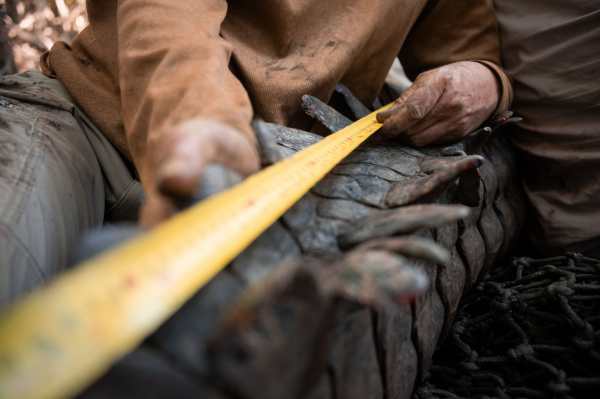
Australia Zoo’s crocodile research project has reached an extraordinary milestone, with the team tagging its 300th saltwater crocodile in the Wenlock River system on the Steve Irwin Wildlife Reserve.
In August 2026, the 12-foot, 6.5-inch (3.8 metre) male saltwater crocodile was named “Prince William” by Robert Irwin, in recognition of His Royal Highness The Prince of Wales’ unwavering commitment to conservation, and to commemorate the halfway point of The Earthshot Prize.
Steve Irwin began crocodile research in the 1980’s and his capture and study techniques remain the world’s best to this day. Australia Zoo, in partnership with The University of Queensland, now manages the largest and most successful crocodile research project in the world, utilising these techniques. Each year, a team of croc experts, scientists and conservationists join the Irwin family for the trip to the Steve Irwin Wildlife Reserve on Queensland’s Cape York Peninsula.
The research has provided unprecedented insights into the movement ecology of saltwater crocodiles, as well as their nesting behaviour, diets, social structures, unique physiology and the impacts of climate change. The findings have also played an important role in informing policy and supporting successful coexistence between people and crocodiles.
As apex predators, saltwater crocodiles play an important role in maintaining the health and balance of Australia’s tropical estuarine ecosystems. Understanding this emblematic species is therefore critical not only to their conservation, but also to the ecosystems and communities that share their habitat.
Following a series of morphological measurements and DNA sampling, “Prince William” was fitted with both an acoustic tag and a satellite tag before being released back into the Wenlock River. The technology will allow scientists to follow his movements and journey over the coming decades, providing valuable data that will contribute to the global understanding and conservation of saltwater crocodiles.
Robert Irwin, who is an ambassador for The Earthshot Prize founded by Prince William, said the milestone was a special opportunity to recognise both the importance of crocodile conservation and the work of those championing solutions for the planet.
“Naming the 300th crocodile “Prince William” is a celebration of our shared commitment to conservation, and a belief that through research, innovation and collective action, we can find solutions that protect our natural world and create a healthier planet for generations to come.
“I look forward to seeing Prince William the croc again on the Wenlock River, hopefully many years from now, as we continue to work together to conserve our wildlife and wild places.” – Robert Irwin
The 300th crocodile marks another significant chapter in Australia Zoo’s long-running commitment to crocodile research and conservation, a legacy pioneered by Steve Irwin and carried forward by his family. Through this ongoing research, the Irwin family is helping turn knowledge into meaningful conservation action, contributing to a future where people and crocs can thrive alongside one another.











