

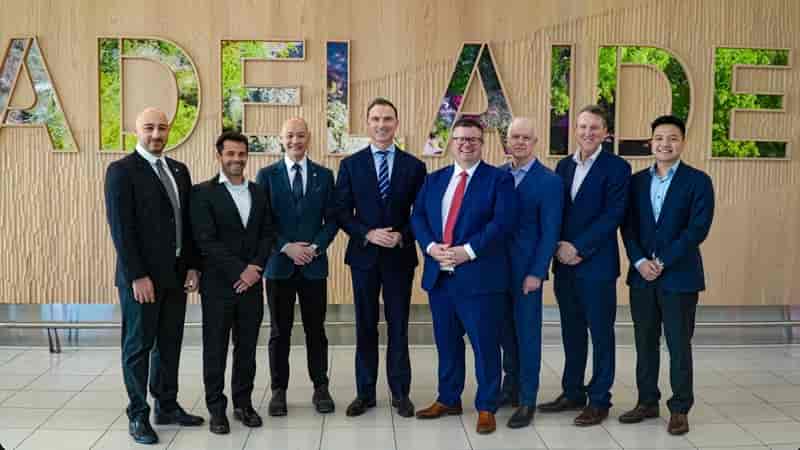
(From left to right) Apo Ozkececi, Senior Vice President, Pre-Sales, APAC, Amadeus, Ricardo Rabago, Director, Airports & Border Authorities, Pacific, Amadeus, Jonathan Tong, Senior Vice President, Airports & Border Authorities, APAC, Amadeus, Brenton Cox, Managing Director, Adelaide Airport Limited, Dermot O’Neill, Executive General Manager, People, Culture and Customer, Adelaide Airport Limited, David Blackwell, Executive General Manager – Technology & Innovation, Adelaide Airport Limited Nathan Reed, Head of Airport Development, Adelaide Airport Limited, Yu Jun Tan, Vice President, Airports & Border Authorities, Pacific, Amadeus
Adelaide Airport is preparing for a major change in the passenger journey. Check-in, bag drop and terminal processing are all set for an upgrade and, mercifully, the plan involves far less queueing.
The South Australian gateway has signed a new agreement with Amadeus to roll out self-service and cloud-based travel technology more broadly.
More than 50 Amadeus Seamless Bag Drop S7 Air and S7 Air Hybrid units will be installed. About 80 Amadeus Seamless Kiosks will support them.
The aim is refreshingly simple: faster check-in, shorter queues and more freedom for airlines to serve passengers where they are needed.
For travellers, that could mean less time studying somebody else’s suitcase in a queue and more time moving towards security, the lounge or, with luck, a decent coffee.
Bags get smarter
The new bag-drop units can work in full self-service mode or with an airport agent. Their side-loading design should also make larger items easier to handle, including wheelchairs, prams and trolleys.
The bigger change, however, sits behind the counter.
Adelaide Airport will move its passenger-processing system to Amadeus ACUS, short for Airport Cloud Use Service. The cloud platform lets airlines use different check-in and boarding positions without being tied to fixed network connections.
That flexibility matters at a busy airport.
Adelaide Airport says it handles more than 8.7 million passengers each year and is Australia’s fifth-largest domestic and international airport.
Dermot O’Neill, Adelaide Airport’s Executive General Manager, People, Culture and Customer, captured the scale of the move neatly:
“This is more than just a technology upgrade.”
O’Neill said the Amadeus systems would help the airport make better use of terminal space, bring new airline partners on board more easily and provide passengers with a more connected experience.
Jonathan Tong, Amadeus Senior Vice President, Airports & Border Authorities, Asia Pacific, said the new platform would provide a more flexible base for passenger services while supporting Adelaide’s important domestic and growing international connections.
A $600 million transformation
The deal arrives while Adelaide Airport is already investing heavily in future growth.
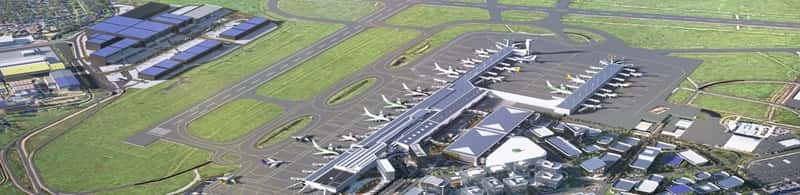
Its $600 million Project Flight program is reshaping the terminal. Work includes changes to the check-in hall, gate lounge upgrades, new security screening, terminal expansion and additional aircraft parking positions.
Together, the bricks-and-mortar work and the digital upgrade point to the same objective: move more people through the airport with less fuss.
And that matters.
Airports can build splendid terminals, handsome lounges and retail precincts capable of separating a traveller from his wallet before breakfast. But if check-in becomes a 40-minute endurance event, passengers tend to remember the queue rather more vividly than the architecture.
Teletype shown at the departure gate
Another change may earn a quiet cheer from aviation technology teams.
Adelaide Airport will introduce Amadeus Smart Message for communication between airlines and baggage infrastructure. It will replace traditional Teletype messaging, a long-standing aviation communications technology.
Aviation has always had a remarkable gift for keeping old systems alive. Some pieces of technology appear to enjoy longer careers than the people operating them.
This one, however, is finally being shown the departure gate.
For travel agents and advisers, the upgrade is highly practical.
The airport experience is part of the holiday experience, even if nobody has yet marched into a travel agency demanding a package because the destination has particularly attractive bag-drop machines.
Long queues, confusing check-in areas and slow processing can sour a journey before the aircraft has even pushed back.
Better systems can help passengers feel more confident. They can also give airlines more operating choices during busy periods.
The technology will not remove every delay. Weather, late aircraft and operational problems will still have their say.
No kiosk has yet learned how to negotiate with a thunderstorm.
But Adelaide Airport is putting stronger digital foundations beneath its growth plans. New routes require more than extra floor space. Rising passenger numbers also need systems that can adapt when demand changes.
For South Australia’s main aviation gateway, that is the real story.
Adelaide Airport is not simply buying a collection of shiny new machines. It is building a more flexible terminal, designed to keep passengers moving and airlines connected.
And if that means fewer queues before take-off, travellers may decide this is one technology upgrade well worth applauding.
By: Anne Keam – © 2026.
Read Time: 3 minutes.
Author Bio:
 Anne Keam’s story begins in Queensland, on a grain farm in the state’s wide western reaches, where the days were long and the lessons simple: work hard, look after your own, and don’t make a fuss. Those early years left their mark.
She later studied Arts at the University of Queensland, before doing what felt natural at the time, heading back home to the family property. But the world was calling. Anne packed a backpack and went looking, spending years on the road and finding herself most alive in South America. She wrote everything down along the way. Those notebooks, full of dust, colour, and curiosity, eventually became her blog, a quiet, personal record of seeing the world and learning from it.











