

FCM Travel is taking the booking form out of business travel, or at least making it far less visible.
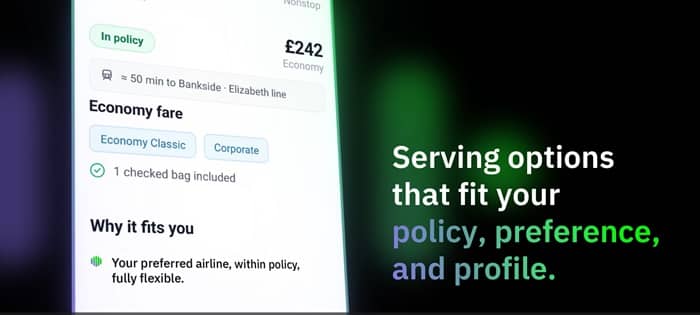
The travel management company has unveiled a new AI-powered booking feature that lets travellers describe a trip in plain English. The system then returns choices shaped by company policy, personal profiles, past trips, loyalty status and favoured routes.
It is a simple idea with a useful aim: less time searching, fewer doubts and a quicker path to the “book” button.
The feature is part of the next stage of FCM Booking, the company’s own online booking platform. It is powered by Sam, FCM’s existing AI layer, which draws on each traveller’s details and builds a fuller profile as they use the platform.
Sam does more than serve up a list of flights or hotels. Each suggestion will also say why it fits. One option may sit inside policy. Another may match a usual route, earn loyalty points or suit the way a team tends to travel.
That could prove vital. A fast answer is handy. A fast answer with no clear reason can feel like taking advice from a very confident stranger at the airport bar.
“Conversational booking only works if travellers trust what they’re being shown, and that trust comes from context, not just convenience,” said Jessica Dunderdale, Global Head of Product at FCM Travel.
“That’s the experience we’re building toward: every recommendation explains itself, so travellers can act on it with confidence, and travel managers see adoption follow as a result.”
Booking comes to Teams, Slack and AI tools
FCM says the service will first be offered through Microsoft Teams and Slack. It also plans to use Model Context Protocol technology to bring booking tools into ChatGPT, Claude and Gemini.
This means travellers could start a booking in software they already use, rather than open yet another app. For travel buyers, the gain may be just as useful. More staff could book within the company program, which should improve policy use and data capture.
The same AI layer will also feed FCM’s reports and live analysis. It is built to spot shifts in spend, policy breaches and trip risks as they arise. That is a fair improvement on finding the problem in a report after the money has left the building.
The aim is not to push travel managers aside. It should give them earlier facts and more time to act. The system can find a trend, but people still need to judge what it means for the firm.
People remain part of the plan
FCM is also keen to keep its consultants on the itinerary.
Sam is designed to stay with a traveller from the first search through booking, duty of care and support during the trip. When a person needs to step in, the consultant should already have the right details and chat history.
“We didn’t build FCM’s tech ecosystem to replace our consultants’ judgment. We built it to take the routine work off their plate, so they can focus on the moments that actually need a person,” said John Morhous, Chief Experience Officer at FCM Travel.
“Travellers get speed from tech and expertise from our consultants; they shouldn’t have to choose between the two.”
That balance will decide whether the new feature wins trust.
Travellers may welcome fewer forms and faster choices. Travel managers may value better data and stronger policy use. Yet when a late flight turns a neat plan into an itinerary bonfire, a skilled human still earns top billing.
FCM’s pitch is clear: let AI handle the dull work, show its reasoning and call in people when the trip becomes hard. In business travel, where time and trust often share the same seat, that sounds like a sensible upgrade.
By: Octavia Koo – © 2026.
Read Time: 3 minutes.
Author Bio:
 Octavia Koo arrived in Australia in the early eighties with little fuss and a good eye. Sydney suited her. At UNSW, she studied Arts, then found her footing in graphic design before drifting, quite naturally, into the digital side of things, building websites and shaping words that made people want to stay.
Singapore followed, and with it, the fast pace of tourism platforms and ITB Asia. Long before SEO became a buzzword, Octavia understood how stories travelled online. That’s where she met Stephen, and the seed for something more was planted.
A few years later, she joined Global Travel Media.
Today, Octavia works with quiet assurance, blending art, instinct and experience to produce stories that don’t shout; they simply work and linger.











