

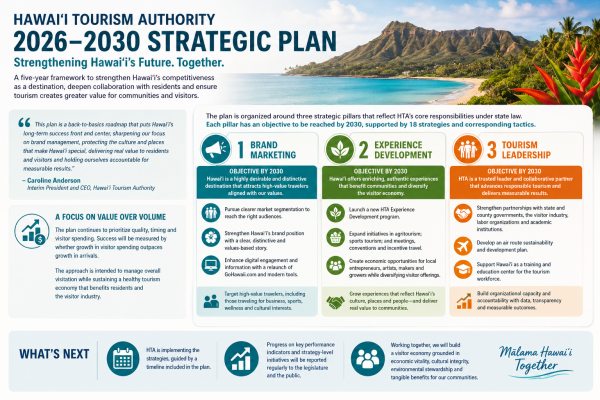
The Hawaiʻi Tourism Authority (HTA) released its 2026-2030 Strategic Plan, a five-year framework to strengthen Hawaiʻi’s competitiveness as a destination, deepen collaboration with residents and ensure tourism creates greater value for communities and visitors.
The plan is organized around three strategic pillars that reflect HTA’s core responsibilities under state law: Brand Marketing, Experience Development and Tourism Leadership. Each pillar has an objective to be reached by 2030, supported by 18 strategies and corresponding tactics.
“This plan is a back-to-basics roadmap that puts Hawaiʻi’s long-term success front and center, sharpening our focus on brand management, protecting the culture and places that make Hawaiʻi special, delivering real value to residents and visitors and holding ourselves accountable for measurable results,” said Caroline Anderson, HTA’s interim president and CEO. “These strategies reflect what we heard directly from our communities, visitor industry and policymakers, and position Hawaiʻi to build a visitor economy grounded in economic vitality, cultural integrity, environmental stewardship, and tangible benefits for our communities.”
A focus on value over volume
The plan continues to prioritize quality, timing and visitor spending. Success will be measured by whether growth in visitor spending outpaces growth in arrivals. The approach is intended to manage overall visitation while sustaining a healthy tourism economy that benefits residents and the visitor industry.
Under Pillar 1, Brand Marketing, HTA will pursue clearer market segmentation, a more distinctive brand position and updated digital tools, including a relaunch of GoHawaii.com. The goal is to attract high-value travelers, including those traveling for business, sports, wellness and cultural interests.
Under Pillar 2, Experience Development, the plan introduces a new HTA Experience Development program and expanded initiatives in agritourism; sports tourism; and meetings, conventions and incentive travel. The initiatives are intended to create economic opportunities for local entrepreneurs, artists, makers and growers while diversifying visitor offerings.
Under Pillar 3, Tourism Leadership, HTA will build organizational capacity and accountability, including stronger partnerships with state and county governments, the visitor industry, labor organizations and academic institutions. The plan also calls for an air route sustainability and development plan and support for Hawaiʻi as a training and education center for the tourism workforce.
What’s next
HTA is implementing the strategies, guided by a timeline included in the plan. Progress on key performance indicators and strategy-level initiatives will be reported regularly to the legislature and the public.











