

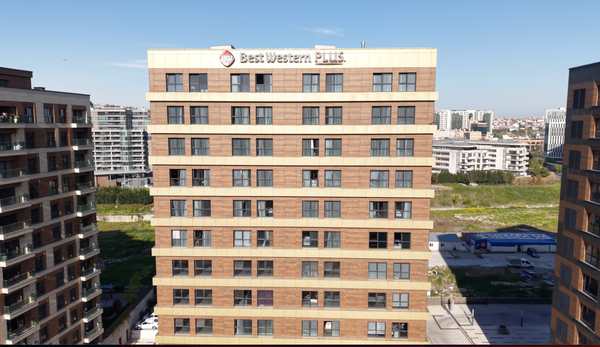
The Unexpected Role an Istanbul Hotel Plays in Thousands of Medical Journeys
When people think about medical travel, they tend to think about hospitals. The reality is far more complex. Behind every appointment, consultation and treatment plan lies a second journey: one that receives far less attention. It unfolds in hotel rooms, over early-morning breakfasts, during long afternoons between appointments and in the everyday routines people attempt to recreate while living temporarily in an unfamiliar city.
For a growing international community of patients and families travelling to Istanbul, that part of the experience has become closely associated with one address. Best Western Plus Hotel & Residence Istanbul was never designed specifically for medical travellers. Yet over the years, the property has quietly become a trusted fixture within an international oncology community stretching across Europe and North America. Many guests first arrive because of its proximity to a leading treatment centre. Increasingly, however, they arrive because someone else told them to.
The recommendation often comes from a former patient, a family member or a caregiver. Sometimes it appears in an online community. Sometimes it is exchanged through private conversations between people preparing for similar journeys. However it travels, the message remains remarkably consistent. In a period defined by uncertainty, guests found a place that understood the practical realities of long-term stays and adapted to them.
That distinction matters. Unlike leisure travel, medical journeys rarely fit neatly into a schedule. Plans change. Treatments are extended. Family members come and go. What begins as a short stay can quickly become several weeks or even months. Under those circumstances, details that might seem secondary in a traditional hotel environment take on greater significance. Space matters. Flexibility matters. Familiarity matters.
Over time, Best Western Plus Hotel & Residence Istanbul‘s response to those needs evolved organically. Residence-style accommodation, kitchen facilities and personalised service became part of the reason guests continued recommending the property to others. Yet perhaps the most telling example emerged not from a formal programme, but from an observation.
The team noticed that many long-stay guests were purchasing similar everyday items during their time in Istanbul. Some bought practical household essentials. Others acquired comfort items intended to make an extended stay feel more manageable. Once treatment ended and guests returned home, many of those belongings were left behind.
Rather than viewing this as waste, the hotel saw an opportunity. A dedicated community-sharing space was created, allowing useful items to be passed from one guest to another. The concept was simple, but the response revealed something larger. What appeared to be a practical solution became an informal expression of solidarity within a community connected by shared experiences rather than personal acquaintance.
The initiative continues to resonate because it reflects the broader culture that has emerged around the property. Guests frequently describe a sense of continuity, as though they are arriving somewhere already known to them through the experiences of others who came before. In many cases, they are.
Looking ahead, the hotel is exploring additional ways to support that sense of connection through informal gatherings and community-focused initiatives designed for long-stay guests and accompanying family members. The goal is not to redefine healthcare or position hospitality as a substitute for professional support. Instead, it reflects a simple recognition that treatment journeys involve far more than medical appointments alone.
The story of Best Western Plus Hotel & Residence Istanbul ultimately speaks to a broader shift in the way medical travel is experienced. As international healthcare continues to grow, conversations are increasingly expanding beyond clinical excellence to include the wider environment surrounding treatment. Where people stay, how they spend their time and whether they feel supported throughout the process are becoming part of the conversation.
In that context, the hotel’s role is both modest and meaningful. It has not built its reputation through large-scale campaigns or carefully engineered positioning. Instead, it has earned recognition through years of listening, adapting and responding to the needs of guests whose circumstances demanded something different from traditional hospitality.
What emerged was never part of a business plan. It was built through recommendations, relationships and the quiet accumulation of trust. And that may be the most powerful endorsement any hotel can receive.











