

Thailand has never struggled to sell the dream. There are beaches, temples, food, colour and a welcome that can melt the hardest traveller. Yet modern tourism needs more than charm. It also needs clear rules, sound systems and help that arrives when things go wrong.
That is the thinking behind Trusted Thailand.
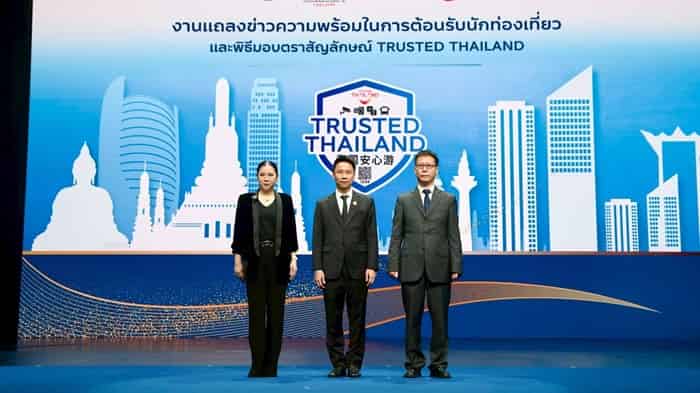
The Tourism Authority of Thailand, the Ministry of Tourism and Sports and industry partners launched the scheme nationwide on 13 November 2025. It gives tourism businesses a badge when they meet set standards for safety, payment, visitor care and transport access.
In plain terms, the badge helps travellers spot businesses that have passed formal checks. Hotels, restaurants, attractions, shopping centres and leisure venues can apply.
This matters because safety is often hidden in the fine print. Most guests never ask about emergency plans, camera coverage or staff training. They assume all is well and head for the pool. Trusted Thailand brings those matters into view before the booking is made.
Four Checks Behind the Badge
The scheme uses four main tests.
The first covers general safety. This includes CCTV, emergency plans and readiness for floods or other events.
The second looks at payment. Businesses must offer secure and clear payment options through recognised systems.
The third checks whether staff can help guests in more than one language. Good manners are welcome, of course, but clear words in a crisis are far more useful.
The fourth looks at safe and easy transport links. Signs, access points and travel information must be clear.
The badge lasts for two years. That gives it more weight than a quick launch photo and a tray of ribbon-cutting scissors.
At the November 2025 launch, Thai officials expected more than 5,000 businesses to seek approval. By March 2026, TAT said more than 7,467 tourism sites and firms had received the Trusted Thailand mark.
Tourism Minister Artthakorn Sirilatthayakorn called it a “visible assurance of safety and reliability”. That is the right frame.
The badge is not a magic shield. It does not mean that no guest will ever face a problem. It shows that a business has met a common set of rules and can be checked before money changes hands.
Safety Now Starts at Booking
The best safety advice is the advice a traveller can find and use.
TAT has worked with Agoda to show approved stays on a Trusted Thailand page. Badges are also being added to some hotel listings. This allows guests to see the mark while they compare rooms, rates and locations.
Agoda City Guides and QR codes also carry official safety tips. The first guides focused on floods, with more topics planned.
This may sound like a small digital change. It is not. Putting safety next to the booking button gives it a place in the buying decision. Advice found before payment has far more value than advice found after check-in.
TAT has also worked with Trip.com, Meituan and other travel platforms. Much of the early push aimed to rebuild trust among Chinese visitors. China remains a major market for Thailand, so that focus makes sound business sense.
The wider gain is clear. Australian and other global travellers also want clean payment systems, trained staff, clear signs and a fast way to seek help. Safety may not look glamorous in a holiday brochure, but it sells confidence.
The App Every Visitor Should Know
The Trusted Thailand mark covers the business a traveller chooses. The Thailand Tourist Police app covers the moment when the day takes an unwanted turn.
The official app is free through Apple, Google Play and Huawei. It offers help, translation and travel information. It also links visitors with emergency support.
The Tourist Police 1155 call centre runs 24 hours a day and can assist in eight languages. The app supports five languages. Its SOS tool can share a traveller’s location, which helps police work out where help is needed.
Save 1155 in your phone before the trip. Do not rely on memory in an emergency. Panic has many talents, but tidy record-keeping is not among them.
Travellers should download the app through the official Tourist Police website or approved app stores. Older services, including Tourist Police i lert u, have also used location data to link visitors with the 1155 centre. Using the current official links helps avoid old or fake apps.
A Badge Does Not Replace Good Judgement
Trusted Thailand is useful, but it does not replace normal travel care.
Visitors still need travel insurance. They should use known transport, keep copies of key papers and watch local news. Drinks should stay in sight. Helmets should be worn on motorbikes. Government warnings should be taken seriously.
Australians should read Smartraveller before leaving and during the trip. On 22 July 2026, the advice was to exercise a high degree of caution in Thailand overall. Higher warnings applied to parts of the Thailand–Cambodia border and several southern areas.
Smartraveller lists 1155 for Tourist Police, 191 for police and 1669 for medical emergencies and rescue.
A professional travel adviser also has a role. A good adviser can check routes, explain local risks, recommend sound suppliers and help when plans change. That old-fashioned human back-up still earns its keep.
For agents and operators, the distinction is essential: sell the reassurance, not invincibility.
Thailand Adds Steel to the Smile
Thailand has built its tourism name on warmth, care and service. Trusted Thailand adds stronger bones to that promise.
It brings common rules, a clear badge, booking links and police support into one wider safety system. It also asks tourism firms to show that care is not just a smile at the front desk. It is part of how the business is run.
No system can promise a perfect holiday. Trusted Thailand offers something more honest: better choices, clearer signs and a quicker path to help.
That is not flashy. It is simply good tourism. And, as the industry has learned more than once, the basics are often what matter most.
By: Kanda Limw – © 2026.
Read Time: 5 minutes.
Author Bio:
 Kanda Limw is one of those rare people every office quietly depends on. She doesn’t fuss or fanfare her way through the day; she simply notices what needs doing and gets on with it, often before anyone else has drawn breath.
Years behind the scenes have taught her that good administration isn’t about control; it’s about care. Diaries align, tensions soften, loose ends disappear. When the day threatens to tilt, Kanda steadies it without drama.
There’s something reassuringly old-fashioned about her reliability. She listens properly, remembers the small things, and does what she says she will.
Kanda has no appetite for the spotlight. Yet ask anyone who works alongside her, and they’ll tell you that when she’s there, everything runs just a little smoother.











