

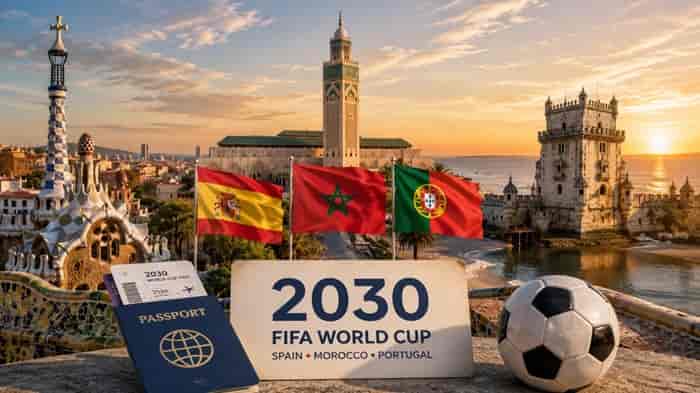
Spain’s win over Argentina has done more than put the World Cup trophy back in Spanish hands. It has fired the starting gun on a four-year travel race towards 2030, when Spain, Morocco and Portugal will share football’s biggest stage.
A trophy with a tourism tailwind
Spain beat Argentina 1–0 after extra time in the 2026 final on 19 July. It was the nation’s second men’s World Cup title. The timing could hardly be better for tourism. Spain now moves from champion to co-host, with fresh global attention as the countdown begins.
The 2030 FIFA World Cup will focus on Spain, Morocco and Portugal. Three centenary matches will also be held in Argentina, Paraguay and Uruguay. They will mark 100 years since the first World Cup in 1930. It is a bold plan across two continents — because one hemisphere was plainly not enough.
For travel advisers, cruise experts and tour operators, the sales chance is clear. Major sports events do not just fill stadiums. They lift demand for flights, hotels, trains, tours, meals and longer stays. Fans may arrive for football, but many will stay for culture, coastlines and cuisine.
Morocco and Iberia move early
Morocco is moving at full pace. The country plans to add 60,000 hotel beds by 2030. It is also spending heavily on airports, roads, rail and stadiums. Casablanca and Rabat could gain far more than a few weeks of football fever. The event may speed their growth as major touring and cruise stops.
Spain brings strong tourism links, fast trains, famous food regions and cities used to large global crowds. Portugal offers compact cities, Atlantic views, deep heritage and warm service. As a first-time World Cup host, it has a rare chance to turn football fame into lasting visitor growth.
Excursions turn fixtures into holidays
Shore Excursions Group now promotes about 4,500 trips in more than 300 ports. It is already highlighting tours in places that may draw early interest.
In Casablanca, the Casablanca Souks Shopping and Cultural Experience takes guests through spice stalls, craft shops and textile markets. Mint tea and Moroccan sweets offer a civilised pause from the bargaining. Travellers can also book a Private Trip to Rabat. Stops include the Royal Palace grounds, Chellah ruins, the Mohamed V Mausoleum, Hassan Tower and the Andalusian Gardens.
Spain gives fans good reasons to stay beyond match day. Secrets of Cádiz blends old streets, sea views and key sights with a rooftop sherry, wine and cheese tasting. Barcelona & Montserrat links the city’s best-known sights with skip-the-line entry to the mountain monastery.
Plan early, but avoid an own goal
The sound advice is not to book blindly four years ahead. It is to start planning early. Match dates, venues, tickets and transport plans will change as 2030 nears. A professional travel adviser can build a flexible trip, help protect deposits, compare insurance and stop a dream holiday becoming an expensive own goal.
The 2030 travel boom is not yet at full roar. But after Spain’s triumph, the whistle has certainly blown.
By: Soo James – © 2026.
Read Time: 2 minutes.
Author Bio:
 There’s nothing rehearsed about Soo James, and that’s precisely the point. Malaysian by heritage, Sydney by schooling, she arrived at UNSW to study Arts, then took a left turn into IT, not out of ambition, but curiosity. Somewhere among systems and schedules, she worked out what really held her attention: people, language, and the quiet spaces between them.
Writing followed naturally. Travel and lifestyle gave her room to observe, to listen, to notice the details others rush past. Soo writes the way good travellers move, watching the room before admiring the view, catching the gesture before chasing the headline.
At Global Travel Media, her stories don’t shout or sell. They linger. They slow you down, open a door, and gently suggest there’s more to see if you’re willing to look.











