

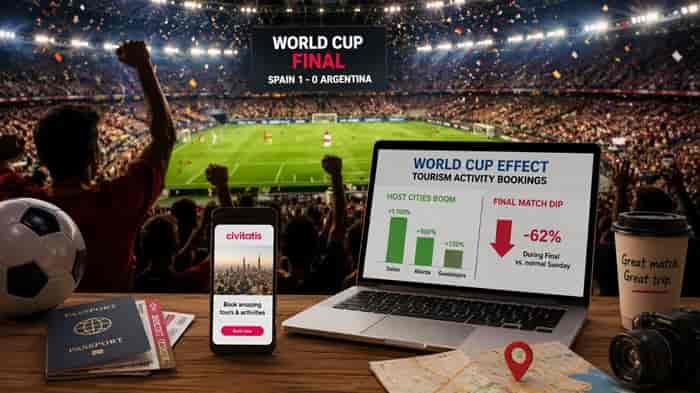
The World Cup did more than crown Spain as champion. It also showed how World Cup tourism bookings can move with the match, fill city tours and change online buying in an instant.
New data from Civitatis points to a clear “World Cup effect”. Tourism activity bookings rose fast in cities that hosted Spain’s matches. Yet demand fell hard when the key games began. During the final against Argentina, millions of fans stopped browsing and watched the action instead. Civitatis’ published figures show strong activity-booking growth in Dallas, Atlanta and Guadalajara during the tournament.
Spain won its second men’s World Cup title in East Rutherford, New Jersey, on 19 July. Ferran Torres scored in the 106th minute to seal a 1–0 win after extra time.
The travel trade also had reason to cheer. The event showed that fans do not travel only for 90 minutes of football. They eat, tour, shop and explore. The match may start the trip, but the host city can turn it into a full holiday.
“The World Cup has once again demonstrated that sport and tourism are becoming increasingly interconnected. Thousands of fans travelled to follow the Spanish national team while taking the opportunity to discover the host cities. At the same time, a World Cup final is one of the few events capable of capturing the full attention of millions of people for several hours and even influencing their online purchasing behaviour,” said Andrés Spitzer, CEO of Civitatis.
Spitzer’s position as chief executive is also confirmed by Civitatis’ corporate leadership information.
Host cities post huge booking gains
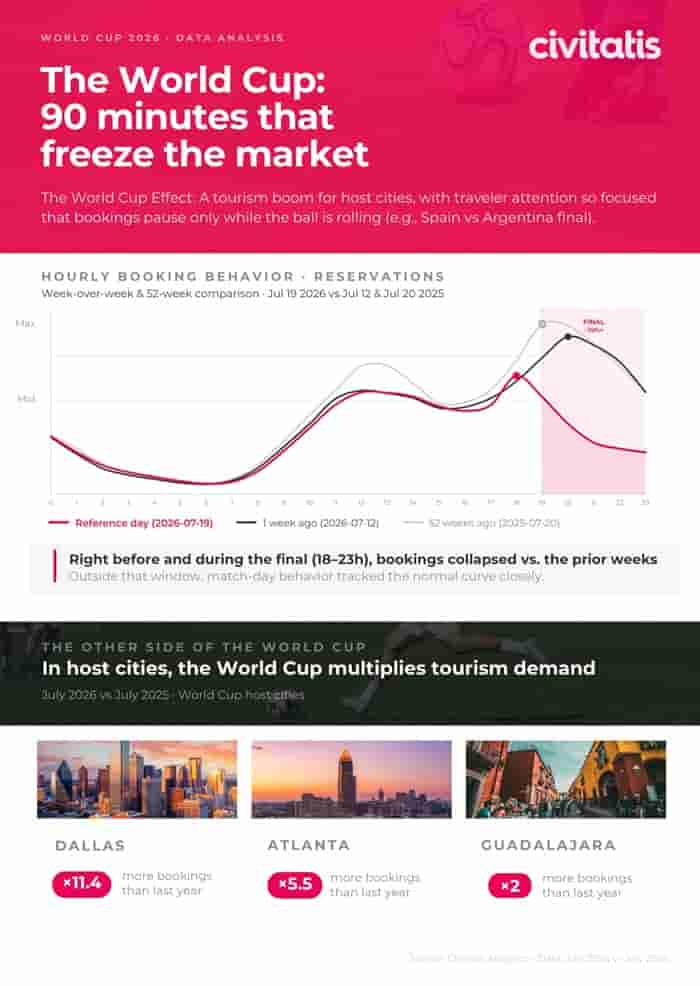
Dallas led the Civitatis results. Bookings for tours and activities rose to more than 11 times the level seen in the same period last year. Atlanta recorded more than five times the demand. Guadalajara more than doubled its bookings.
Those gains matter well beyond the stadium. A fan may arrive with a scarf, a match ticket and a loud opinion about the referee. Yet that same visitor may also book a food tour, a museum ticket or a day trip.
This is the real value of sports tourism. Football brings the crowd. The destination gives that crowd more reasons to stay and spend.
For local operators, the message is simple. Put the right products in front of fans before they arrive. Make tours easy to book. Offer times that fit around matches. Explain transport clearly. Most of all, give visitors a reason to see more than the inside of a stadium.
A host city also needs to promote nearby areas. Fans may have free days between games. Some will extend their stay. Others will bring partners or family members who are less keen on football and rather more keen on lunch.
That mix can spread spending across hotels, cafés, attractions, shops and local transport. It can also help small operators share in the gains from a global event.
The final brings bookings to a halt
Then came the strange part.
Civitatis said online bookings for tourism activities fell by up to 62 per cent during the World Cup final. The fall was measured against a normal Sunday in the same time slot.
For the travel sector, it was the digital version of an empty street. Fans were not comparing walking tours or checking museum times. They were watching Spain and Argentina chase the biggest prize in football.
Bookings did not return to their normal pace until after the match. That point is vital. Demand was not gone. It was delayed.
Travel firms can use that pattern. There is little sense in pushing a sales message during a final when the audience is glued to the screen. A better plan is to build interest before kick-off, pause during the game and return soon after the whistle.
A well-timed mobile message could suggest a tour for the next morning. A hotel could promote a local food experience. A city guide could point fans towards a late-night venue or a calm walk after the noise of the match.
In other words, do not try to beat football. Work with it.
Sports tourism becomes big business
The World Cup effect is part of a wider shift. Sports tourism is no longer a small market built only around tickets and fan packages. It now supports flights, rooms, meals, tours, shops and local events.
The gains can also reach people who never enter the stadium. Fan zones, public screens and city events can draw large crowds. Nearby towns may gain from day trips. Local guides can shape special tours around match days.
Booking data adds another layer. Platforms such as Civitatis can see when demand rises, pauses and returns. That can help firms plan staff, adverts, stock and tour times.
The data should be used with care. Yet it gives the trade a sharper view of what travellers do in real time. That is useful when a whole market can go quiet for two hours and wake up again at the final whistle.
The travel trade’s winning play
The lesson is clear. Football can stop online bookings for an evening, but it can lift travel demand for weeks.
Dallas, Atlanta and Guadalajara show the scale of the prize. The 62 per cent fall during the final shows the power of live sport to seize attention.
Spain took home the trophy. Host cities and tour firms gained something else: proof that fans want more than a match. They want a trip, a story and a taste of the place.
The smart move is to be ready before kick-off, quiet during the drama and visible again when the crowd looks up from the screen.
When football travels, tourism follows. And, once the whistle blows, the bookings follow too.
By: Bridget Gomez – © 2026.
Read Time: 5 minutes.
Author Bio:
 Bridget has never been built for stillness. Of Portuguese heritage, she began as a nurse, tending veterans at the Repatriation Hospital, listening to stories as colourful as the life she was yet to live. It was worthy, steady work, but wanderlust, as always, proved louder than routine.
So, she traded starch for a backpack and disappeared for a year, chasing trains, sunsets and the occasional regrettable glass of wine. She wrote everything down: the dust, the laughter, the missteps, the magic. Those notebooks became a travel blog, then a habit, then a calling.
Eventually she found Global Travel Media, or perhaps it found her.
Today Bridget writes with heart, humour and a dash of mischief, still travelling, just now with words.











