

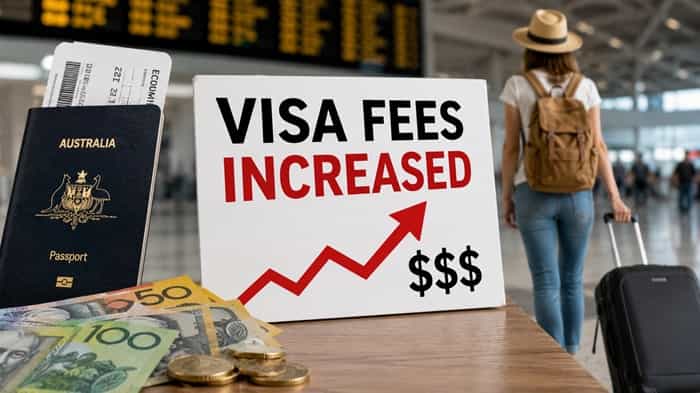
Australia risks making itself a dearer ticket before the aircraft has even left the gate.
The Australian Tourism Export Council has warned that new visa fee rises could slow growth in one of the nation’s best export earners. For an island continent already asking visitors to fly a very long way, this is not quite the welcome mat the trade wanted.
From 1 July 2026, the Working Holiday Maker visa charge rose from $670 to $840. The Visitor visa (subclass 600) rose from $200 to $250. The Department of Home Affairs now lists the first Working Holiday visa at AUD840 and the Visitor visa from AUD250, while its current pricing page directs travellers to the official Visa Pricing Estimator for current charges.
ATEC Managing Director Peter Shelley said the sector was not just upset by one more fee rise. It was worried by the pattern.
“The industry is incredibly disappointed by this decision,” Mr Shelley said.
“The concern isn’t simply this latest increase; it’s the cumulative impact of the WHM visa increasing by around $200 in the past two years alone.
“Where is the strategy behind these repeated increases? Where is the consideration of the impact on regional tourism, regional economies and the businesses that rely on international visitors to support demand and seasonal workforce needs?
“We understand the Government’s focus on managing net migration, but WHM visitors are fundamentally different.
“They are temporary visitors who come to Australia, travel throughout the country, spend money with local businesses, support regional communities, contribute to seasonal workforce needs and then return home, far from a long-term migration contribution.
“At the same time, increasing visitor visa costs sends a broader message that Australia is becoming a more expensive destination to visit.”
That message matters. Tourism Research Australia says total international visitor spend reached $57.6 billion in the year ending March 2026, up 16 per cent on March 2025. This is not a small change in the nation’s back pocket. It is a major export industry. It keeps aircraft seats filled, hotels open, coaches moving, restaurants busy and regional tours alive.
Working holiday makers are also more than names on a visa form. They travel widely. They stay longer. They spend it in towns that need the money. They also help fill seasonal gaps in tourism, hospitality, farming and events.
In plain English, they book a hostel bed, buy a reef cruise, pour the coffee, pick the fruit, take the outback tour, and tell their friends at home that Australia is worth the journey. That sort of word-of-mouth is old-fashioned marketing, and still the best kind.
ATEC warned that higher costs could weaken Australia against Canada, New Zealand, Japan and the United Kingdom. Young travellers, in particular, watch the total cost. They may dream in postcards, but they book with a calculator.
“International travellers compare destinations on value, affordability and ease of access, so when visa costs continue to rise, it reinforces the perception that Australia is a more expensive and more difficult destination to visit.
“That limits our ability to grow international visitation, particularly among younger travellers, who deliver significant economic value to tourism businesses and regional communities.”
The policy point is simple. Managing migration and growing tourism are not the same job. Working holiday makers are temporary visitors. They come, work, travel, spend and leave. Treating them like a long-term migration problem risks hurting the very regions that need their cash and labour.
Mr Shelley said these visitors bring new money into the country, support tourism businesses, help regional economies and then return home.
“If Government is serious about growing the visitor economy and supporting regional Australia, policy settings should encourage international visitors, not gradually price Australia out of the global tourism game.”
Australia has the beaches, reefs, cities, food, wine, wildlife, and a warm welcome. It should not make the front door feel like a toll booth.
By: Anne Keam – © 2026.
Read Time: 3 minutes.
Author Bio:
 Anne Keam’s story begins in Queensland, on a grain farm in the state’s wide western reaches, where the days were long and the lessons simple: work hard, look after your own, and don’t make a fuss. Those early years left their mark.
She later studied Arts at the University of Queensland, before doing what felt natural at the time, heading back home to the family property. But the world was calling. Anne packed a backpack and went looking, spending years on the road and finding herself most alive in South America. She wrote everything down along the way. Those notebooks, full of dust, colour, and curiosity, eventually became her blog, a quiet, personal record of seeing the world and learning from it.











