

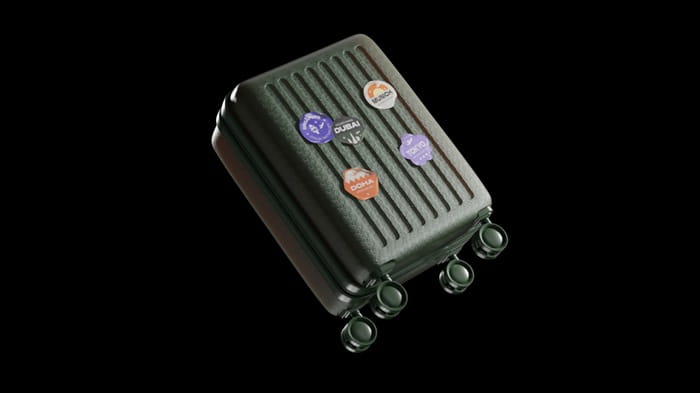
Airports have spent years telling passengers to arrive early, pack lightly and keep calm at the carousel. In 2025, the industry finally had some better news to report: the bags behaved better than passengers expected.
According to the SITA 2026 Baggage IT Insights report, mishandled baggage fell below pre-pandemic levels for the first time, even as global passenger volumes reached five billion. Mishandled baggage rates dropped by 23 per cent in 2025, even as 24 million bags were still mishandled worldwide. That is progress, certainly. It is not yet perfection. In aviation, as in life, one missing suitcase can still turn a polished arrival into a laundry emergency with immigration stamps.
The financial sting remains fierce. SITA estimates mishandled baggage still costs the aviation industry $6.3 billion annually. It’s new benchmark puts the average cost at $260 per mishandled bag, replacing the long-cited $150 figure with a more data-driven measure. SITA says that is equal to about 15 per cent of airline industry profit, which should make every boardroom sit up straighter than a passenger hearing “final call”.
The business case is blunt. With net profit averaging just $8 per passenger, one mishandled bag wipes out the profit from more than 30 sold seats. Five such bags can erase the profit of an entire flight. For airlines already facing rising labour costs, constrained airport capacity and unforgiving passenger expectations, baggage is no longer merely an operational nuisance. It is a profit leak with wheels.
The improvement in 2025 was not the work of a single silver bullet. It was the result of systems starting to talk to each other properly: real-time data sharing, AI routing, biometric bag drop, passenger location devices, and better integration among airlines, airports, and ground handlers. Baggage, once treated as a back-of-house chore, is becoming a visible digital service. Nicole Hogg, SITA’s Portfolio Director Baggage, put it neatly: “Baggage is shifting from a logistical problem to a digital service.”
That shift matters because travellers now expect baggage visibility the way they expect parcel tracking. If a $12 online order can be tracked from warehouse to doorstep, passengers understandably wonder why a suitcase full of holiday clothes can vanish somewhere between the gate, the belt, and the great unknown. The old shrug-and-form-at-the-counter routine is wearing thin.
Real-world results suggest the technology is more than airport theatre. SITA says Apple’s Find My integration with SITA WorldTracer permanently reduced luggage loss by 90 per cent in its first year and shortened delayed-bag recovery by 26 per cent. Google’s Find Hub share item location feature has also been integrated into WorldTracer, while Thai Airways’ use of SITA’s Auto Reflight compressed a three-minute task to a single second per bag across nine airports.
Transfers remain the villain of the piece, accounting for 39 per cent of mishandling cases in 2025, down from 41 per cent the year before. It is not hard to see why. A transfer bag must survive handovers, tight connections, different systems, ground handlers, aircraft changes and the occasional thunderstorm with a sense of humour. The more moving parts, the more opportunities for a suitcase to take its own unscheduled city break.
The cost profile also shows where the industry should aim next. Delayed bags account for around 70 per cent of total baggage mishandling cost, much of it operational: recovery, rerouting and delivery. For lost or damaged bags, compensation can account for up to 70 per cent of the cost. In plain English, delays burn money in labour and logistics, while lost and damaged bags burn money in claims and goodwill.
IATA Resolution 753 is central to the next stage. The standard requires airlines to track bags at four key points: passenger handover, aircraft loading, transfer delivery and return to the passenger. IATA says this creates a verifiable audit trail across acquisition and handover, improving traceability and reducing mishandling. Resolution 753 has been mandatory for IATA member airlines since 2018, but implementation has been uneven across regions and infrastructure types.
SITA says industry-wide baggage tracking has now passed the 50 per cent mark, with full compliance targeted for 2027. Three in four airlines plan to invest in AI over the next two years, and half plan to provide real-time baggage updates to passengers. That is not gadgetry for gadgetry’s sake. It is an operational discipline dressed in digital clothing.
David Lavorel, CEO at SITA, captured the capital dilemma with admirable economy, saying “the answer isn’t always more concrete”. Airports are running closer to their physical limits each year, and building bigger is not always possible, popular or affordable. Data, AI and predictive operations offer a less dramatic but more practical answer: make existing infrastructure work harder, faster and smarter.
The next horizon is already taxiing. Home tagging, car park bag drop and baggage that does not necessarily fly on the same aircraft as the passenger all point to a different future. Done well, that future could give travellers more certainty and airlines more resilience. Done badly, it could simply add new acronyms to old frustration.
For now, the 2026 SITA report delivers a welcome message with a sharp commercial edge. The aviation industry is losing fewer bags, but baggage remains too expensive, too emotional and too visible to ignore. In travel, trust is often won in grand moments: a safe landing, a warm welcome, a perfect view. Sometimes, though, it is won by a black suitcase appearing on the carousel exactly when it should.
By: Sandra Jones – © 2026.
Read Time: 4 minutes.
Author Bio:
 Sandra has spent a working lifetime quietly rescuing journeys, one itinerary, one anxious caller, one impossible connection at a time. Years in Australia’s finest travel agencies taught her the art of calm, how to find a flight in a fog of cancellations, how to soothe a traveller when luggage wanders, how to turn nine frantic days in Europe into something resembling sense. Qualified, seasoned, endlessly patient, she learned that good travel advice is part logistics, part listening.
But the storyteller in her was always waiting its turn. Writing offered a new map, a way to turn experience into reflection, detail into delight. At Global Travel Media, Sandra now writes the truths only insiders know: the mishaps, the laughter, the grace found between gates and goodbyes. She reminds us that travel, for all its fuss, is still one of life’s better ideas.











