
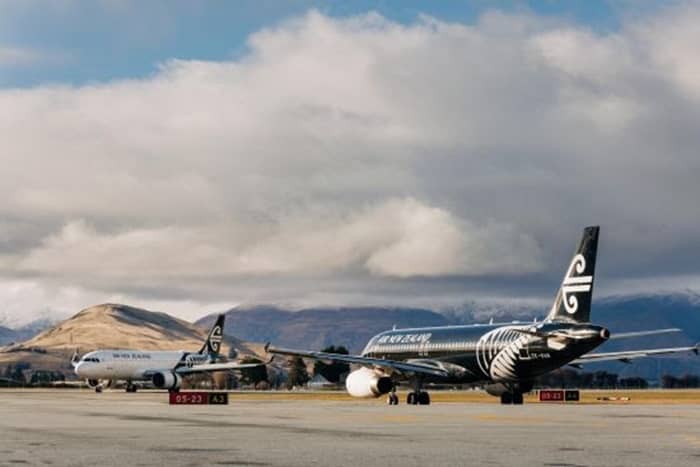
New seasonal route delivers thousands of extra seats, strengthens trans-Tasman tourism and gives Queensland travellers a direct gateway to New Zealand’s winter playground.
There is something satisfying about watching an aircraft touch down carrying not only passengers, but opportunity. Every arrival into Queenstown during winter brings fresh visitors to hotels, cafés, restaurants, ski fields and attractions, helping fuel one of New Zealand’s most valuable tourism economies.
That is the significance behind Air New Zealand’s new seasonal Queenstown–Brisbane service. The inaugural flight departed on 22 June, launching a three-times-weekly service operating through to 23 October 2026 and adding 16,500 seats to the airline’s trans-Tasman network.
For Queensland travellers, the new route removes the inconvenience of connecting flights while opening a direct pathway to one of the Southern Hemisphere’s most celebrated alpine destinations. For New Zealand, it represents another investment in rebuilding international tourism through stronger air connectivity.
Air New Zealand says capacity between Australia’s east coast and Queenstown has increased by 40 per cent this winter, reflecting strong demand for the South Island.
Air New Zealand General Manager Short Haul and Domestic Lucy Hall said:
“The increase in capacity and addition of our Queenstown–Brisbane route reflects the airline’s commitment to growing where Kiwi travellers want to go and providing more opportunities for visitors to access the beautiful South Island directly.
“Our role is to keep New Zealand connected, competitive and open to the world. These additional seats will not only help New Zealanders access Brisbane and Queensland more easily but will also support tourism in the South.
“This new service is perfectly timed to align to the Queensland and New Zealand July school holiday period and we’re looking forward to welcoming families on board over this period.”
The additional capacity arrives at an ideal time. Queenstown’s ski season is in full swing, while July school holidays traditionally generate some of the busiest travel periods across both countries. Direct access makes weekend snow holidays, family escapes, and adventure breaks considerably more attractive for Brisbane travellers.
The benefits extend beyond tourism alone. Airlines increasingly shape regional economies by improving accessibility, supporting employment and stimulating visitor spending. Every extra seat creates opportunities for accommodation providers, transport operators, restaurants, retailers and tourism experiences throughout the wider Otago region.
Air New Zealand expects more than 730,000 customers to travel across its domestic and international network during the July school holiday period. Queenstown remains among the airline’s most popular destinations, while Wellington is preparing for increased demand surrounding the All Blacks’ Test against Italy.
The carrier is also supporting regional celebrations, including the Rotorua Aronui Drone Festival and the Dunedin Matariki Mā Puaka Celebration, through its Regional Events Sponsorship programme, reinforcing airlines’ role in encouraging visitors to explore beyond traditional tourism hotspots.
Busy airports, however, require equally smart preparation. Air New Zealand General Manager Cabin Crew, Sarah Murray, says planning ahead can reduce much of the stress families experience during winter travel.
“Many of our crew will be welcoming you onboard over the July school holidays, whether it’s for a trip to the ski fields or time exploring a new destination. Younger flyers can also stay busy onboard with the return of our Kia Ora Kids magazine! It’s available in lounges and onboard during the school holidays, and includes fun facts about New Zealand, activities and space to document their holiday.
“Wherever you’re travelling to, I hope these simple tips help you as much as they help me.”
Among the airline’s recommendations are downloading the Air New Zealand app, registering for travel alerts, carefully checking booking details before departure and considering travel insurance, particularly during winter when weather disruptions can occur.
Passengers are also encouraged to arrive earlier than usual, especially when travelling with children, prams, ski equipment or bulky winter clothing. Checking baggage allowances before leaving home and pre-purchasing additional baggage can help avoid unnecessary delays and extra costs at the airport.
Simple packing solutions, such as using packing cubes to organise children’s clothing, can also make both the journey and the arrival significantly easier.
The Queenstown–Brisbane route reflects a broader trend across the aviation industry. Rather than simply expanding networks, airlines are targeting routes where seasonal demand, tourism appeal and economic benefits align. This service ticks every one of those boxes.
For Australia, the route strengthens links with one of its closest tourism partners. For New Zealand, it delivers another boost to regional tourism and international connectivity. And for travellers, it offers something increasingly valuable: more choice, greater convenience and another excuse to swap office shoes for snow boots.
As winter gathers momentum, Air New Zealand’s latest trans-Tasman investment demonstrates that aviation remains far more than transport. At its best, it connects people, communities and economies while making remarkable destinations just that little bit easier to reach.
By: Michelle Warner – © 2026.
Read time: 5 minutes.
Author Bio:
 Michelle Warner has always carried stories the way others carry passports lightly, faithfully, and with purpose. She learned her craft in newsrooms, shaping sentences with care, before swapping deadlines for departures as a flight attendant with some of the world’s great airlines. Years aloft sharpened her eye for character and deepened her fondness for the small, dignified rituals of travel, the quiet kindness of strangers, the poetry of arrival, the patience learned between time zones.
Now grounded by choice, Michelle has come home to writing with the same calm authority she once brought to turbulent cabins. Her prose blends an editor’s discipline with a traveller’s wonder, tinged with humour and reverence for the golden age of travel. Each piece feels like a handwritten boarding pass, gracious, observant, and unmistakably alive.