

If there is one thing Australia’s airline industry has taught us over the years, it is this: starting an airline Down Under is rather like taking up crocodile wrestling as a retirement hobby. It sounds adventurous. It attracts plenty of attention. And it rarely ends well.
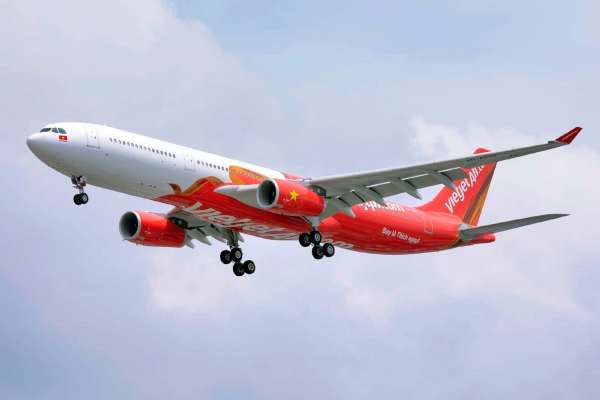
Yet that hasn’t stopped Vietnam’s fast-growing low-cost carrier VietJet from taking a serious look at Australia’s domestic skies.
Reports that the airline is seeking regulatory approval to establish an Australian subsidiary have sent a ripple, perhaps even a minor tremor, through an industry that has grown rather accustomed to life as a cosy two-airline club.
Should the proposal win approval, VietJet would become the first overseas airline in more than a decade to directly challenge Qantas and Virgin Australia on domestic routes.
That prospect alone will have aviation executives dusting off old files marked “Tigerair”, “Bonza” and, for the historians among us, “Compass”.
None ended particularly happily.
The Australian market has never been an easy nut to crack. Distances are vast, airport charges are hefty, fuel remains stubbornly expensive and Australian travellers, while forever hunting bargains, can be fiercely loyal when things go pear-shaped.
Many have tried. Most have failed.
But dismissing VietJet would be a mistake.
Unlike some previous challengers, this is not a start-up arriving with a handful of leased aircraft and a PowerPoint presentation full of optimism. VietJet is already a major force in Asian aviation.
The carrier has spent the past decade transforming itself from an ambitious newcomer to one of the region’s largest low-cost airlines. Today, it carries millions of passengers annually across an extensive domestic and international network.
Importantly, it has already demonstrated an ability to export its business model.
Its Thai subsidiary, Thai VietJet, has become an established player in one of Asia’s most competitive aviation markets, while the airline has recently expanded into Kazakhstan through another affiliated operation.
That international experience could prove invaluable if Australia becomes its next frontier.
And Australia is certainly no stranger to VietJet.
The airline already serves Sydney, Melbourne, Brisbane and Perth from Vietnam, steadily increasing frequencies as demand between the two countries has surged.
Vietnam, after all, is no longer merely a backpacker’s paradise. It has become one of Australia’s fastest-growing inbound and outbound leisure markets, attracting holidaymakers, business travellers, students and a rapidly expanding visiting friends and relatives segment.
In simple terms, Australians have discovered Vietnam in a big way.
The beaches help.
So does the pho.
Industry observers believe any Australian domestic operation would initially focus on the nation’s lucrative trunk routes, Sydney-Melbourne, Melbourne-Brisbane, and perhaps selected leisure destinations where passengers remain highly price-sensitive.
Those routes are currently dominated by Qantas, Jetstar and Virgin Australia.
Additional competition would almost certainly place downward pressure on fares.
For travellers still recovering from post-pandemic sticker shock when booking a domestic flight, that could be very welcome news indeed.
Naturally, significant hurdles remain.
Australia maintains strict rules governing airline ownership, licensing and operational certification. Establishing a local airline requires substantial investment, extensive regulatory scrutiny and no small amount of patience.
The process is neither quick nor cheap.
Even if approvals are secured, VietJet will discover what every aspiring airline eventually learns: winning market share in Australia can be considerably easier than making money.
Just ask Bonza.
Still, the timing may be favourable.
Passenger demand remains robust, tourism operators continue calling for increased domestic capacity, and consumers are increasingly receptive to alternative carriers offering genuine value.
The incumbents are unlikely to quietly surrender market share.
Qantas has spent decades defending its dominant domestic position with all the enthusiasm of a farmer protecting the last cold beer in the esky. Virgin Australia, meanwhile, has rebuilt strongly and remains fiercely competitive.
A three-way battle, particularly one involving an aggressive low-cost operator, would fundamentally reshape Australia’s domestic market.
That, in turn, could deliver lower fares, more choice and improved connectivity for travellers and tourism businesses alike.
For now, however, Australia’s aviation industry remains in wait-and-see mode.
Regulatory approval is far from guaranteed, and aviation history is littered with ambitious plans that never progressed beyond the drawing board.
But one thing is certain.
If VietJet succeeds, Australia’s airline landscape could soon become a great deal more interesting.
And in an industry not generally renowned for dull moments, that is saying something.
By: Christine Nguyen – © 2026.
Read Time: 4 minutes.
Author Bio:
 Christine’s story is one of quiet courage, told without fuss and lived with remarkable grace. She arrived in Australia as a young refugee from Vietnam, carrying little more than hope, family, and a curiosity that refused to be extinguished. Sydney became home, built patiently, brick by careful brick.
She studied Tourism at TAFE and soon found her place in inbound travel, working with one of the city’s leading destination companies. Christine loved showing visitors the Australia that lives beyond postcards, warmer, truer, and far more interesting.
When the sea began to whisper, and life asked for a gentler rhythm, she listened. Designing brochures, writing blogs, she discovered storytelling waiting quietly inside her.
Today, at Global Travel Media, Christine writes with warmth and wisdom, reminding us, softly and persuasively, why travel still matters.











