

There’s a quiet truth in tourism that veterans know well: people don’t stop travelling because they’ve lost interest, they hesitate because they’ve lost confidence. And in a world where misinformation can spread faster than a boarding call, restoring that confidence has become something of an art form.
Step forward Brand USA, which this week has made a decisive play to reclaim the narrative.
At the twin global stages of the U.S. Travel Association’s IPW in Fort Lauderdale and IMEX Frankfurt in Germany, the organisation unveiled an expanded strategy designed not just to inspire travel, but to remove the lingering doubts that keep wallets closed and suitcases unpacked.
At the centre of it all is a familiar banner, America the Beautiful, now given fresh muscle with two new initiatives that aim to turn curiosity into confirmed bookings.
A three-part playbook: inspire, reassure, convert
If tourism marketing were theatre, Brand USA is now running a well-rehearsed three-act performance.
The first act, America the Beautiful, remains the headline act, broad, aspirational, and designed to stir the imagination. Since its global debut last October, it has struck a chord, with more than seven in ten surveyed travellers reporting increased interest in visiting the United States.
But inspiration alone doesn’t fill aeroplanes.
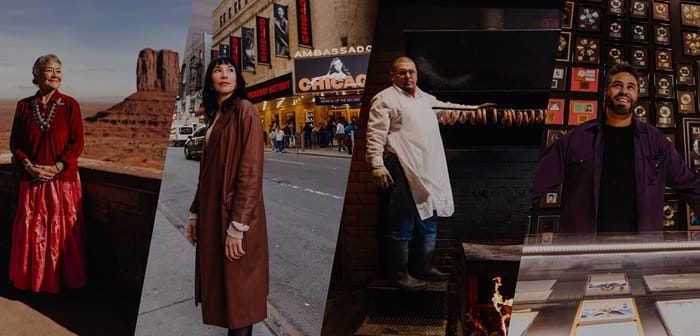
Enter the second act: American Originals, a storytelling series that leans into the country’s cultural DNA. Think less brochure, more narrative. Less checklist, more character study. From the cinematic sweep of Monument Valley to the rhythm of Memphis and the restless energy of New York City, the series taps into the people and places that have shaped global culture.
And then comes the third act, the one that may well make the biggest commercial difference.
Clearing the fog with facts
The cleverly titled Get Facts. Get Going. Is Brand USA’s answer to a problem the industry has danced around for years: confusion?
Visa requirements, entry procedures, fees, and border processes have become a tangle of half-truths, outdated blog posts, and social media speculation. For many would-be travellers, the uncertainty has been enough to delay or abandon plans altogether.
Fred Dixon, President and CEO of Brand USA, addressed it head-on.
“We have an opportunity to further build traveller confidence and inspire visitation,” Dixon said. “We want international visitors to know that we are open for business and warmly welcome them.”
The initiative serves as a single, authoritative hub, consolidating accurate, real-time information on entry policies and requirements. In doing so, it replaces rumour with reassurance, a move that feels both overdue and entirely necessary.
For those inclined to check the fine print (and increasingly, who isn’t?), the resource is available via
Visit the USA Entry Information
Timing is everything
The timing of this expanded push is no coincidence. The United States is entering what can only be described as a golden run of global attention.
The FIFA World Cup looms large, drawing millions of eyes and visitors. Add to that the country’s 250th anniversary and the centenary of the legendary Route 66, and you have a rare alignment of events capable of driving sustained inbound demand.
In tourism terms, this is what insiders call a “once-in-a-generation runway”.
Brand USA, to its credit, is not leaving that opportunity to chance.
Partnerships and precision
Behind the scenes, there’s another layer at work, one that speaks to a more mature, data-driven approach.
The expanded platform opens the door for deeper integration with destination partners such as South Dakota and Alabama, alongside corporate heavyweights like Hilton. The aim is simple enough: extend reach, sharpen targeting, and ensure the message lands where it matters most.
It’s a far cry from the spray-and-pray campaigns of years gone by. Today’s tourism marketing is precise, measured, and increasingly accountable.
Technology smooths the path
Of course, messaging can only go so far if the experience doesn’t match the promise.
Here, too, the United States appears to be making quiet but meaningful progress. Technological improvements from Mobile Passport Control to expanded Trusted Traveller programs such as Global Entry are steadily reducing friction at the border.
As Dixon noted, “Technological improvements… are making the entry process more seamless than ever before.”
That may not sound glamorous, but anyone who has endured a long-haul arrival queue knows it’s the sort of detail that shapes lasting impressions.
Storytelling with substance
Meanwhile, American Originals offers something the industry occasionally forgets: travellers don’t just buy destinations—they buy stories.
The series leans into emerging travel trends, from set-jetting to culinary exploration and live entertainment, packaging them in a way that feels both authentic and aspirational.
For those keen to explore, the content is available via the American Originals Series.
And for broader planning inspiration: America the Beautiful Platform.
The bigger picture
Taken together, these initiatives reflect a broader shift in how destinations compete.
It’s no longer enough to be desirable; you must also be understandable. Clear. Accessible. Reassuring.
In that sense, Brand USA’s latest move feels less like a campaign refresh and more like a recalibration of priorities.
Confidence, after all, is the currency of modern travel.
And if Brand USA has read the room correctly, restoring that confidence may prove to be its most valuable export yet.
by Jason Smith – (c) 2026.
Read Time: 5 minutes.
About the Author.
 Jason Smith didn’t learn travel from textbooks. He learned it in airports, taxis and hotel lobbies, watching the business unfold long before he played his own part. Half American, half Asian, he grew up around the quiet workings of tourism, where people come and go, and stories rarely stand still.
Bangkok came first, then formal study, then a career that carried him through Singapore, Malaysia and Vietnam. Each place left something behind. In the end, Thailand felt like home, and I landed a senior role in hotel sales.
Then everything stopped. Borders shut, planes grounded, and Jason found himself back in America with time to reflect.
Now at Global Travel Media, he writes travel as it really is, not polished, not perfect, but human, and all the better for it.











