

There was a time when overseas travel meant two certainties: an overstuffed passport wallet and at least one heated airport debate over who forgot to repay the dinner bill in Rome.
Thankfully, those days may finally be headed for the same departure gate as traveller’s cheques.
Global fintech powerhouse Wise has rolled out a suite of new travel-focused features aimed squarely at calming what many Australians quietly describe as “holiday money panic”. And judging by the numbers, it appears plenty of Aussies are boarding flights with more financial stress than sunscreen.
Fresh research released by Wise reveals a hefty 67 per cent of Australians experienced financial anxiety during their most recent overseas adventure. Frankly, that figure will surprise absolutely nobody who has ever attempted to decipher a foreign ATM fee at 2 am while jet-lagged and desperately hunting for cash.
The new tools sit inside Wise’s expanding Travel Hub platform, designed to remove much of the confusion surrounding international spending, currency conversion and shared travel costs.
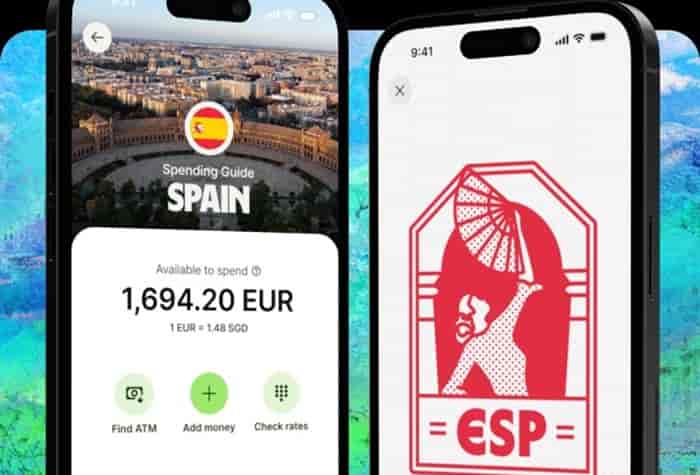
And in a rather clever touch that feels part travel diary, part gamified finance, travellers using their Wise card overseas can now collect digital passport stamps within the app. Tap on the stamp to unlock destination-specific insights, including guidance on low-fee ATMs, navigating local public transport, understanding exchange rates, and working out when cash still matters in an increasingly card-driven world.
It is the sort of practical travel advice usually dispensed by a seasoned backpacker over a lukewarm airport beer, only now it arrives instantly on your phone.
Wise has also partnered with DragonPass to offer access to more than 1,400 airport lounges worldwide directly through the Wise app. Better still, travellers can often purchase passes at a lower price than standard walk-in rates.
That alone may earn Wise a standing ovation from economy-class passengers facing delayed departures and terminal coffee priced like vintage champagne.
But perhaps the most interesting aspect of the rollout is Wise’s recognition that travel money stress rarely travels alone.
According to the company’s research, almost half of Australians, 46 per cent, admitted to arguing with someone about travel-related money, while 30 per cent experienced disputes over unpaid expenses during trips.
Anyone who has survived a group holiday spreadsheet will understand the emotional battlefield all too well.
Families, meanwhile, appear to carry an even heavier burden. Parents travelling with children under 18 reported significantly higher financial anxiety levels, with 75 per cent saying overseas spending created stress during their latest holiday.
Wise believes its new “Young Explorers” cards could help ease some of that pressure.
The feature allows parents to issue physical Wise cards to children aged 6 to 17, alongside digital cards for kids aged 13 and above. The system includes a child-friendly version of the app while still allowing parents to maintain complete control over funding, spending limits and oversight.
In perhaps the most reassuring detail for modern households, both parents can simultaneously monitor activity on the account. No mystery spending sprees. No accidental souvenir shop catastrophes. No suspicious quantities of airport confectionery are disappearing unnoticed.
For travelling friendship groups and extended families, Wise has also introduced “Group Spending”, enabling up to 10 account holders to share a central spending pool for meals, transport and activities.
Each participant receives a linked virtual card, while the main account holder retains ownership and visibility of the funds.
In simpler terms, it removes the need for awkward conversations that begin with “Mate, you still owe me for Barcelona.”
The companion “Bill Split” feature tackles another classic travel headache: splitting restaurant or activity costs among multiple people and across multiple currencies. Travellers can pay once using their Wise card, divide the expense inside the app, then request repayment in the recipient’s preferred currency.
It sounds simple, but anyone who has attempted to untangle multi-currency holiday expenses after several sangrias knows simplicity is often priceless.
Wise has also added PayID integration for Australian customers, allowing users to link their mobile number or email address directly to their Wise account. The result is faster, more seamless transfers from Australian bank accounts without the need to exchange lengthy BSB and account number details.
In an era where convenience increasingly determines customer loyalty, the move feels less like a feature upgrade and more like basic survival.
Tristan Dakin, Australia and New Zealand Country Manager at Wise, said the company’s latest innovations were designed to reduce friction during travel and return the focus to the experience itself.
“Aussies love travel, but we’ve all experienced the stress of navigating different currencies, being overcharged by hidden fees, and keeping tabs on spending with friends and family,” Dakin said.
“With these new features, we’re taking convenience to the next level, helping travellers to spend less time worrying about money, and more time enjoying their trip.”
That sentiment may resonate strongly as Australians continue travelling internationally in growing numbers despite persistent cost-of-living pressures at home.
For many travellers, budgeting anxiety has become an unwelcome carry-on item. Wise appears determined to ensure it no longer gets a boarding pass.
And perhaps that is the real win here. Travel has always promised freedom, discovery and a brief escape from everyday pressures. Anything that removes financial friction from the journey is likely to find a willing audience.
Because while nobody minds collecting passport stamps, collecting hidden bank fees has never been part of the holiday dream.
by Bridget Gomez – (c) 2026.
Read Time: 4 minutes.
About the Author.
 Bridget has never been built for stillness. Of Portuguese heritage, she began as a nurse, tending veterans at the Repatriation Hospital, listening to stories as colourful as the life she was yet to live. It was worthy, steady work, but wanderlust, as always, proved louder than routine.
So, she traded starch for a backpack and disappeared for a year, chasing trains, sunsets and the occasional regrettable glass of wine. She wrote everything down: the dust, the laughter, the missteps, the magic. Those notebooks became a travel blog, then a habit, then a calling.
Eventually, she found Global Travel Media, or perhaps it found her.
Today, Bridget writes with heart, humour and a dash of mischief, still travelling, just now with words.











