

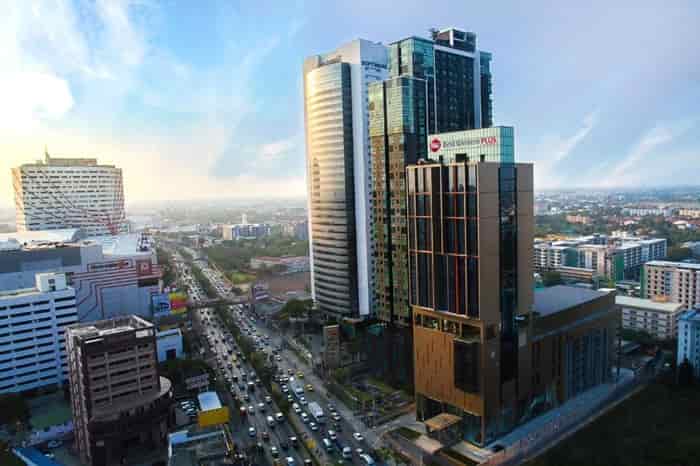
In a Bangkok hotel market defined by volatility and competition, Matthew Horvat speaks with the calm pragmatism of an operator who has learned to adapt quickly. Nearly six years with Best Western Hotels & Resorts and two years on the ground in Thailand’s capital have given him a clear view of what works, and what does not, in one of Asia’s most dynamic hospitality environments.
We meet at Vīb Bangkok Sanam Pao, one of three properties under his remit, alongside the Best Western Nada Don Mueang Airport and the Wanda Grand Hotel. Each serves a distinct segment, but Horvat’s approach to all three is consistent: operational discipline, brand accountability and a focus on what today’s traveller actually values.
“The traveller is both budget conscious and luxury conscious,” he says. “But for us, particularly in Bangkok, the corporate and conference market is critical. That’s what drives the local economy and underpins our business.”
Midscale momentum
Horvat aligns with a broader industry trend: the resilience of the four-star sector. While luxury hotels continue to define aspiration, he sees midscale properties as better equipped to handle disruption.
“The midscale was able to adapt faster,” he explains. “Luxury offers a more fixed experience. Our segment can pivot and swivel quickly. That’s down to operational efficiency.”
That agility is not theoretical. It is central to how Horvat runs his three hotels. When inbound markets soften, the response is immediate.
“We can target different markets swiftly, especially domestic and regional demand. That flexibility is crucial when international travel slows.”
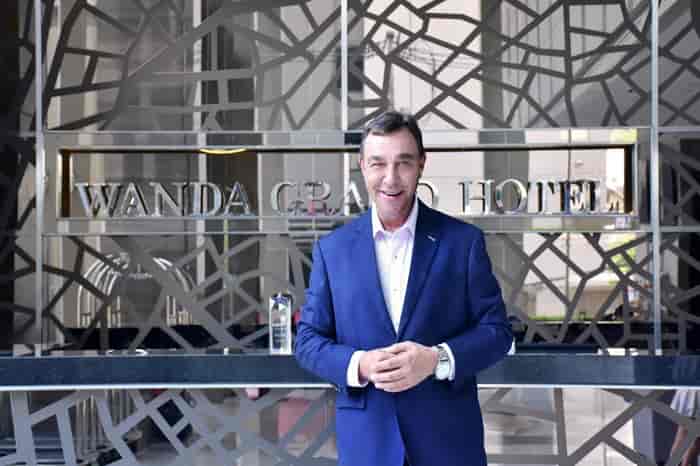
Matthew Horvat – Cluster General Manager – Best Western Plus Wanda Grand Hotel
Time over price
Contrary to the assumption that corporate travel is driven primarily by cost control, Horvat suggests a more nuanced shift.
“I’d say corporates are more location savvy than cost savvy,” he says. “Time is the real currency. Executives want efficiency. Good bed, strong Wi-Fi, a reliable shower, breakfast, and yes, good coffee.”
It is a simple checklist, but one that reflects a broader recalibration in business travel. Connectivity and convenience now outweigh traditional markers of luxury.
Brand discipline and accountability
Horvat’s tenure with Best Western has clearly shaped his management philosophy. He repeatedly references the brand’s systems and benchmarks as foundational to his approach.
At the core is performance transparency. Each property is measured against guest satisfaction metrics, particularly on platforms such as Tripadvisor, where a minimum rating of 4 out of 5 is required.
“If we fall below that, we need to implement immediate improvement plans,” he says. “There are clear benchmarks across service, facilities and food. Everything is constantly reviewed.”
This extends beyond guest feedback. Annual quality assurance inspections, often unannounced, ensure compliance with brand standards.
“You have to pass. If not, you act quickly. That’s key to maintaining brand integrity.”
For Horvat, these systems are not constraints but safeguards.
“They give me confidence. Whether a guest books through an OTA or direct, they know what they’re getting.”
Navigating distribution and trust
Distribution remains a complex landscape. Online travel agencies continue to dominate, but Horvat is conscious of shifting consumer behaviour, particularly with the rise of AI-driven search.
“OTAs are crucial, but security is becoming more important,” he notes. “Personally, I would book through a trusted OTA or directly via the brand website. That’s where the confidence is.”
While AI is beginning to influence how travellers research and compare options, Horvat believes trust and brand credibility will remain decisive factors.
Three hotels, three strategies
Managing three distinct properties requires segmentation rather than uniformity.
At Vīb Bangkok Sanam Pao, the focus is on lifestyle-driven offerings, blending corporate and leisure demand in a well-connected inner-city location.
Nada Don Mueang Airport serves a transient market, capitalising on proximity to the airport and short-stay convenience. “If I’ve got a 7am flight, I’m staying there,” Horvat says. “You can’t beat ten minutes to the terminal.”
Wanda Grand Hotel, by contrast, is a large-scale conference operation with 14 meeting rooms and a ballroom that can host up to 1,000 guests. It is a key player in Bangkok’s meetings and events segment.
“They’re three completely different businesses,” he says. “But the principles are the same. Efficiency, service and understanding your customer.”
A philosophy shaped by experience
Horvat’s time with Best Western has instilled a pragmatic, systems-driven mindset. In a market prone to shocks, from geopolitical tensions to fluctuating demand, his emphasis on flexibility and measurable standards stands out.
“There are always speed humps,” he says. “The key is how quickly you respond.”
It is a straightforward philosophy, but in Bangkok’s competitive hotel landscape, it may be precisely what keeps the midscale segment ahead of the curve.
by Roderick Eime – (c) 2026.
Read Time: 4 minutes
About the Author.
 Widely published, multiple award-winning specialty travel and tourism journalist and photographer with a broad general knowledge.
Rod’s experience in professional media spans four decades, giving him a firm grounding in traditional media as well as an insight into the evolution of digital and online communications.
A natural storyteller, Rod seeks to entertain, inspire and engage readers as well as inform and educate. Whether it is an adventure travel story amongst reindeer herders in Siberia or a potentially stodgy end-user account for an industrial lubricant manufacturer, Rod believes a reader should be enriched and motivated.
His photography has won several awards, including a rare double ‘Travel Photographer of the Year’ gong from the Australian Society of Travel Writers in 2011 and 2013.
An early adopter of digital and online publishing, he first published web pages in 1994.
Learn more at www.traveloscopy.com or contact him at [email protected].











