

There are moments in travel when the numbers don’t just add up, they sing. Loudly. With a brass band and a confident swagger.
This is one of them.
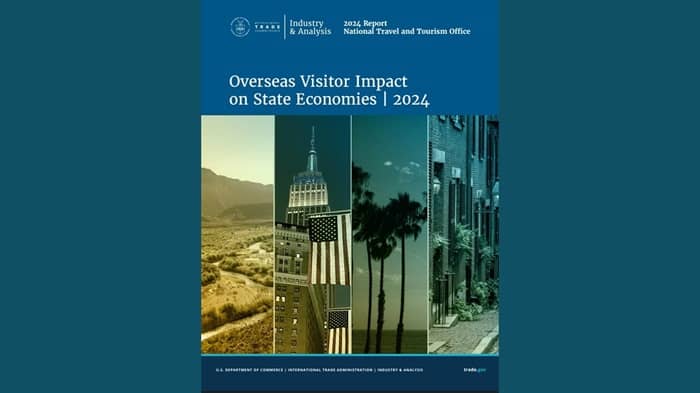
The United States has quietly well, not that quietly posted a tourism result that would make even the most seasoned industry veteran raise an eyebrow and pour another coffee. In 2024, overseas visitors injected US$169.8 billion into the American economy, supporting close to 906,000 jobs.
That’s not recovery. That’s a full-throated return to form.
And perhaps the most surprising part? It’s taken nearly three decades for anyone to map this impact properly across individual states. One suspects the accountants have been busy elsewhere.
The Visitors Are Back, and They’ve Brought Their Wallets
A total of 35.2 million overseas travellers arrived in the U.S. last year, excluding Canada and Mexico, which, as always, play by slightly different rules.
They came from everywhere: China, India, the UK, Brazil, Japan, Australia, and they didn’t come lightly packed. These are not the cautious spenders of the pandemic era. These are travellers making up for lost time, and quite happily paying for the privilege.
They filled hotel rooms, queued for Broadway, bought sneakers they didn’t strictly need, and in many cases, paid tuition fees that would make your local mortgage broker blink twice.
It’s tourism, yes, but it’s also export revenue in disguise.
New York, Naturally, Steals the Scene
Some things in travel never change. New York, for instance, continues to behave like the industry’s headline act, and why wouldn’t it?
The state pulled in US$32.1 billion, welcomed nearly 10 million overseas visitors, and supported more than 156,000 jobs.
It’s not just a destination, it’s a habit.
California followed with its familiar blend of cinema and coastline, while Florida did what Florida does best: sunshine, scale, and a well-oiled tourism machine. Texas and Massachusetts rounded out the top five, each carving out its own niche in the global travel conversation.
Together, these five states accounted for almost 59% of all overseas spending, a tidy US$99.7 billion.
Not quite a closed shop, but certainly a well-guarded one.
Meanwhile, Across the Rest of the Map…
Away from the usual suspects, something quietly encouraging is happening.
Twenty-six states and territories pulled in more than US$1 billion each in overseas visitor spending.
That’s not luck, that’s diversification.
Nevada continues to turn entertainment into an economic engine. Illinois thrives on business travel and conventions. Hawaii remains irresistible, as it has been for decades, while places like Arizona, Georgia and Washington are steadily building their own international following.
The story here isn’t just about the giants. It’s about a broadening base, an industry spreading its wings again.
Jobs: The Bit That Actually Matters
For all the talk of billions, it’s the employment figure that deserves a quiet moment of respect.
Nearly 906,000 jobs are tied directly to overseas visitor spending.
That’s chefs, drivers, hotel staff, tour guides, retail workers, the people who make travel work in the real world.
And here’s where it gets interesting. Not all spending carries the same weight. A dollar spent on food or education tends to generate more jobs than one spent elsewhere.
It’s a subtle detail, but an important one and the sort of nuance that separates a busy destination from a truly successful one.
Who’s Paying the Bills?
The top 10 international markets account for 59% of total overseas spending, with China and India leading the charge.
There’s a quiet shift happening here.
Yes, the traditional markets remain dependable, but the emerging players are no longer “emerging”. They’ve arrived, wallets open, expectations high, and patience somewhat limited.
For destinations, the message is clear: adapt or be politely ignored.
A Rare Thing: Useful Data
The report itself, compiled by the National Travel and Tourism Office, is built on solid ground, drawing from its Survey of International Air Travellers and broader economic datasets.
It measures only direct spending, meaning the wider ripple effect isn’t even counted. If anything, the figures are conservative.
Which, in this business, is rather refreshing.
Of course, there are the usual footnotes; some states carry smaller sample sizes, a reminder that not every number arrives fully polished. But the overall picture is clear enough.
And it’s a strong one.
The Final Word
If there’s a lesson here, there usually is one:
International tourism isn’t just back. It’s evolved.
It’s bigger, more valuable, more competitive, and perhaps a little more demanding than before. Travellers expect more, spend more, and move with purpose.
And in 2024, they delivered nearly US$170 billion worth of impact to the United States.
Not bad for an industry that was, not so long ago, grounded.
Now, it’s flying again and judging by these numbers, it’s picked up a rather favourable tailwind.












