

There are travel trends that arrive with fanfare, new routes, shiny aircraft, and reimagined hotel brands. And then there are the quieter shifts, the ones that don’t shout but matter far more. Like the slow, steady disappearance of the world’s food traditions.
No press conference. No ribbon cutting. Just recipes fading, techniques forgotten, and stories quietly slipping out of circulation.
That, in essence, is what’s prompted the World Food Travel Association to step in with a rather pointed reminder: if we don’t pay attention now, we may not have much left to celebrate later.
Enter World Culinary Heritage Day, landing each year on April 18. Not so much a marketing exercise as a gentle but firm nudge to the global travel community and anyone who has ever cooked, eaten, or travelled with curiosity to look again at what’s on the plate.
And more importantly, who put it there?
Not just food. Never was.
The travel industry has long leaned on food as a selling point. “Authentic cuisine” has done plenty of heavy lifting in brochures over the years. But authenticity, as it turns out, isn’t something you can standardise, package, and roll out at scale.
Because it’s human.
As Erik Wolf neatly puts it:
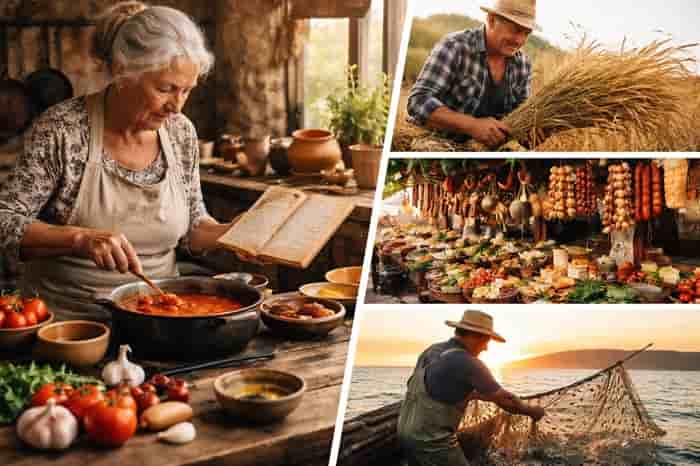
“Culinary heritage is not simply about what is on the plate, it is about the grandmother whose recipe has been passed down for generations, the farmer cultivating a near-forgotten grain, the fishing community whose techniques predate written history.”
There’s a certain old-world truth in that. Food, at its best, is a memory you can taste.
And right now, too much of that memory is being lost.
The numbers tell their own story
A comparative review across 29 countries suggests that around 13% of traditional culinary practices have either disappeared or are teetering on the edge. Not collapsed overnight, mind you, this isn’t a crisis that makes headlines, but eroded slowly, almost politely.
Globalisation has done what globalisation does: streamlined, simplified, scaled. Add in shifting consumer habits and the march of industrial food systems, and suddenly that hand-ground spice blend or time-honoured fermentation method looks… inefficient.
The trouble is, efficiency rarely tells a good story.
And in travel, the story is everything.
A subtle pivot with sharper intent
This isn’t the Association’s first outing. For eight years, it ran World Food Travel Day, a perfectly respectable initiative that spoke largely to industry insiders. The rebrand to World Culinary Heritage Day, however, feels more deliberate.
Less trade jargon. More cultural weight.
It’s a small linguistic shift, but an important one. “Food travel” might appeal to marketers. “Culinary heritage” speaks to communities, policymakers, educators, and the people who can actually keep traditions alive.
In other words, it broadens the table.
Anyone can pull up a chair
There’s no barrier to entry here, which is rather the point.
You don’t need a commercial kitchen or a destination marketing budget. Just a story worth telling.
The brief is refreshingly straightforward:
- Share a dish, an ingredient, or a food tradition
- Explain where it comes from and why it matters
- Acknowledge the people behind it
- Tag it with #CulinaryHeritageDay
That’s it.
One suspects the simplicity is intentional. In a world drowning in campaigns, the ones that cut through tend to be the ones people can actually participate in without needing a manual.
The invisible workforce
If there’s a quiet hero in all this, it’s the people who’ve been doing the work long before hashtags arrived.
Farmers grow heritage crops because their parents did. Fishers work the way their grandparents taught them. Home cooks who never thought of themselves as custodians of culture but are, nonetheless.
They don’t usually make the industry panels. They’re rarely quoted in trend reports. Yet without them, much of what the travel sector proudly sells as “local experience” would simply not exist.
This initiative, at the very least, gives them a name and a measure of recognition.
A timely nudge for the industry
For tourism operators and destinations, there’s a clear takeaway.
You can build a resort anywhere. You can replicate a menu. But you cannot recreate heritage once it’s gone.
The irony is that the industry has spent years chasing differentiation, when it has always had its most powerful asset sitting quietly in plain sight.
Local food, done properly, is impossible to copy.
And increasingly, it’s what travellers are chasing, not just flavour, but meaning.
More than a date on the calendar
World Culinary Heritage Day forms part of the broader Taste of Place movement, an effort to embed food culture into tourism in a way that’s both sustainable and commercially sensible.
It’s not about nostalgia for nostalgia’s sake. It’s about recognising that what makes a place distinctive is also what makes it economically resilient.
Protect the tradition, and you protect the destination.
Lose it, and you’re left with something far less interesting.
The bottom line
The travel sector has never been short of big ideas. Some land. Some don’t. This one feels different, quieter, perhaps, but grounded in something enduring.
Because while aircraft change, hotels evolve, and trends come and go, the simple act of sharing real food with a story behind it has always been at the heart of travel.
The trick now is making sure those stories don’t disappear before we’ve had the chance to hear them.
by Prae Lee – (c) 2026.
Read Time: 4 minutes.
About the Author.
 You can tell a great deal about a person by how they meet a Bangkok morning. Prae Lee doesn’t charge into it; she glides, unhurried, as if time itself has agreed to behave. There is a calm assurance about her, the sort earned by knowing both your roots and your destination.
A graduate of Chulalongkorn University, she earned her business degree with quiet pride, then further polished it in Singapore and Australia. Travel didn’t change her. It refined what was already there: curiosity, discipline, grace.
Back in Bangkok, she slipped modern life into the family business, mastering social media with an instinct for listening and selling with Thai gentleness.
Prae never seeks attention, yet everything she touches grows brighter.
Now with Global Travel Media, she writes with authenticity, drawing on culture, travel and a rare, steady confidence.











