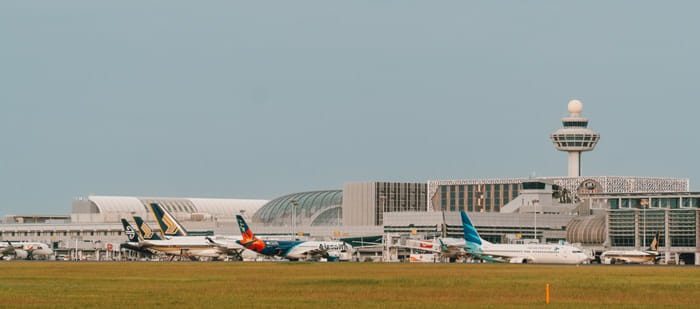
There are airports that chase growth, and then there are those that simply get on with the job and let the numbers speak for themselves. Singapore Changi Airport has always belonged to the latter camp, quietly efficient, occasionally brilliant, and rarely rattled.
So, when the first-quarter figures for 2026 landed, they didn’t scream. They didn’t need to.
They simply confirmed what the industry already suspected: Changi is playing the long game and winning it.
Between January and March, the airport handled 17.6 million passengers, a 2.3% lift on the same period last year. Aircraft movements edged up 1.4% to 95,300. Modest? On paper, perhaps. But in a quarter shaped by geopolitical disruption, it’s the kind of steady progress that seasoned operators respect.
And here’s the kicker: over the 12 months to March, Changi processed 70.4 million passengers, the highest rolling annual total in its history. Not bad for an airport navigating global uncertainty with one hand tied behind its back.
When One Door Closes…
March told a sharper story. Traffic between Singapore and the Middle East fell a staggering 80% year-on-year, a sobering reminder that aviation remains at the mercy of events far beyond the runway.
But here’s where Changi’s experience shows. Rather than flinch, the network flexed.
North Asia and Europe stepped up, quietly absorbing the displaced demand. Airlines, sensing both risk and opportunity, added around 90 extra flights in March alone, redirecting capacity to cities like Frankfurt, London, Munich, Paris, Perth and Sydney.
It’s not glamorous work, this constant reshuffling of routes and capacity. But it’s what keeps global travel moving when the map suddenly changes.
China Still Calls the Tune
If there’s a constant in Changi’s traffic mix, it’s China, and once again, it led the charge.
Indonesia, Malaysia, Australia and India rounded out the top five markets, a line-up that reads like a who’s who of Asia-Pacific demand.
Yet the real momentum came from the up-and-comers. Vietnam surged 26.5% year-on-year, while China itself grew 17.7% among the airport’s top markets. That’s not just recovery, that’s acceleration.
At the route level, the usual suspects, Kuala Lumpur, Bangkok, Jakarta, Tokyo and Hong Kong, held their ground. Meanwhile, Shanghai, Taipei and Tokyo posted the strongest growth among the busiest corridors.
In other words, the region isn’t just back. It’s moving.
Freight: The Quiet Achiever
While passengers grab the headlines, cargo keeps the lights on, and Changi’s freight numbers deserve a quiet nod.
The airport handled 517,000 tonnes in Q1, up 7.6% year-on-year. Not spectacular, perhaps, but in a world of fragile supply chains and cautious trade, it’s a solid performance.
China, the United States, Australia, Hong Kong and India dominated cargo flows, reinforcing Changi’s role as a key node in global logistics.
A Measured Response
Mr Lim Ching Kiat, Executive Vice President for Air Hub and Cargo Development, summed it up without fuss:
“Travel demand in the quarter remained strong, bolstered by growth in North Asia and Europe. While there was some impact from the Middle East crisis, we were resilient and worked closely with our airline partners in response to evolving passenger demand and shifts in travel patterns.”
That word resilient does a lot of heavy lifting here. Because behind it sits a network that adapts quickly, airlines willing to redeploy capacity, and a hub that knows its strengths.
“We will continue to monitor the global geopolitical situation and work with airlines to provide passengers with alternatives across our diversified network,” he added.
In other words: steady hands on the wheel.
New Routes, Old Wisdom
Changi didn’t sit still either.
Scoot added Chiang Rai and Palembang to its network, while Jetstar Airways opened new links to Sunshine Coast and Newcastle (via Bali), pushing Changi’s Australian connections to a record nine cities.
It’s a reminder that even in uncertain times, expansion doesn’t stop; it just becomes more deliberate.
On the cargo side, Qantas Freight joined the fold with a Sydney–Shanghai–Singapore service, adding capacity and giving shippers more flexibility across Asia and beyond.
The View from the Tower
There’s a temptation in aviation reporting to chase the dramatic, the record-breaking surge, the headline-grabbing collapse.
But Changi’s first quarter tells a more interesting story.
This is an airport that understands balance. When one region falters, another rises. When demand shifts, capacity follows. And when uncertainty looms, experience takes over.
No fuss. No theatrics. Just results.
And in a business where fortunes can turn faster than a departing flight, that kind of consistency is worth its weight in gold.