

Australia’s regional tourism sector, long regarded as the quiet achiever of the national economy, is suddenly looking rather fragile, and not for the first time.
A troubling mix of flight cancellations, suspended air routes, and persistent fuel conservation messaging has begun to sap traveller confidence, particularly beyond the comfortable two-hour radius of capital cities. For regions already battered by bushfires, floods and cyclones, the timing could hardly be worse.
According to Australian Regional Tourism, the warning signs are no longer subtle; they are flashing.
“Demand is weakening in regions more than two hours from capital cities, with bookings down by up to 40 per cent in some areas,” said Lauren Douglass, CEO of ART.
“In some regions, forward bookings from May onwards are now almost non-existent.”
That is not merely a seasonal dip; it is a structural wobble. And in regional Australia, where tourism often underpins the local café, the family-run motel, and the tour operator who knows every bend in the river, such a wobble can quickly become existential.
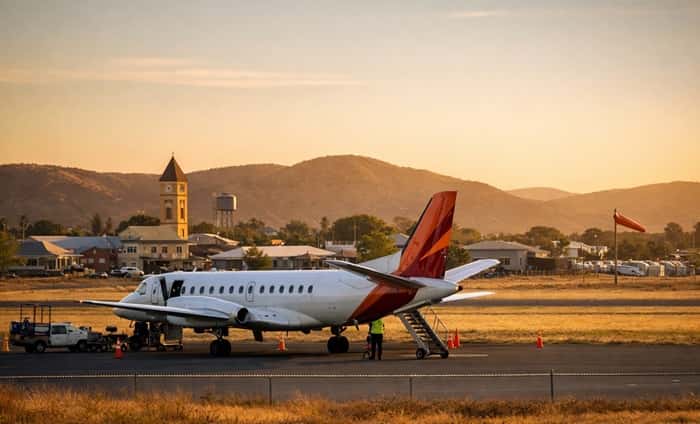
The aviation squeeze sits at the heart of the problem. Reduced connectivity, whether through route suspensions or scaled-back services, has effectively placed parts of regional Australia at arm’s length from their traditional visitor markets. It’s a blunt reality: fewer seats mean fewer visitors, and fewer visitors mean fewer dollars circulating through already strained communities.
At the same time, national calls for fuel conservation, though necessary, are having an unintended psychological effect. Travellers, ever sensitive to cost and perception, are quietly recalibrating their plans. The long weekend road trip, once a national pastime, is increasingly being reconsidered.
ART has been careful not to dismiss the broader national interest. Fuel conservation, after all, is not optional. But the organisation is equally clear that a more balanced approach is needed, one that recognises the unique vulnerability of regional economies.
“Regional tourism is now facing a crisis, particularly as confidence in domestic regional travel continues to weaken, and it requires national leadership,” Douglass said.
The call to action is measured but firm. ART is urging a targeted national response built on three pillars: restoring traveller confidence, safeguarding essential aviation links, and investing in long-term regional resilience.
It is a familiar refrain, but one grounded in hard-earned experience. Regional businesses, once closed, rarely reopen. The loss is not just economic; it is cultural and social, eroding the very fabric of communities that rely on a steady flow of visitors.
There is, of course, a broader narrative at play. Australia’s regions have shown remarkable resilience over the past decade, weathering disaster after disaster with a stoicism that borders on heroic. Yet resilience, as any seasoned operator will tell you, is not infinite.
The challenge now is to ensure that the next chapter is not one of quiet decline.
Because, as Douglass rightly notes, “Supporting regional tourism is not just about visitors, it’s about sustaining regional communities.”
And that, in the end, is the story that matters.












