

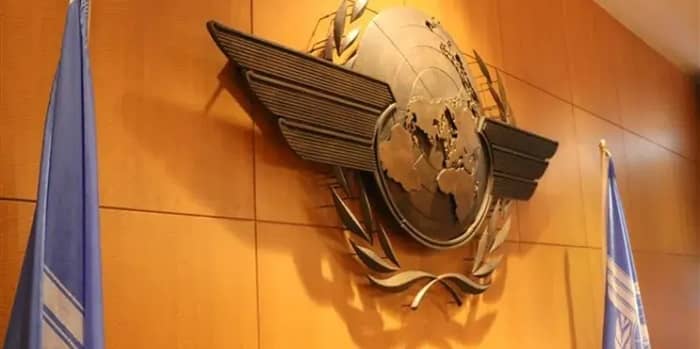
There’s a certain quiet language in aviation diplomacy. Carefully chosen words, politely delivered, and more often than not wrapped in layers of restraint. Which is why the latest move from the International Civil Aviation Organisation lands with rather more weight than usual.
In plain terms, ICAO has had enough.
At its Council session on 31 March 2026, the body formally condemned Iran for breaching the sovereign airspace of several Gulf states, among them Bahrain, Jordan, Kuwait, Oman, Qatar, Saudi Arabia and the United Arab Emirates. It is not the sort of list any aviation authority wants to see grouped together in a single complaint.
At issue is a principle so fundamental it rarely needs restating: countries control their own skies. It has been that way since the Chicago Convention set the tone for modern aviation. ICAO’s message, delivered with notable firmness, is that this principle is not optional.
What appears to have tipped matters is the use of unmanned aircraft systems, drones, in plain English, over civilian infrastructure. Military intent aside, the concern for aviation is immediate and practical. Airspace is a carefully managed environment. Introduce uncoordinated activity, and the margins for error narrow quickly.
Airlines don’t deal in hypotheticals. If there is risk, they reroute. If rerouting becomes routine, costs follow. And if costs rise, so too do fares eventually, landing, as they always do, with the travelling public.
ICAO, referencing United Nations Security Council Resolution 2817, stopped short of theatrics but made its position unmistakably clear: cease the activity, and comply with international obligations. No grandstanding, just a line drawn where it ought to have been all along.
For the region, the timing is awkward. The Middle East remains one of aviation’s great crossroads, stitching together Europe, Asia and Africa with remarkable efficiency. Disruptions here are rarely local; they echo across global networks.
What’s unfolding is less about politics, though politics is never far away, and more about predictability. Aviation thrives on it. Crews, controllers, insurers and regulators all depend on the assumption that the system will behave as expected.
When it doesn’t, confidence wobbles.
And confidence, in this industry, is everything.
ICAO’s intervention may not resolve the issue overnight. These matters rarely do. But it does serve as a reminder, perhaps an overdue one, that the rules governing the skies were written for a reason and they still matter.
by Jill Walsh – (c) 2026.
Read Time: 2 minutes.
About the Author.
 Jill Walsh has always kept a pen close and a suitcase closer. She started out on media releases, then learned the trade properly by escorting press trips around the world, discovering which stories travel well and which need a sharper edit.
Before long, she wasn’t just promoting destinations, she was representing them, translating civic ambition and local pride into words people actually wanted to read. These days, semi-retired and happily so, Jill has traded departure boards for deadlines, joining old friend and colleague Stephen at Global Travel Media on a casual basis.
Her patch is the business end of wanderlust: balance sheets, route maps, tender wins and the numbers that quietly decide where travellers go. She writes with dry humour, clean prose and an old-school respect for facts, a steady voice when the market starts shouting.











