

There’s something quietly momentous about a first flight. Not the sort that makes a racket, mind you, but the kind that signals a shift, subtle, structural, and long overdue. And in Western Sydney, that shift has now begun in earnest.
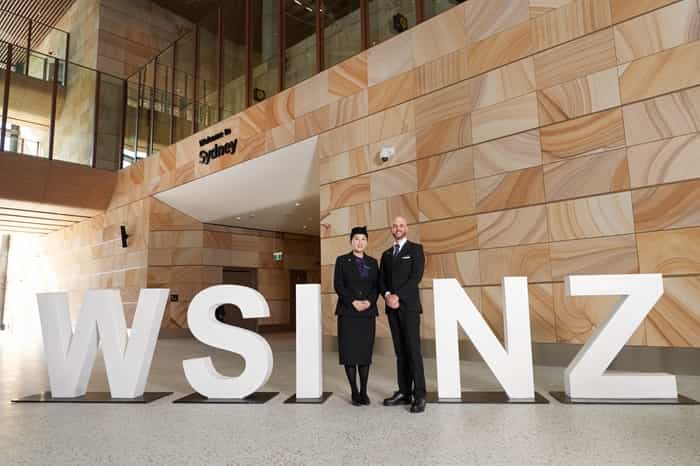
Tickets are officially on sale for the first international services from the long-anticipated Western Sydney International (Nancy-Bird Walton) Airport, with Air New Zealand stepping up as the inaugural carrier to bridge the Tasman from this new 24-hour gateway.
From 26 October, the airline will operate three weekly return services between Western Sydney and Auckland, marking a defining milestone not just for the airport, but for the broader aviation landscape in New South Wales.
A Second Sydney, At Last
For decades, Sydney has been a one-airport city carrying a two-airport ambition. Kingsford Smith has long done the heavy lifting, but the western basin, home to millions, has waited patiently for its own gateway.
Now, with WSI edging closer to full operation, that balance is beginning to right itself.
WSI CEO Simon Hickey, clearly aware of the symbolism, didn’t overplay the moment, but nor did he understate it.
“We’re delighted to have Air New Zealand as a trusted partner,” he said, noting the airline’s decision to bring forward its launch timetable.
It’s a pragmatic partnership. Three flights a week, Monday, Wednesday and Friday may not sound like a floodgate opening, but it’s precisely how enduring aviation networks are built: steadily, sensibly, and with demand in mind.
A Route With Purpose
The schedule itself is tailored with a traveller’s eye. Depart Auckland at 6:05 am, arrive in Western Sydney before 8 am. Return mid-morning, back across the Tasman by early afternoon. Efficient, predictable, and importantly, useful.
Aircraft will be drawn from Air New Zealand’s narrowbody fleet, with A321 and A320 jets configured entirely for economy seating. No frills, no fuss, just capacity where it’s needed.
And there is, by all accounts, plenty of that.
Lucy Hall, General Manager Short Haul and Domestic at Air New Zealand, pointed to the numbers that matter: a catchment of more than 2.5 million people in Western Sydney alone, including a sizeable New Zealand community.
“Flying directly into Western Sydney opens up a catchment… and supports stronger business, tourism and visiting friends and family links,” she said.
In other words, this isn’t speculative aviation it’s demand-driven, and long overdue.
More Than Just Another Runway
What distinguishes WSI isn’t simply geography; it’s intent.
Unlike its older sibling across town, this airport has been designed from the ground up with modern passenger expectations in mind: seamless processing, integrated technology, and the sort of efficiency that seasoned travellers have learned not to take for granted.
There’s also the small matter of operating around the clock, no curfews, no compromises. For airlines, that’s a rare commodity. For passengers, it’s freedom.
Government Backing, Economic Stakes
Behind the scenes, the machinery of government has been quietly and significantly engaged.
The $16 million Western Sydney International Take-Off Fund, jointly backed by the NSW Government and WSI, has helped secure early routes such as this one. The attached figures are not trivial: more than 162,000 international visitors are forecast, and an estimated $530 million in visitor expenditure.
NSW Minister for Jobs and Tourism Steve Kamper framed the development in broader economic terms, pointing to the state’s ambitious target of $91 billion in annual visitor expenditure by 2035.
It’s a big number. But then again, so is Western Sydney.
Federal Infrastructure Minister Catherine King struck a similarly measured tone, acknowledging the turbulence the aviation sector has weathered in recent years while expressing confidence in a rebound in trans-Tasman demand.
History would suggest she’s right. Few air corridors are as resilient or as culturally and commercially intertwined as that between Australia and New Zealand.
The Beginning, Not the End
What’s unfolding here is not a grand unveiling, but the laying of foundations.
Three flights a week will become four, then seven. One airline will become several. Routes will expand, frequencies will rise, and before long, Western Sydney will no longer be described as “new” but as essential.
For now, though, there’s a certain satisfaction in the simplicity of it: tickets on sale, schedules published, and a runway ready to welcome its first international departure.
After years of planning, consultation, and no small measure of scepticism, Western Sydney finally has its gateway.
And, as these things tend to do, it has begun not with a bang but with a boarding call.
by Christine Nguyen – (c) 2026.
Read Time: 3 minutes
About the Author.
 Christine’s story is one of quiet courage, told without fuss and lived with remarkable grace. She arrived in Australia as a young refugee from Vietnam, carrying little more than hope, family, and a curiosity that refused to be extinguished. Sydney became home, built patiently, brick by careful brick.
She studied Tourism at TAFE and soon found her place in inbound travel, working with one of the city’s leading destination companies. Christine loved showing visitors the Australia that lives beyond postcards, warmer, truer, and far more interesting.
When the sea began to whisper, and life asked for a gentler rhythm, she listened. Designing brochures, writing blogs, she discovered storytelling waiting quietly inside her.
Today, at Global Travel Media, Christine writes with warmth and wisdom, softly and persuasively reminding us why travel still matters.











