

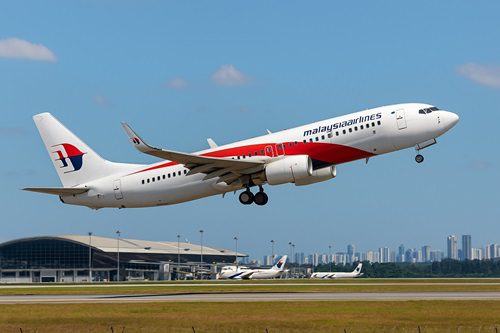
Airlines, like old hands in any trade, tend to circle back to what they know works.
Malaysia Airlines has done exactly that, though this time, with a sharper pencil and a clearer sense of where the money and momentum now sit.
After an absence of nearly 20 years, the carrier will return to Fukuoka from September 2026. It’s the sort of move that doesn’t shout, but doesn’t need to. Fukuoka isn’t Tokyo, and that’s precisely the point. It’s a city that trades in substance rather than spectacle, strong domestic demand, a growing international appetite, and just enough distance from Japan’s obvious gateways to make it interesting.
The airline last flew the route in 2006. Different world back then. Less crowded skies, fewer low-cost disruptors, and far less competition for attention. Coming back now is not nostalgia; it’s timing.
And timing, in aviation, is everything.
China: The Real Prize
Alongside Fukuoka, Malaysia Airlines is pushing further into China with new services to Shenzhen and Changsha from July 2026. If Fukuoka is the quiet return, China is the main game.
Shenzhen, in particular, barely needs an introduction anymore. What was once a manufacturing outpost is now a technology powerhouse. Changsha, less headline-grabbing, is no less important, quietly building influence and demand.
With these additions, the airline’s China network grows to nine destinations. Beijing, Shanghai, Guangzhou, Xiamen, Hong Kong, Taipei and Chengdu are already in the fold. It’s a map that reflects where Asia’s growth has been and where it’s heading next.
Malaysia Aviation Group CEO Captain Nasaruddin A. Bakar summed it up with the sort of clarity the market appreciates:
“This expansion reflects our strategic focus on scaling our presence in key growth markets across East Asia while cementing Kuala Lumpur’s position as a key strategic gateway.”
He noted that both Shenzhen and Changsha sit neatly within that strategy, driven by demand across business and leisure alike.
And then, almost as an aside, the line that matters:
“As the only carrier operating direct flights on this route, we are proud to offer passengers a seamless non-stop experience that eliminates the need for transit.”
Non-stop. Two words that still carry weight. Particularly in a region where time is increasingly treated as a premium commodity.
Strength Where It Counts
Beyond the new routes, Malaysia Airlines is doing something equally important, adding frequency where demand already exists.
Brisbane, Manila and Colombo will all see increased services. No grand announcements, no fanfare, just a quiet acknowledgement that steady growth often beats flashy expansion.
Brisbane’s inclusion is no surprise. Australia remains one of Malaysia’s most reliable aviation partners, underpinned by education flows, business ties and the perennial lure of leisure travel in both directions.
Meanwhile, the airline has shown a degree of operational pragmatism by scheduling additional Kuala Lumpur–London flights in April to assist passengers affected by disruptions elsewhere. It’s the sort of move that doesn’t make headlines, but earns loyalty.
A Pavilion, Not Just a Presence
Then there’s MATTA Fair 2026, where Malaysia Aviation Group has decided subtlety is overrated.
Enter the MAG Arena.
At 46,000 square feet, it’s being billed correctly as the largest airline pavilion of its kind in Asia. But size alone doesn’t carry a story. What matters is what you do with it.
Here, the airline has leaned into experience. Visitors can explore destinations, engage with emerging travel technology, and, most importantly, get a feel for Malaysian hospitality before they’ve even boarded.
There’s also a sporting thread woven through the space, with partnerships featuring Manchester United and national cycling hero Datuk Azizulhasni Awang. It’s a clever nod to the shared language of sport and travel, both at their core about movement, connection and a bit of theatre.
The Hub That Keeps Growing
All roads, as they say, lead back to Kuala Lumpur.
The city has long been positioning itself as a regional hub, but what we’re seeing now is less talk and more delivery. More routes, better connectivity, and a network that increasingly makes sense for travellers moving between Southeast Asia, North Asia and beyond.
It aligns neatly with the broader ambitions of Visit Malaysia 2026, but more importantly, it stands on its own commercial footing.
Because in the end, hubs aren’t built on slogans. They’re built on schedules.
Playing the Long Game
Malaysia Airlines has also set its sights on becoming one of the world’s top 10 airlines by 2030. It’s an ambitious target, but ambition in aviation is hardly new.
What matters is how you get there.
This latest expansion suggests a strategy grounded in discipline rather than bravado. Return to proven routes. Enter high-growth markets. Strengthen what already works.
There’s nothing revolutionary about it. And that may well be the point.
In an industry that occasionally confuses noise with progress, Malaysia Airlines is making a quieter argument, one route, one frequency, one decision at a time.
And if history is any guide, that’s usually how the best operators win.
by Soo James – (c) 2026.
Read Time: 4 minutes
About the Author.
 There’s nothing rehearsed about Soo James, and that’s precisely the point. Malaysian by heritage, Sydney by schooling, she arrived at UNSW to study Arts, then took a left turn into IT, not out of ambition, but curiosity. Somewhere among systems and schedules, she worked out what really held her attention: people, language, and the quiet spaces between them.
Writing followed naturally. Travel and lifestyle gave her room to observe, to listen, to notice the details others rush past. Soo writes the way good travellers move, watching the room before admiring the view, catching the gesture before chasing the headline.
At Global Travel Media, her stories don’t shout or sell. They linger. They slow you down, open a door, and gently suggest there’s more to see if you’re willing to look.











