

Every now and then, aviation pauses, takes a breath, and decides it’s time to grow up. This is one of those moments.
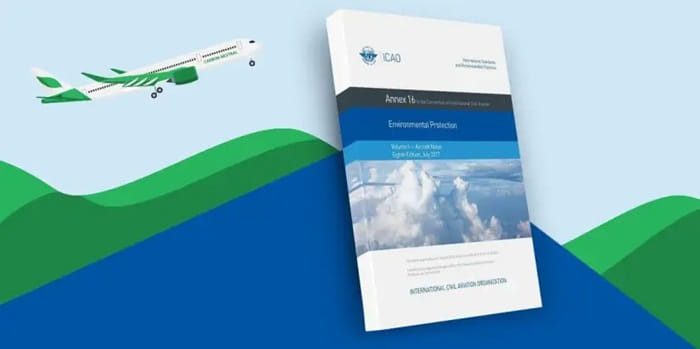
The International Civil Aviation Organisation (ICAO) Council has quietly, very quietly, fittingly tightened the screws on aircraft noise and carbon emissions. No fanfare, no grandstanding. Just a set of decisions that will ripple through boardrooms, design studios and airport communities for decades to come.
And make no mistake: this is not tinkering around the edges. This is a recalibration of how aircraft will be built, flown, and judged.
Less Noise, Less Carbon, No More Excuses
Let’s start with the obvious: aircraft will need to behave better.
ICAO has strengthened its CO2 emissions standard by 10 per cent for new aircraft designs entering service from 2031. That alone is a firm nudge. But the real weight lands in 2035, when even aircraft already in production will face tougher emissions rules for new deliveries.
In other words, the industry doesn’t get to hide behind legacy models. The clock is ticking, and it’s set globally.
Noise, too, is finally getting the attention it deserves. New aircraft designs from 2029 will have to meet tighter limits, six decibels lower for larger aircraft, two for smaller ones. It may sound like a technical footnote, but for anyone living under a flight path, it’s the difference between interruption and indifference.
For decades, communities have simply endured aviation. Now, aviation is being asked firmly to return the favour.
Supersonic Returns… But Not With a Bang
Then there’s the curious case of supersonic travel.
The ghost of the Concorde still lingers in aviation folklore, glamorous, fast, and, frankly, a bit of a nuisance to anyone within earshot. This time around, ICAO is setting the rules before the party begins.
From 2029, any new supersonic aircraft will need to meet the same noise standards as today’s subsonic fleet. No exceptions, no romantic nostalgia.
It’s a neat piece of regulatory foresight. If supersonic travel is to return, and many believe it will, it must do so without rattling windows or patience.
Innovation Now Has a Deadline
For manufacturers, this is where the conversation gets serious.
These standards don’t just encourage innovation, they demand it. Fuel efficiency, advanced propulsion, lighter materials, smarter aerodynamics… all of it moves from “nice to have” to “non-negotiable”.
And let’s be honest: the industry has been edging in this direction for years. What ICAO has done is remove any lingering ambiguity. The runway is clear. The expectation is set.
Airlines, too, will need to think carefully about fleet strategy. The days of stretching aircraft lifecycles indefinitely are looking increasingly shaky. Environmental performance is no longer a marketing line, it’s becoming a licence to operate.
A Measured, Methodical Approach
To its credit, ICAO hasn’t rushed this.
The standards are the product of years of technical work through the Committee on Aviation Environmental Protection, with input from governments, manufacturers, and industry stakeholders across the globe.
It’s the sort of slow, deliberate process aviation has always relied on. Not flashy, not fast, but usually right.
The timeline reflects that same discipline. The standards formally take effect on 3 August 2026, with global application from 1 January 2027. Enough time to prepare but not enough to procrastinate.
The Bigger Picture: 2050 Looms Large
All of this sits within a broader ambition: net-zero carbon emissions from international aviation by 2050.
It’s an ambitious target, some would say heroic. But targets have a habit of sharpening focus, and this latest move does exactly that.
There’s an old-school view of aviation, one that celebrates engineering brilliance, respects operational discipline, and understands that progress is earned, not announced.
This feels like a return to that thinking.
Less noise. Less carbon. More responsibility.
And perhaps, just perhaps, a future where aviation grows not just bigger but better.
by Octavia Koo – (c) 2026.
Read Time: 4 minutes.
About the Author.
 Octavia Koo arrived in Australia in the early eighties with little fuss and a good eye. Sydney suited her. At UNSW, she studied Arts, then found her footing in graphic design before drifting, quite naturally, into the digital side of things, building websites and shaping words that made people want to stay.
Singapore followed, and with it, the fast pace of tourism platforms and ITB Asia. Long before SEO became a buzzword, Octavia understood how stories travelled online. That’s where she met Stephen, and the seed for something more was planted.
A few years later, she joined Global Travel Media.
Today, Octavia works with quiet assurance, blending art, instinct and experience to produce stories that don’t shout they simply work, and linger.











