

There was a time not that long ago when corporate travel was quietly ushered toward the exit. Zoom was king, Teams was the new normal, and someone, somewhere, decided a webcam could replace a handshake.
Well, that theory hasn’t aged particularly well.
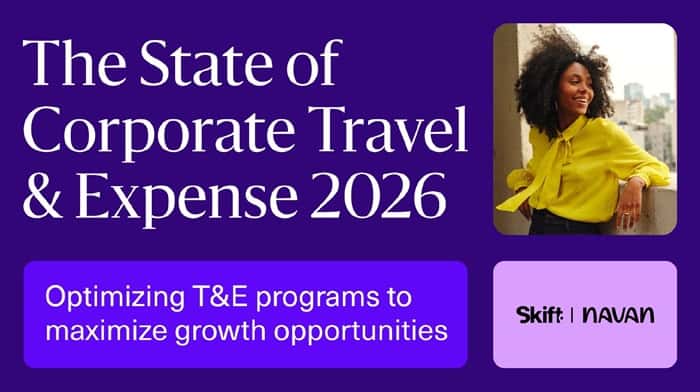
Because if the latest State of Corporate Travel & Expense 2026 report is anything to go by, business travel isn’t just back, it’s back with purpose, swagger, and a renewed sense of commercial urgency.
And frankly, it’s about time.
The Return of Common Sense (and Commercial Reality)
Let’s not overcomplicate it. Business has always been done best in person. The report confirms what most seasoned operators already knew:
- 90% say business travel is now an essential investment
- 84% insist face-to-face meetings beat virtual ones
In other words, the great digital experiment had its moment, but relationships, trust, and revenue still travel better in the same room.
And travellers aren’t exactly easing back into it either. Nearly half are clocking six or more trips a year, which tells you everything about where priorities now sit.
No one boards a plane for the fun of expense reports. They board because it works.
Deal-Making Is Back With Intent
Here’s where things get interesting.
For a few years, the industry flirted with the idea that deals could be closed remotely. Efficient? Perhaps. Effective? Not quite.
Now, “closing a deal” has surged back into the top tier of reasons to travel.
And that’s the real story here.
This isn’t about ticking boxes or attending meetings for the sake of optics. It’s about revenue. Growth. Outcomes.
Corporate travel has rediscovered its commercial backbone.
From Solo Flyers to Strategic Squads
Another shift worth noting and one that’s been brewing quietly, is the rise of group travel.
Not the “team bonding over cocktails” variety (though that never hurts), but structured, strategic gatherings.
- 86% expect more group travel this year
- 72% are heading to multiple off-sites
What we’re seeing is companies pulling distributed teams back together, not out of nostalgia, but necessity.
Strategy doesn’t land properly over patchy Wi-Fi.
And Yet… The Systems Are Still Stuck in 2015
Here’s the catch, and it’s a familiar one.
While travel itself has surged, the systems that manage it are still dragging their feet.
Take compliance. A staggering 80% of travellers admit to booking outside approved platforms.
Not because they’re rebellious, but because they’re practical. If the official system doesn’t deliver the best option, they’ll find one that does.
Then there’s expense management, the industry’s favourite slow burn.
- Most travellers are still wasting 30 minutes or more on filing expenses
- Many companies are still running manual processes
It’s 2026, and we’re still chasing receipts like it’s a weekend hobby.
The Data Myth: “We’ve Got It”… Except We Don’t
One of the more telling insights from the report is this quiet disconnect:
Most managers believe they have control over their travel data.
They don’t.
Only about 40% actually have full, real-time access, and fewer still use it properly.
That’s not just inefficient, it’s expensive.
Because buried in that unused data is the difference between a travel program that ticks along… and one that actively drives savings and smarter decisions.
AI: The New Co-Pilot (But Not the Captain)
Now, let’s talk about the buzzword that’s doing the rounds, AI.
Yes, it’s making a difference. And yes, it’s speeding things up.
Smarter booking. Better recommendations. Faster processing.
There’s genuine progress here, particularly when paired with NDC, where 88% of managers see improved options and savings.
But, and this is important, it’s not a magic fix.
Travellers still pick up the phone when things go wrong. They still want a human who understands nuance, urgency, and context.
Or put more bluntly: no one wants to argue with a chatbot while stranded at an airport.
Even the report acknowledges the gap. AI is trusted for simple tasks, but consistency? Still a work in progress.
The Real Opportunity (and the Real Risk)
Strip it all back, and the message is straightforward.
Corporate travel is no longer a support function. It’s a growth lever.
Handled well, it fuels deals, strengthens relationships, and sharpens strategy.
Handled poorly, it becomes a drain on time, money, and patience.
As Kim Hamer puts it:
“T&E is rapidly changing… a solution that doesn’t anticipate shifts… is vulnerable to being frozen in time.”
That’s not a warning, it’s a reality check.
Final Boarding Call
The industry has reached an inflection point.
Travel is back. Demand is strong. The intent is clear.
Now it’s up to businesses to decide whether their systems and their thinking are keeping pace.
Because in this market, standing still isn’t neutral.
It’s expensive.
by Jill Walsh – (c) 2026.
Read Time: 5 minutes.
About the Writer.
 Jill Walsh has always kept a pen close and a suitcase closer. She started out on media releases, then learned the trade properly by escorting press trips around the world, discovering which stories travel well and which need a sharper edit.
Before long, she wasn’t just promoting destinations, she was representing them, translating civic ambition and local pride into words people actually wanted to read. These days, semi-retired and happily so, Jill has traded departure boards for deadlines, joining old friend and colleague Stephen at Global Travel Media on a casual basis.
Her patch is the business end of wanderlust: balance sheets, route maps, tender wins and the numbers that quietly decide where travellers go. She writes with dry humour, clean prose and an old-school respect for facts, a steady voice when the market starts shouting.











