

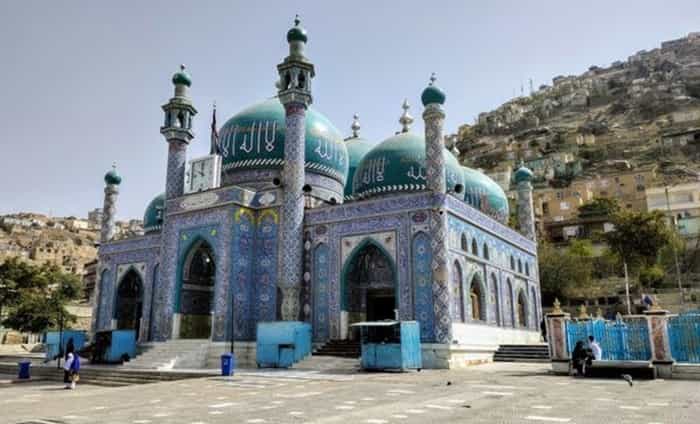
There’s something quietly telling about a country that chooses to simplify its visa process before it fixes its reputation. It suggests confidence. Or perhaps, more accurately, a willingness to be judged on what it is now not what the world remembers it to be.
Afghanistan, a destination long filed under “too hard basket” by most travellers and many agents, has taken a decisive step in changing that narrative. The country has introduced its first-ever e-visa system, a move designed to make entry less of a logistical marathon and more of a considered decision.
And make no mistake, until now, it was a marathon.
From Paper Trails to Digital Trails
For years, securing a visa to Afghanistan involved a curious mix of determination and geography. Travellers often found themselves routing through the Gulf, knocking on embassy doors in Dubai or elsewhere, documents in hand and patience firmly tested.
With only limited diplomatic representation globally, it wasn’t so much a visa application as it was a rite of passage.
Now, with a few clicks, that barrier begins to soften.
The timing is no accident. Regional tensions, particularly those involving Iran, the United States and Israel, have made physical access to embassies increasingly impractical. Afghanistan’s response? Remove the middle step altogether.
It’s a pragmatic solution, and in travel, pragmatism tends to win.
Numbers That Suggest a Shift
Quietly, and without much fanfare, Afghanistan’s tourism numbers have been edging upwards.
Around 9,000 international visitors made the journey in 2024. By mid-2025, more than 7,000 had already followed, putting the country on track to exceed last year’s total.
They are not mass-market tourists. They are not chasing infinity pools or buffet breakfasts. These are travellers who prefer stories over souvenirs and substance over convenience.
And increasingly, they are arriving.
A Guidebook and a Signal
Adding a touch of legitimacy to this slow-burning revival is the release of the first mainstream Afghanistan guidebook in two decades, published by Bradt Travel Guides.
Authored by James Willcox of Untamed Borders, it is less a glossy invitation and more a seasoned nod to those already paying attention.
Willcox has been operating in Afghanistan since 2008. Not theorising. Not observing. Operating.
He has organised everything from cultural tours to ski expeditions, launched the country’s first international group ski trips, and co-founded the Marathon of Afghanistan, the only mixed-gender sporting event the country has hosted.
In short, he knows where the road bends.
“There are many hurdles for someone travelling to Afghanistan and previously this started with the visa process.
While visiting Afghanistan still throws up lots of challenges, the old laborious visa system is now not one of them and that is a welcome change.
With tourism to the country continuing to grow, the streamlining of the visa process is likely to encourage more people to consider a trip to Afghanistan.
We have seen this happen in other challenging countries, such as Somalia and Libya, after the introduction of e-visas in those nations.”
It’s not a sales pitch. It’s an observation delivered by someone who has seen this pattern play out before.
Tourism, But Not As You Know It
Afghanistan is not trying to be everything to everyone. In fact, its appeal lies in doing precisely the opposite.
This is a destination where the Wakhan Corridor offers trekking routes untouched by crowds, where cultural encounters are direct rather than curated, and where the experience feels, for better or worse, entirely real.
Willcox’s work reflects that ethos, kayaking expeditions, trekking programs, even a snowboard film and the award-winning documentary Champions of the Golden Valley. This is tourism built on curiosity, not comfort.
A Calculated Step Forward
Of course, let’s not dress it up too neatly.
Afghanistan remains complex. The current government’s international recognition is limited. Infrastructure is evolving. Safety considerations are real and must be taken seriously.
But here’s the thing, the industry understands well: access shapes perception.
Remove friction, and interest follows.
The introduction of an e-visa doesn’t solve everything, but it removes the first excuse not to look closer.
Why It Matters to the Trade
For agents and operators, this is not about suddenly packaging Afghanistan as next season’s must-sell destination. It’s about recognising a shift when it happens.
Niche travel is growing. Experiential travel is growing. Destinations once considered out of reach are quietly stepping into view.
Afghanistan’s e-visa system is a signal, subtle but unmistakable, that it intends to be part of that conversation.
And for a small but determined segment of travellers, that invitation will be more than enough.
by Charmaine Lu – (c) 2026.
Read Time: 4 minutes.
About the Writer.
 Charmaine has always carried a quiet kind of courage. She grew up in Shanghai, a city that never slows, yet found her own balance there, studying accounting for discipline and the arts for beauty. She needed both, and she knew it.
When she arrived in Sydney in the 1980s, she brought little more than a degree, a suitcase and the resolve to begin again. The harbour breeze felt like permission. She met Stephen, and together they built a life that bridged two cultures, a family, a home, and plenty of laughter.
Work was never just work. Long before search engines ruled the day, Charmaine was helping businesses be found by telling stories people wanted to read. That remains her quiet gift.
Her life isn’t a résumé. It’s grace under change structure and creativity, held together by a generous heart.











