

Washington, DC, has never struggled for significance. Charm, on the other hand, has historically been a more negotiable asset.
That may finally be changing.
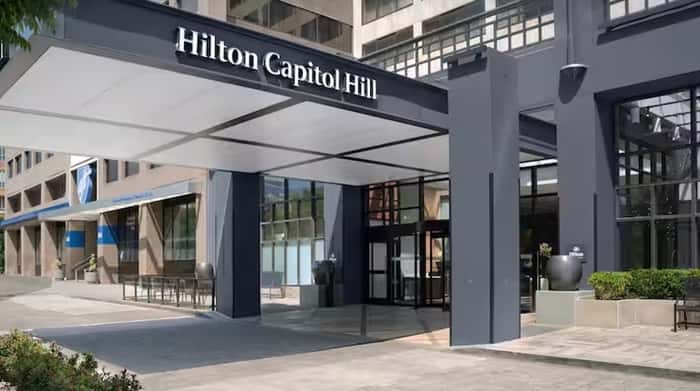
Behind the marble façades and federal formality, the capital is quietly undergoing one of the most aggressive hotel expansions in its modern history. More than 20 properties, new builds, conversions, and full-scale refurbishments are either landing or lining up, adding over 3,000 rooms to a market that, until recently, felt comfortably predictable.
Predictable no longer.
What’s emerging instead is a city learning perhaps a little late, but decisively nonetheless, how to sell itself.
Follow the Money (and the Moment)
Timing, as ever, is doing a fair bit of heavy lifting.
The United States’ 250th anniversary in 2026 isn’t just a commemorative milestone, it’s a commercial one. Washington sits at the centre of that story, and the hotel sector has read the room with admirable clarity.
Packages tied to “America 250” are already flooding the market. Some are tasteful, leaning into history and neighbourhood storytelling. Others… well, let’s just say the Watergate’s quarter-million-dollar offering suggests patriotism now comes with a luxury surcharge.
Still, the strategy is sound. Give travellers a reason to anchor in DC, extend their stay, and wrap it all in a narrative that feels uniquely American. It’s tourism fundamentals, executed with a capital-city advantage.
Cherry Blossoms: The Annual Cash Crop
If the Fourth of July is DC’s headline act, cherry blossom season is its box office guarantee.
Every year, the city turns pink, and the hotels follow suit with almost theatrical enthusiasm. Lobbies bloom, menus blush, and high teas appear with clockwork precision.
The likes of the Conrad, Waldorf Astoria and Salamander don’t just acknowledge the season; they monetise it with quiet efficiency. Blossom-themed dining, curated experiences, and what can only be described as “Instagram staging” have become standard practice.
And why not? When nature hands you a global marketing campaign, the smart move is to lean in.
Rooftops: Where DC Finally Lets Its Hair Down
For a city known for its rules, Washington has discovered the joy of a good rooftop.
Over 30 rooftop venues have opened or been refreshed since 2020, and the shift is more than cosmetic. It’s cultural.
Spaces like VUE, Smoke and Mirrors, and the steadily expanding Wharf precinct have turned elevation into an experience. The Potomac glints, the monuments glow, and suddenly, DC feels dare one say it social.
This isn’t accidental. Rooftops extend dwell time, lift spend per guest, and, crucially, reshape perception. They tell visitors that Washington isn’t just where decisions are made, it’s where evenings are enjoyed.
A subtle shift, but an important one.
The Pipeline: Less Bureaucracy, More Imagination
The next wave of openings reads like a market finding its confidence.
A former office building reborn as Tempo by Hilton on 1776 K Street is a neat bit of symbolism, history repurposed, quite literally. CitizenM’s expansion into Georgetown, preserving a century-old façade while delivering its signature efficiency-driven model, suggests the city is warming to modern hospitality formats.
Then there’s ROOST White House, blurring the line between hotel and residence. Larger rooms, proper kitchens, space to breathe, and an acknowledgement that not every traveller wants to live out of a suitcase.
It’s a more nuanced offer than DC has traditionally provided.
Renovations: Respect the Past, But Don’t Be Trapped By It
Washington’s grand dames aren’t going quietly.
The Willard InterContinental has leaned into its history with a careful restoration that feels less like nostalgia and more like curation. Lincoln slept here, King planned here, and now, guests can do much the same, albeit with better Wi-Fi.
Meanwhile, the Salamander’s transformation from its Mandarin Oriental past signals a different approach: lighter, more residential, less ceremonial. Add a high-profile restaurant and a serious spa, and you’ve got a property that understands modern luxury isn’t about formality, it’s about ease.
Even the Grand Hyatt has refreshed itself with lighter tones and sustainability credentials, proving that scale doesn’t have to mean stagnation.
Rebrands: The Quiet Consolidation
Behind the scenes, the usual consolidation is underway.
Property shifts, City Express under Marriott, and Eurostars entering the capital tell a familiar story. Big brands are tightening their grip, and smaller identities are folding into global systems.
For travellers, it means predictability. For operators, it’s efficiency. For the city, it’s another sign that the market is no longer niche, it’s competitive.
And competition, as any seasoned hotelier will tell you, tends to sharpen the product.
What Happens After the Party?
The real test, of course, comes after 2026.
Anniversaries pass. Fireworks fade. What remains is the infrastructure and the expectations that come with it.
Projects slated for 2027 and beyond design-led concepts, chef-driven hotels, and culturally anchored brands suggest DC isn’t planning to retreat once the bunting comes down. A Paris-born MOB Hotel bringing concerts and community programming. José Andrés is stepping into branded hospitality. These are not short-term plays.
They’re statements of intent.
The Verdict
Washington, DC is not trying to become New York. Nor should it.
What it is doing finally is recognising that relevance in travel isn’t guaranteed by history alone. It has to be earned, refreshed, occasionally reimagined.
The hotel sector has taken that lesson to heart.
More rooms, yes. But also better ones. More experiences. More reasons to linger.
And perhaps most importantly, a city that feels just a little less like a museum and a little more like somewhere you’d choose to stay.
by Anne Keam – (c) 2026.
Read Time: 8 minutes.
About the Writer.
 Anne Keam’s story begins in Queensland, on a grain farm in the state’s wide western reaches, where the days were long and the lessons simple: work hard, look after your own, and don’t make a fuss. Those early years left their mark.
She later studied Arts at the University of Queensland, before doing what felt natural at the time, heading back home to the family property. But the world was calling. Anne packed a backpack and went looking, spending years on the road and finding herself most alive in South America. She wrote everything down along the way. Those notebooks, full of dust, colour and curiosity, eventually became her blog, a quiet, personal record of seeing the world and learning from it.











