


For all the sophistication of modern travel, plenty of people still go overseas and behave as though a strong stomach is a substitute for common sense.
That, in essence, is the message from the Global Rescue Winter 2026 Traveler Sentiment and Safety Survey, which found that international travellers continue to take avoidable risks with food and water despite knowing full well the consequences can be unpleasant, expensive and, in some cases, serious.
The survey points to a stubborn gap between awareness and behaviour, with men and non-US respondents generally more inclined to trust local conditions than women and US-based travellers. In other words, some people remain remarkably willing to gamble with their holiday for the sake of convenience, habit or misplaced confidence.
Water, predictably, remains one of the biggest culprits.
Overall, 44% of travellers said they are most likely to brush their teeth with tap water while overseas, making it the most common form of exposure. Another 30% said they consume drinks with ice, while 9% opt for beverages diluted with local water, such as juice or cocktails. A further 6% rinse their mouth in the shower, and 2% drink tap water directly.
None of that will come as a surprise to travel medicine professionals, who have been trying for years to explain that unsafe water does not need to be swallowed by the glassful to cause trouble. A few careless habits can do the job nicely.
The national split is telling. Half of non-US respondents said they brush their teeth with tap water, compared with 43% of US travellers. Americans, meanwhile, were more likely to consume drinks with ice, at 33%, versus 20% among non-US respondents.
The gender divide is sharper still. Men were far more likely than women to brush their teeth with tap water, at 56% versus 40%. Women, on the other hand, were more likely to drink beverages with ice made from tap water, at 36% compared with 15% for men.
As Jeff Weinstein, a paramedic and medical operations manager for Global Rescue, put it: “Water safety boils down to the local area where travelers are staying. Assumptions about water quality can vary widely from place to place, even within the same country.”
That is the sort of advice travellers tend to agree with right up until the moment they are handed a cold drink on a humid afternoon and decide, against their better judgment, that it will probably be fine.
Food choices show much the same pattern.
When asked which risky food they trust most while travelling, 49% of respondents chose freshly cooked hot food from a street vendor. That placed it comfortably ahead of every other option, including street-vended fruits or snacks (7%), fresh salads or leafy greens (6%), and food purchased during peak crowds or festivals (6%).
At the lower end of the confidence scale were the usual suspects: sushi or ceviche, runny or soft-cooked eggs, and buffet foods with unclear temperature control, each trusted by fewer than 5% of respondents.
That travellers favour hot street food is not entirely irrational. Freshly cooked food served piping hot is often safer than buffet food that has been languishing in the heat since breakfast. Even so, the survey suggests many travellers are relying more on instinct than discipline.
Non-US respondents again appeared the more relaxed of the two groups, with 53% willing to trust freshly cooked street food, compared with 49% of US travellers. They were also more than twice as likely to trust fresh salads or leafy greens, at 11% versus 5%.
Men and women recorded similar levels of trust in hot street food, although women were more likely to trust food purchased during peak crowds or festivals, at 10% compared with 6% for men.
Weinstein offered a blunt reminder of what is really at stake: “When you travel to a place that’s new to you, there are a lot of germs your body is not used to. Something like traveler’s diarrhea or a really bad case of food poisoning can become an emergency.”
And there it is. Not the glamorous side of international travel, admittedly, but one of the more enduring truths.
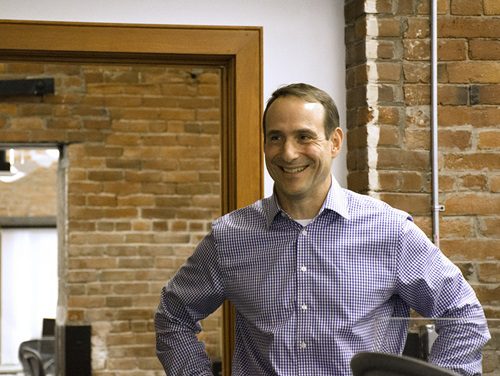
Dan Richards is standing in the operations room.
For the travel industry, the survey is a useful reminder that health messaging still matters. Advisers, tour operators and travel risk specialists can talk about culture, cuisine and immersive local experiences all they like, but none of it counts for much if the traveller ends up spending two days in a hotel bathroom wondering where it all went wrong.
Dan Richards, CEO of The Global Rescue Companies and a member of the US Travel and Tourism Advisory Board at the US Department of Commerce, said the results reflect a familiar problem.
“Most travelers understand, in theory, that food and water safety matters, but convenience and familiarity often override caution,” Richards said. “These results show why pre-travel medical and risk guidance remains critical, especially for travelers heading to regions with different sanitation standards.”
He added that the survey’s differences by gender and residency reveal how risk is perceived differently across traveller groups.
“Men and non-US travelers tend to accept higher levels of risk, while women and US travelers are generally more cautious, but no group is immune from making risky choices when traveling,” he said.
That last point is the important one. This is not really a story about reckless travellers and prudent ones. It is a story about human nature. People know the rules. They simply decide, from time to time, that the rules are for someone else.
Overseas, that can be a costly little delusion.
by Yves Thomas – (c) 2026.
Read Time: 4 minutes.
About the Writer.
 There’s a quiet pull about Yves Thomas, the kind you only notice after a moment. It comes from having lived travel from both sides of the reception desk. A graduate of Bangkok University International, she stepped straight into Thailand’s tourism industry, learning early how much care goes into making someone else’s holiday feel effortless.
She worked with some of the country’s best destination management teams, polishing the details most travellers never see but always remember. Eventually, the road began calling louder than meetings and schedules. Yves packed a bag and went looking again, trading conference calls for compass points.
Somewhere between Chiang Mai and Copenhagen, she started writing it down. Those reflections became a warm, observant blog.
Now based in Hua Hin and writing for Global Travel Media, Yves shares travel not as a publicist, but as a traveller, attentive, thoughtful, and deeply human.











