

Japan doesn’t need much help attracting travellers. The country has been doing that quite successfully for centuries.
But the current wave of interest is something else entirely.
With international visitor numbers smashing records and travel magazines falling over themselves to crown Japan the must-visit destination of 2026, the global tourism industry has clearly taken notice. Airlines are adding seats, tour operators are expanding itineraries, and travel technology companies are racing to keep up.
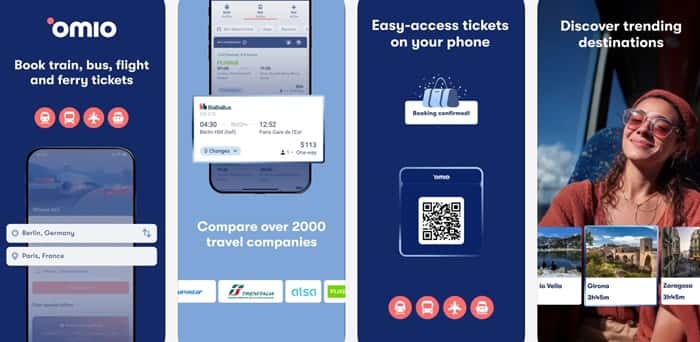
Into that crowded conversation steps Omio, which this week officially launched its platform in Japan, its 47th market worldwide, and its first serious foothold in East Asia.
For travellers trying to make sense of Japan’s famously complex transport network, the idea is straightforward enough: one place to book trains, buses, flights and ferries instead of juggling half a dozen systems.
Simple in theory. Quite useful in practice.
A Destination Everyone Suddenly Wants
Japan’s tourism rebound has been nothing short of remarkable.
According to the Japan National Tourism Organisation, the country welcomed more than 40 million international visitors in 2025, the highest figure ever recorded and nearly 16 per cent higher than the previous year.
Currency shifts have helped, making Japan comparatively affordable for many overseas travellers. But the appeal runs deeper than exchange rates.
The country has always managed that rare travel balancing act of ancient traditions alongside cutting-edge technology. Where else can you step out of a thousand-year-old temple and onto a train that runs with the punctuality of a Swiss watch?
Not surprisingly, famous landmarks like Mount Fuji and the historic streets of Kyoto are seeing the effects of the boom.
Tourism officials are now encouraging visitors to explore beyond the usual headline destinations, spreading travellers more evenly across the country.
Technology may help with that.
Making Sense of Japan’s Transport Maze
Japan’s transport system is widely admired, but it isn’t always easy for newcomers to navigate.
The famous Shinkansen bullet trains tend to steal the spotlight, but they are only part of the story. Beneath the surface lies a sprawling web of regional railways, long-distance buses, domestic airlines and ferry routes connecting thousands of islands.
For locals, it works brilliantly.
For first-time visitors, however, the sheer number of options can feel like trying to solve a railway timetable puzzle.
Omio’s platform attempts to remove that friction. Travellers can now compare routes, prices and schedules for multiple forms of transport through one interface, whether it’s booking a bullet train between Tokyo and Osaka, a regional rail trip through the countryside or a ferry journey across Japan’s island networks.
The platform also allows travellers to purchase Japan Rail Passes, the long-standing favourite among international visitors planning multi-city journeys.
Helping Travellers Venture Further
One of the quieter advantages of platforms like Omio is their potential to encourage exploration beyond the obvious.
When booking transport becomes easier, travellers are more likely to venture further afield to smaller cities, rural regions and lesser-known destinations that rarely make it into glossy travel brochures.
That matters for Japan.
Overtourism has become a growing concern in some of the country’s most famous locations. By contrast, countless regions across the archipelago remain relatively untouched by international tourism.
Omio’s system supports 32 languages and 33 currencies, making it easier for travellers to plan journeys before arriving in Japan.
The company has also introduced Omio Advance, allowing bookings up to 12 months ahead, a feature likely to appeal to travellers hoping to secure seats during peak seasons such as cherry blossom.
A Bigger Global Strategy
The Japan launch is part of a broader push by Omio to expand its global transport marketplace.
The company has recently launched services across parts of Southeast Asia and Brazil, steadily building a network that links rail, coach, ferry and flight bookings across multiple continents.
By 2028, the Omio Group hopes to operate in more than 70 markets.
Founder and CEO Naren Shaam believes Japan represents a milestone moment.
“Japan is the gold standard of modern mobility. Its high-speed rail, dense regional networks, domestic aviation and ferry systems operate at a scale and precision that few countries can match,” Shaam said.
“Bringing this ecosystem onto Omio is a defining moment for our platform. It reflects our ambition to organise the world’s most advanced transport networks within one intelligent interface.”
Travel Technology Meets Travel Tradition
For all the excitement around digital platforms, the real story here isn’t the technology.
It’s the travellers.
Japan’s enduring appeal, the culture, the food, the landscapes, and the sheer novelty of the experience continue to draw millions from across the globe.
If platforms like Omio simply make the journey easier, that may be enough.
After all, when the destination is Japan, the hard part isn’t convincing people to go.
It’s helping them get around once they arrive.
by Octavia Koo – (c) 2026.
Read Time: 5 minutes
About the Writer.
 Octavia Koo arrived in Australia from Indonesia in the early eighties, drawn by Sydney’s creative pull and a place at UNSW. Studying Arts, she quickly developed an eye for visual storytelling, starting in graphic design before naturally moving into digital building websites and crafting copy that invited people in and kept them there.
Singapore came next. There, she ran blogs for tourism platforms and developed an instinct for SEO well before it had a name, working the corridors of ITB Asia and learning how stories travel online. There, she met Stephen, who suggested Global Travel Media.
A few years later, she joined.
Today, Octavia is part of GTM’s editorial family, bringing a quiet brilliance to every piece, blending art, technology, and intuition to make travel stories both charming and effective, much like their author.











