

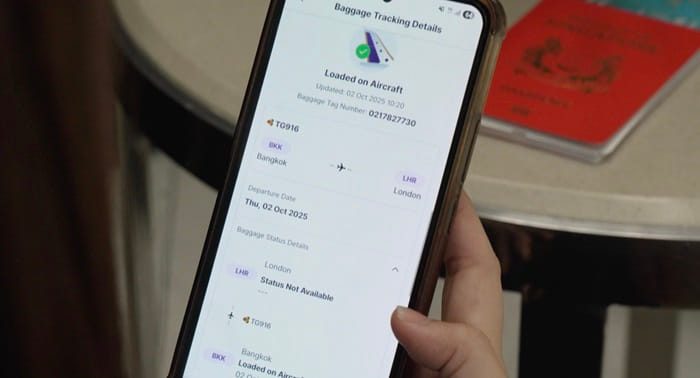
Airlines love talking about premium cabins, partnerships and “elevated experiences”. But ask any frequent traveller what actually defines a good flight, and you’ll usually get a simpler answer: does the bag turn up?
Thai Airways seems to have taken that truth to heart.
In a quietly significant move that will resonate far beyond baggage halls, the carrier has chopped processing times from minutes to seconds by overhauling how it handles delayed and transferred luggage. The result? Fewer frazzled passengers, calmer ground teams and a reminder that operational basics still matter most.
A proud airline confronting a modern pain point
Thai Airways has always carried more than passengers. Since 1960, it has been a symbol of Thai hospitality in the skies, equal parts national icon and global connector.
But like many legacy carriers emerging from the pandemic, it found itself wrestling with the unglamorous realities of recovery. Aircraft returned faster than processes modernised. Passenger numbers surged. And suddenly, baggage that perennial Achilles’ heel was back in the spotlight.
At Bangkok’s Suvarnabhumi Airport, the strain was especially visible. Manual reconciliation processes that once ticked along quietly began to creak under pressure.
And travellers noticed.
When paper processes meet post-pandemic volumes
Behind the scenes, much of the workflow still relied on manual handling. Staff printed rush tags. Cross-checked flight details. Worked through paper-based reconciliation sheets that belonged to another era.
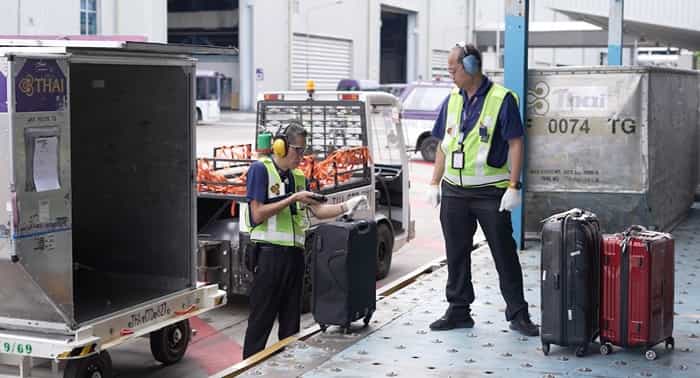
SITA-Thai Airways-Baggage Loading
It wasn’t broken, exactly. But it wasn’t built for scale either.
As travel rebounded, Lost and Found counters swelled, connections tightened, and baggage teams found themselves stuck in a loop of reactive firefighting.
For an airline known for service polish, that’s not a comfortable place to be.
Enter a digital fix that actually fixes something
Rather than dressing up the problem, Thai Airways went straight at it.
Working with aviation technology leader SITA, the airline rolled out Bag Manager and WorldTracer Auto Reflight first in Phuket, then across key domestic stations, including Bangkok, Chiang Mai, Chiang Rai, Hat Yai, and Krabi.
On paper, it sounds technical. In practice, it’s beautifully simple.
What used to take three minutes now takes about a second.
And in airport operations, seconds are gold.
Less drama at the carousel
The shift is more than a stopwatch story.
Automation now validates passenger and flight data in real time, reallocating bags across onward services without the usual paper trail.
For staff, it removes repetitive grunt work. For passengers, it removes that creeping dread while staring at an empty belt.
And let’s be honest, nothing erodes confidence faster than baggage uncertainty.
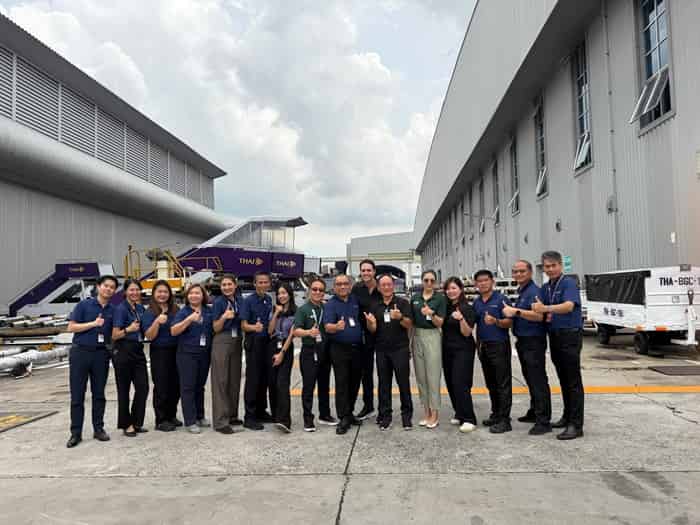
SITA-Thai Airways-Team
A rare win that helps the planet too
There’s also a small but meaningful sustainability upside.
By eliminating disposable rush tags, the new workflow quietly cuts waste across the network.
It won’t make the cover of an ESG report, but multiplied across millions of bags, it adds up.
Sometimes progress is measured in fewer bins behind the scenes.
Smarter data, fewer mysteries
Perhaps the most interesting change is what passengers won’t see.
The system now identifies the reason a bag goes astray, giving the airline sharper insight into where things unravel.
That’s operational gold. Better data means faster recovery, tighter accountability and fewer black holes in the baggage journey.
And in aviation, clarity is currency.
Partnership done properly
One detail worth noting is the collaborative tone of the rollout.
Airlines often bolt on technology and hope for the best. This feels more iterative, adapting systems to the realities of Thai airports rather than forcing a one-size-fits-all model.
In Southeast Asia’s varied infrastructure landscape, that flexibility matters.
Because software that works in Frankfurt doesn’t automatically work in Phuket.
This is only the opening chapter
Importantly, Thai Airways isn’t treating this as a box ticked.
Next steps include deeper baggage visibility tools such as Bag Journey and Netscan, along with potential expansion across international stations and ground-handling operations.
That hints at a bigger ambition: turning baggage capability into a competitive strength rather than a compliance chore.
A subtle shift but a meaningful one.
Why the industry should care
For travel professionals, this story lands at the right moment.
The industry is still rebuilding trust. Labour remains tight. Passenger tolerance for friction is thin.
Against that backdrop, investments in operational plumbing matter more than ever.
Because while biometric boarding gates grab headlines, it’s often baggage reliability that shapes word-of-mouth.
And word-of-mouth still drives bookings.
Back to basics and forward again
There’s something reassuringly old-school about this move.
No flashy rebrand. No inflated buzzwords. Just a clear-eyed decision to fix something that frustrates customers and strains staff.
In an era obsessed with digital theatrics, that restraint feels almost refreshing.
It’s also very airline.
Because beneath the marketing gloss, aviation has always been about consistency. Showing up. Delivering. Repeating.
Day after day. Bag after bag.
The quiet power of getting it right
For Thai Airways, the baggage upgrade won’t spark viral videos or champagne launches.
But it will spark something more valuable: confidence.
Confidence that connections will hold. Those journeys will finish smoothly. The airline is investing in the nuts and bolts again.
And in today’s travel climate, that kind of reassurance travels a long way.
Final approach
There’s a lesson here for the wider industry.
Not every innovation needs to be loud. Not every transformation needs a slogan.
Sometimes the smartest moves are the ones passengers barely notice except when they go missing.
By turning a chronic weak spot into a quiet strength, Thai Airways has delivered the kind of upgrade that actually sticks.
Not glamorous. Not noisy. Just effective.
And in aviation, that’s about as premium as it gets.
by Yves Thomas – (c) 2026.
Read Time: 5 minutes.
About the Writer.
 There’s a quiet pull about Yves Thomas, the kind you only notice after a moment. It comes from having worked on both sides of the reception desk. A graduate of Bangkok University International, she stepped straight into Thailand’s tourism industry, learning early how much care goes into making someone else’s holiday feel effortless.
She worked with some of the country’s best destination management teams, polishing the details most travellers never see but always remember. Eventually, the road began calling louder than meetings and schedules. Yves packed a bag and went looking again, trading conference calls for compass points.
Somewhere between Chiang Mai and Copenhagen, she started writing it down. Those reflections became a blog, warm and observant.
Now based in Hua Hin and writing for Global Travel Media, Yves shares travel not as a publicist, but as a traveller, attentive, thoughtful, and deeply human.











