

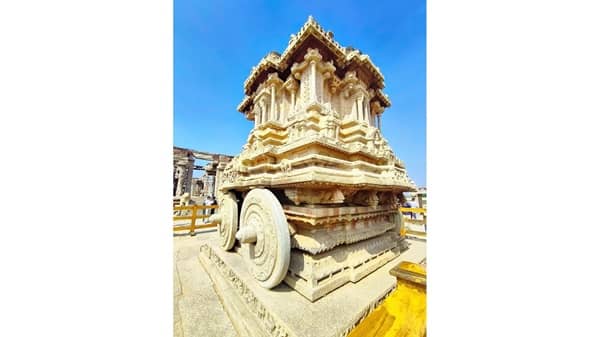
The new budget proposes significant investment in infrastructure, destination upgrades, and enhanced information dissemination.
Recognising tourism as a core economic driver, India’s Union Budget 2026-27 has laid out a roadmap with a clear focus on infrastructure development, economic growth, and enhanced regional connectivity. It is also adding new heritage destinations, upgrading iconic destinations, expanding access to information, upskilling guides, highlighting cultural sites, and focusing on medical tourism.
India’s Union Minister for Finance and Corporate Affairs, Ms Nirmala Sitharaman, said, “I propose to set up a National Institute of Hospitality by upgrading the existing National Council for Hotel Management and Catering Technology. It will function as a bridge between academia, industry and the Government.”
Yogesh Mudras, MD, Informa Markets in India, commented: “One of the standout announcements for the sector is the plan to set up a National Institute of Hospitality, a move that could really strengthen India’s tourism and hospitality ecosystem in a meaningful way. By bringing academia, industry, and government onto the same platform, the institute has the potential to create a skilled workforce that matches the evolving expectations of both domestic and international travellers.”
A National Destination Digital Knowledge Grid is being established to digitally document all places of significance—cultural, spiritual and heritage. This initiative will create a new ecosystem for local researchers, historians, content creators and technology partners.
A pilot scheme to upskill 10,000 guides across 20 iconic tourist sites will be a high-quality 12-week training course in collaboration with an Indian Institute of Management. As many Indian destinations have historic and archaeological significance, a visit to these places requires well-trained interpreters and qualified local guides to deliver the on-site experience.
Five regional medical hubs will be established to promote medical tourism. Minister Sitharaman stated that these hubs would serve as integrated healthcare complexes combining medical, educational, and research facilities. She also added, “They will have AYUSH Centres, Medical Value Tourism Facilitation Centres and infrastructure for diagnostics, post-care and rehabilitation.”
India’s Finance Minister said: “We will develop ecologically sustainable (i) Mountain trails in Himachal Pradesh, Uttarakhand and Jammu and Kashmir; Araku Valley in the Eastern Ghats and Podhigai Malai in the Western Ghats. (ii) Turtle Trails along key nesting sites in the coastal areas 14 of Odisha, Karnataka and Kerala; and (iii) Bird watching trails along the Pulikat lake in Andhra Pradesh and Tamil Nadu to offer world-class trekking and hiking experience.”
Dr Subhash Goyal, Chairman, Aviation & Tourism Expert Committee of the Indian Chamber of Commerce (ICC), said: “We welcome the reduction in Aviation Turbine Fuel and the initiatives to develop new circuits in hill and mountain regions. Our concern is on the sharp reduction in the tourism marketing budget, particularly for overseas promotion.”
Marketing and promotional expenditure has been reduced drastically from around ₹1.03 bn to ₹35 mn.
India will be hosting the first-ever Global Big Cat this year. Heads of government and ministers from 95 countries will deliberate on collective conservation strategies. India had established the International Big Cat Alliance in 2024.
Ms Jyoti Mayal, Chairperson, THSC (Travel Hospitality Skill Council), said: “I am delighted with the proposed reduction in the Tax Collected at Source (TCS) rate on the sale of overseas tour program packages from 5% and 20% to 2% without any stipulation of amount. This will make international travel more affordable for Indian tourists. This will make international travel more affordable, make it easier to do business, benefit both travellers and the travel industry, and boost tourism, encouraging global exposure.
15 archaeological sites, including Lothal, Dholavira, Rakhigarhi, Adichanallur, Sarnath, Hastinapur, and Leh Palace, will be developed into vibrant, experiential cultural destinations. Sarnath is where Lord Buddha delivered his first sermon, and Hastinapur was the capital during the epic Mahabharata era. Minister Sitaraman said, “Excavated landscapes will be opened to the public through curated walkways. Immersive storytelling skills and technologies will be introduced to help conservation labs, interpretation centres, and guides.”
Ambika Saxena, CEO of TWH Hospitality, said: “Structured development of destinations, along with improved connectivity, will expand India’s viable hospitality markets beyond established hubs. With stronger destination infrastructure and a more robust talent pipeline, the industry gains better long-term demand visibility, investment confidence, and the ability to scale sustainably. For investors, this means new hospitality micro-markets that could support mid-scale and experiential formats.
Focus will be on India’s North-Eastern Region through the development of an integrated East Coast Industrial Corridor. Durgapur will be the centre connecting 5 states in the region with 4,000 e-buses. Minister Seetharaman said: “India’s North-Eastern Region is a civilizational confluence of Theravada and 18 Mahayana/Vajrayana Buddhist traditions. A new scheme will see the Development of Buddhist Circuits in Arunachal Pradesh, Sikkim, Assam, Manipur, Mizoram and Tripura.” The Scheme will cover preservation of temples and monasteries, pilgrimage interpretation centres, connectivity and pilgrim amenities.
Nandini Taneja, Chief Executive Officer, Bhumika Enterprises, said: “Budget’s push for women-led entrepreneurship through community-owned SHE-Marts, is encouraging. It will give Small Help Group (SHG) -linked women structured retail access and a pathway to enterprise ownership. This supports inclusive local economy.”
There’ll be a renewed focus on inland waterways and coastal shipping to reduce logistics costs, enhance connectivity, and promote sustainable transport solutions. Sakshi Sawant, Owner of Maati Nature Resort, an eco-centric tourism habitat in Sindhudurg District, said: “Strengthening waterways will make travel more accessible and enjoyable, integration of skills, connectivity and destination development into a coordinated framework could reshape India’s hospitality investment landscape over the next decade.”
by Madhura Katti – (c) 2026.
Read Time: 5 minutes
About the Writer.
 Madhura Katti never simply chose travel; it chose her. Trained in hotel management in Bangalore, she understood early that journeys are really about people, not places. By the nineties, she was writing about travel and food with a natural authority, and later earned a Best Travel Writer award that surprised no one who had read her work.
Storytelling soon moved to film. Her documentary work with Indigenous India captured the spirit of a country in motion and won a National Award for Best Tourism Film.
After years with TTG Asia and Aviation International News, she brought her seasoned judgement to Global Travel Media, where she now guides coverage across India and South Asia steadily, perceptive, and unmistakably human.











