For years, Thailand has enjoyed the comfortable position of being Asia’s default answer.
Where shall we go?
Thailand.
Reliable, friendly, reasonably priced, and thoroughly practised at hosting the world, it became less a destination than a habit. Tourists returned because they always had, and because, frankly, it was easier than thinking.
That habit is now weakening.
As 2026 begins, Asian tourism is roaring back to life. Aircraft are full, hotel lobbies once again hum with multilingual optimism, and ministries are dusting off growth forecasts with the sort of confidence that only follows a crisis.
Yet behind the revival sits a quieter shift, one that Thailand is discovering rather late: the region has changed while it was busy reopening.
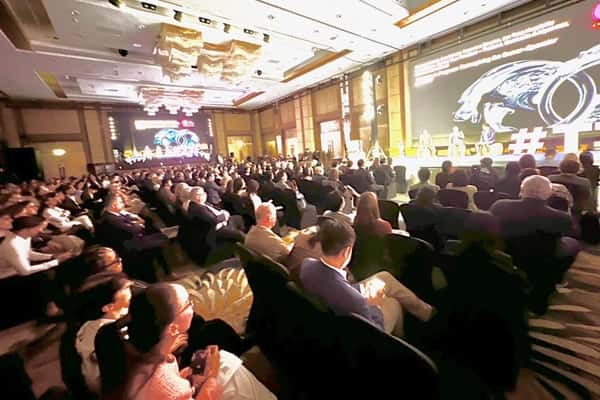
At this week’s Thailand Tourism Forum in Bangkok, Bill Barnett of C9 Hotelworks put it delicately, as one does in hotel ballrooms. Demand is strong. The problem is that Thailand is no longer capturing it in quite the quantities it once did.
Nowhere is this clearer than in China.
Chinese outbound travel is edging back towards pre-pandemic volumes, but a growing share of those travellers are flying elsewhere. Vietnam, Japan and a handful of other neighbours are quietly collecting visitors who once arrived in Bangkok without much deliberation.

The Thailand Tourism Forum 2026 focuses.
The reasons are not mysterious. They are merely uncomfortable.
Vietnam, for one, has been building things.
Twelve international airports now operate across the country, and in 2026, the vast Long Thanh International Airport outside Ho Chi Minh City is scheduled to open, relieving pressure and expanding long-haul capacity. More important than size is strategy. Vietnam is not funnelling growth through one or two overstretched gateways. It is deliberately spreading traffic to secondary cities and coastal resorts, allowing new destinations to mature before the old ones lose their charm.
Thailand, by contrast, remains loyal to its favourites.
Bangkok, Phuket, and Chiang Mai continue to carry most of the traffic, while Suvarnabhumi Airport does its best to look serene amid ongoing construction. Expansion plans progress, though rarely at a pace likely to alarm competitors.
In today’s market, infrastructure is no longer an afterthought. Travellers now notice immigration queues, connection times and transit reliability with the same scrutiny once reserved for beaches and breakfast. Smooth journeys are marketing.
Safety, too, has become more visible.
Thailand’s reputation remains broadly positive, but periodic incidents and uneven enforcement have left small dents in a brand built on reassurance. In the Chinese market, especially, perception travels faster than any aircraft. One unhappy clip on social media can undo months of advertising.
Competing destinations have responded briskly, upgrading standards and communicating them relentlessly. Thailand’s response has been steadier, admirable in temperament, less helpful in a market that rewards speed.
Then comes the awkward subject of money.
For many years, Thailand enjoyed the luxury of pricing from a position of strength. Rooms filled, tours sold, and costs rose politely with demand. The post-pandemic traveller, however, has developed a sharper eye for arithmetic.
Vietnam’s hotels are cheaper.
Japan, courtesy of the yen, now feels like a bargain.
Thailand still offers excellent quality, but excellence now requires explanation.
None of this suggests decline. Thailand remains one of the region’s great tourism performers, with service culture, hospitality depth and destination variety that newer rivals can only envy.
But leadership based on familiarity is fragile.
What once arrived automatically now has to be competed for, planned for, and occasionally fought for.
Three realities stand out as 2026 unfolds.
First, infrastructure is destiny. Airports, rail links and digital systems are no longer supporting actors. They are the show. Projects delayed gently become advantages surrendered quietly.
Second, safety cannot be episodic. It must be uniform, visible and boringly consistent, the highest compliment in risk management.
Third, Thailand’s future will depend less on Phuket and more on the places most visitors still cannot pronounce. Secondary cities, properly prepared and properly promoted, are no longer optional. They are essential.
The Chinese market remains pivotal, but the era of automatic loyalty has ended. Winning back share will require airline partnerships, sharper pricing, credible safety campaigns and a product mix that extends beyond sand and sunsets.
The deeper lesson is simpler.
Thailand did not fall behind because it did anything wrong.
It fell behind because others started running while it was still warming up.
The region is now faster, more competitive and less sentimental.
Leadership, once assumed, must now be re-earned.
And in tourism, as in sport, the most dangerous moment is realising the race began without you.