

By any measure, Thailand has always been good to hotels. Beaches, temples, business hubs and street food do rather nicely as companions to full rooms and rising rates. Yet even in a country accustomed to tourism success, 2026 is shaping up as something of a vintage year, and IHG Hotels & Resorts intends to have a generous pour.
After nearly four decades in the kingdom, the world’s third‑largest hotel group is doubling down on Thailand with the sort of confidence normally reserved for blue‑chip dividends and beachfront real estate. The numbers are persuasive. Forty hotels are already trading. Thirty‑nine more in the pipeline. A workforce now nudging 6,000, with 500 new jobs created last year alone. And a timetable that would effectively double IHG’s Thai footprint over the next three to five years.
Not bad for a market that first welcomed the company in 1987 with a single Holiday Inn Resort in Phuket and a polite wai.
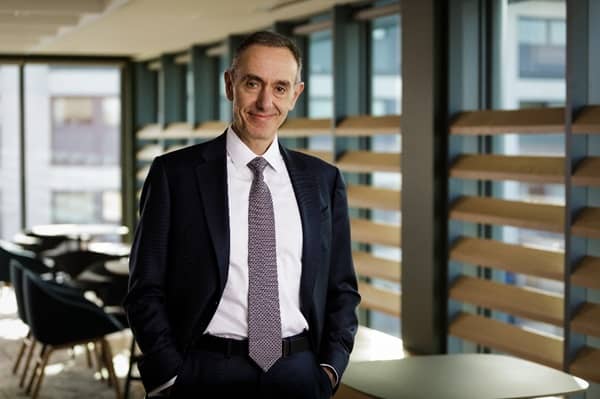
When IHG chief executive Elie Maalouf touched down recently, he brought neither hesitation nor hedging. Thailand, he declared, remains “a land of opportunity”, a phrase hoteliers use sparingly, and only when the spreadsheets agree.
“This is going to be a big year for IHG in Thailand, a land of opportunity, as the country targets 36 million international visitors, a 10 per cent increase year‑on‑year, and over 205 million domestic trips,” Maalouf said.
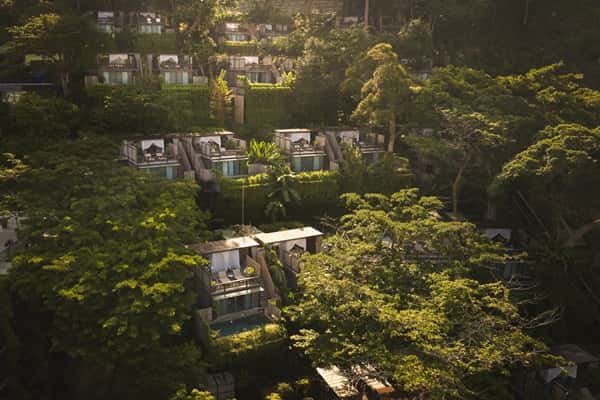
Dinso Resort & Villas Phuket, Vignette Collection
“We are supporting the country’s ambition by giving travellers even more options for every stay occasion. We are building on the reputation of our luxury and lifestyle portfolio, catering to a growing appetite for experience‑rich stays, and will expand across the premium and mainstream segments.”
The immediate proof point is Bangkok, where five new hotels under the Hotel Indigo, Crowne Plaza and Holiday Inn Express banners are scheduled to open this year. In a city already brimming with beds, confidence is rarely more visible than in cranes and concrete. More than 3,000 rooms were added to the capital’s CBD last year, pushing total supply beyond 83,000 rooms, a figure that would make even seasoned developers reach for a stronger coffee.
Yet the mood among owners remains buoyant. Renovations are accelerating. Rebrandings are in vogue. Asset values are being polished like brass hotel plaques.
“The robust development activity we’re seeing reflects the confidence hotel owners have in Thailand’s long‑term potential and our offering,” Maalouf said. “We’re actively pursuing strategic partnerships with local developers and investors to facilitate entry into new destinations, aligned with local priorities.”
For Australian investors and operators watching from afar, the message is familiar: follow the fundamentals. Asia‑Pacific, despite global economic jitters, was the world’s fastest‑growing tourism region in 2025. Seven of the ten busiest international air routes last year were intra‑regional. Bangkok–Hong Kong alone ranked seventh, a reminder that Asia increasingly travels with itself.
“Travel is expected to remain one of Asia‑Pacific’s strongest growth engines this year and beyond, and IHG intends to be at the heart of it,” Maalouf said.

InterContinental Khao Yai Resort
Where IHG is placing its most confident chips is in the luxury segment, which in Thailand is growing close to 10 per cent year‑on‑year. More than a third of the group’s local pipeline now sits in the luxury and lifestyle bracket, neatly aligned with Bangkok’s ambition to attract fewer backpackers and more black cards.
The portfolio reads like a roll call of aspiration: Six Senses, InterContinental, Kimpton, Vignette Collection and Hotel Indigo, each trading on experience rather than excess. Branded residences are rising alongside hotel towers, a hybrid product that allows high‑net‑worth travellers to buy permanence with their pillow menus.
Last year delivered two notable landmarks: the world’s first standalone InterContinental Residences in Bangkok’s Asoke precinct, and The Residences at InterContinental Phuket Resort. Add Hua Hin to the mix and the brand now straddles beach, business and boulevard with equal ease.
Still, IHG has not forgotten the bread‑and‑butter brands that built its empire. Half its Thai portfolio remains squarely mainstream. Holiday Inn, Holiday Inn Express and the newer Garner brand account for 41 per cent of the pipeline – a reminder that occupancy is still won in three‑star increments.
“We remain deeply committed to our mainstream brands,” Maalouf said. “We see significant opportunity to extend our leadership in this space across the country.”
Behind the scenes, the quiet revolution is digital. With more than 6,800 hotels worldwide, IHG is turning carefully toward artificial intelligence – not to replace hospitality, but to rescue it from inefficiency.
“We’re making strong progress in developing and deploying powerful technology to address real business challenges,” Maalouf said. “Every decision focuses on three priorities: promoting our hotels, optimising operations and engaging with guests.”
The language is corporate, but the intent is traditional: free staff from screens so they can return to service. In an industry where warmth still outperforms bandwidth, that may prove the wisest investment of all.
For Thailand, the timing is delicate. Visitor targets are ambitious. Infrastructure must keep pace. Sustainability is no longer optional. Yet few markets combine scale, diversity and global appeal quite so convincingly.
And for IHG, after 39 years of steady courtship, the relationship shows no signs of cooling.
As Maalouf put it, with understatement worthy of a veteran hotelier: “We remain committed to working with government, industry partners and owners to further strengthen Thailand’s position as a world‑class tourism destination.”
In hotel terms, that sounds very much like a long stay.
by Prae Lee – (c) 2026.
Read Time: 4 minutes.
About the Writer.
 You can tell a great deal about a person by how they meet a Bangkok morning. Prae Lee doesn’t charge into it; she glides, unhurried, as if time itself has agreed to behave. There is a calm assurance about her, the sort earned by knowing both your roots and your destination.
A graduate of Chulalongkorn University, she took her business degree with quiet pride, then polished it further in Singapore and Australia. Travel didn’t change her. It refined what was already there: curiosity, discipline, grace.
Back in Bangkok, she slipped modern life into the family business, mastering social media with an instinct for listening and selling with Thai gentleness.
Prae never seeks attention, yet everything she touches grows brighter.
Now with Global Travel Media, she writes with authenticity, drawing on culture, travel and a rare, steady confidence.











