

For a city that has always marched to its own rhythm, somewhere between Gothic stone, sea spray and student swagger, Ōtepoti Dunedin is enjoying a moment that feels both overdue and quietly triumphant.
Summer 2026 arrives not with a marketing slogan, but with substance: steel rails humming again through the south, long-closed coastal paths reopening, cultural markers embedded into the land itself, and a confident pipeline of events, accommodation, food and creative enterprise that suggests Dunedin has rediscovered something important.
Not the loud, chest-beating sort. The Dunedin version is more measured. Thoughtful. Earned.
And that, in many ways, is precisely why it works.
Railways Return and With Them, a Sense of Connection
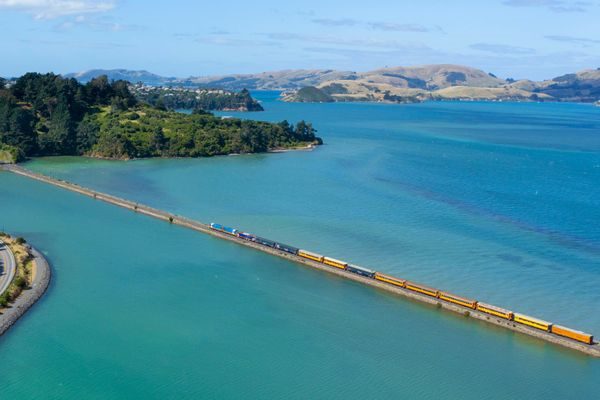
Few announcements have carried as much symbolic weight as the launch of the Mainlander train service. Running from Christchurch to Invercargill via Dunedin, this new rail link quietly restores something the South Island has lacked for decades: a consistent passenger connection binding its major southern cities together.
Launching in January, with plans for expanded services, the Mainlander is not merely a scenic indulgence. It is infrastructure with the intent to acknowledge that slow travel, when done properly, is not nostalgia but strategy.
That intent is echoed inland on the world-famous Taieri Gorge line, where Dunedin Railways has unveiled a reimagined Deep Stream Bridge Walk. The upgraded stop offers guided access onto the historic bridge itself, allowing passengers to watch the train cross while suspended above the gorge, a theatrical flourish that costs nothing extra, yet adds immeasurable value.
It is a small detail, but a telling one. Dunedin is no longer selling views alone; it is selling perspective.
Tracks, Trails and the Reopening of the Wild Edge
When the Tunnel Beach Track reopened in November after more than a year of closure, it was greeted less like a footpath and more like a returning friend.
Closed following severe weather damage, the restoration has focused first on safety and accessibility, ensuring that one of Dunedin’s most beloved short walks once again delivers its signature reward: vast coastal drama just minutes from the city centre.
That same commitment to access underpins the opening of Phase One of the Chain Hills Tunnel Trail, a 1.5-kilometre stretch through regenerating native bush and a beautifully illuminated historic tunnel. Designed for walkers and cyclists alike, it is both practical and quietly magical, a reminder that infrastructure, when done well, can still inspire.
Looking ahead, the opening of Stage One of the Coastal Connection in February is arguably the most ambitious step yet. Once complete, the pathway will link Waikouaiti to Port Chalmers, and eventually Oamaru and the Alps2Ocean Trail. For now, the Waitati-to-Port Chalmers section delivers sweeping views across Blueskin Bay and direct access to Orokonui Ecosanctuary.
This is slow travel with intent and with an unmistakable Otago accent.
Culture Embedded in Place, Not Plaques
Among the most quietly powerful additions to the city this summer are the newly installed tohu whenua along Te Aka Ōtākou. These cultural markers tell Kāi Tahu stories where they happened along the harbour edge, within the landscape itself.
As Te Rūnanga o Ōtākou upoko Edward Ellison notes, reading history is one thing; encountering it in situ is another entirely. The result is not an interpretation for tourists, but a connection for visitors and locals alike.
It is a model increasingly recognised as best practice: cultural storytelling that respects depth, place and continuity.
Experiences That Feel Personal, Not Packaged
Elsewhere, Dunedin’s experiences lean into intimacy and authenticity.
From Cheeky Kiwi Travel’s gold-rush-to-gorge odyssey linking Queenstown and Dunedin, to forest bathing sessions on the Otago Peninsula with Leafy Pete, the emphasis is on participation rather than observation.
Even spirits get the hands-on treatment. At Dunedin Craft Distillers, visitors can now distil their own spirit, working with local botanicals and small alembic stills before taking home a bottle that is, quite literally, their own.
This is tourism that understands modern travellers want stories they helped write.
Arts, Ideas and the Business of Creativity
Dunedin’s creative economy continues to deepen, not just expand.
New galleries such as Ana Teofilo Gallery, POND Gallery, and Hutch Gallery are building platforms for emerging and established artists alike, while Toitū Otago Settlers Museum’s long-running exhibition celebrating dance pioneer Shona Dunlop MacTavish reinforces the city’s commitment to telling its own stories properly and over time.
That same long view underpins Dunedin’s growing screen profile. With local film coordinator Stefan Roesch re-elected to the board of the Association of Film Commissioners International, Dunedin’s visibility among global studios has never been stronger.
The forthcoming Netflix adaptation of East of Eden, filmed locally and set to air in 2026, is expected to place Dunedin before hundreds of millions of viewers, fueling a tourism uplift that global research suggests could exceed 30 per cent.
Eating, Drinking and Staying Done the Dunedin Way
Hospitality, too, is evolving with confidence rather than excess.
Boutique accommodation offerings such as Dunedin House, Harbour Cone Sanctuary, and Blimeys at Roselle lean into heritage, sustainability, and seclusion, offering luxury defined by calm rather than flash.
On the dining front, new venues like Noble, Coupe Society, Blue Cockatoo Dessert Bar, and Strictly Coffee’s Toastie Bar demonstrate that Dunedin’s food scene remains inventive, grounded and unpretentious.
There are no gimmicks here. Just very good things, done properly.
Events That Pay Their Way
The economic impact of Dunedin’s events calendar is no longer theoretical.
The George Street Market returns in February, now scaled up and extending into evening programming via Bath Street Eats & Beats. The Otago Rally’s 50th anniversary is forecast to be its largest yet, building on a 2025 event that generated $3 million in direct spend and more than 7,000 bed nights.
These are not feel-good festivals. They are serious contributors to the regional economy.
A City Reasserting Its Relevance
What distinguishes Dunedin’s Summer 2026 offering is not volume, but coherence. Rail, trails, culture, events, accommodation and food are moving in the same direction towards quality, connection and confidence.
In a global tourism market increasingly wary of excess, Dunedin’s proposition feels refreshingly solid.
No slogans. No shortcuts. Just a city doing the work.
And being quietly rewarded for it.
by Jill Walsh
Read time: 9 minutes.
About the Writer.
 Jill Walsh has always had a pen within reach and a suitcase not far behind. She cut her teeth on media releases, then honed her craft shepherding press trips across half the globe—learning which stories travel well and which need a firmer edit.
In time, she wasn’t merely promoting places; she was representing them, translating civic ambition and local pride into words people wanted to read. Semi-retired now, Jill has swapped departure boards for deadlines, joining long-time colleague and friend Stephen at Global Travel Media on a casual basis.
Her beat is the business end of wanderlust: balance sheets, route maps, tender wins, the quiet numbers that decide where travellers actually go. She writes with tidy prose, dry humour and an old-school respect for facts, giving readers clarity without the clutter. In short, Jill brings seasoned judgement to travel’s moving parts and a steady voice when the market gets noisy.











