

The travel industry is spending more on visibility than ever, but being seen less than it was five years ago.
That uncomfortable truth is beginning to dawn on travel marketers who have done everything they were told to do: invested in SEO, paid more for search, fed social media, hired agencies, bought dashboards. And yet, somewhere between the question and the booking, they have quietly vanished.
What has changed is not the traveller’s intent. It is who now answers the question first.
Artificial intelligence has slipped into the space once occupied by search engines, comparison tables and even brand loyalty. It no longer merely points travellers in a direction. Increasingly, it decides what is worth considering at all.
And most travel brands are not prepared for that shift.
AI Didn’t Arrive, It Moved In
There is still a tendency in travel marketing to talk about AI as something approaching an event scheduled for 2026, perhaps, once budgets and board decks align.
That view is already obsolete.
“AI isn’t coming for travel search it’s already here,” says Emily Souydalay, Associate SEO Director at Propellic. “The only real question now is whether brands are doing what’s required to be found.”
The numbers are sobering. Close to 60 per cent of travel searches now end without a click. Not because travellers lost interest, but because AI answered the question before a website ever loaded. Organic traffic drops of 15 to 25 per cent have become common across the sector, even for well-established brands.
By the end of last year, more than half of first-page travel keywords were triggering Google’s AI Overviews. In practical terms, that means AI, not brands, decides which names appear credible enough to mention.
The Funnel Has Been Flattened
For decades, travel marketing relied on a predictable journey: inspire, compare, click, book. That model has collapsed into something flatter and far less forgiving.
AI surfaces have become the new top of the funnel. They summarise, recommend and filter in a single step. And they are doing so with a bias that should unsettle large parts of the industry.
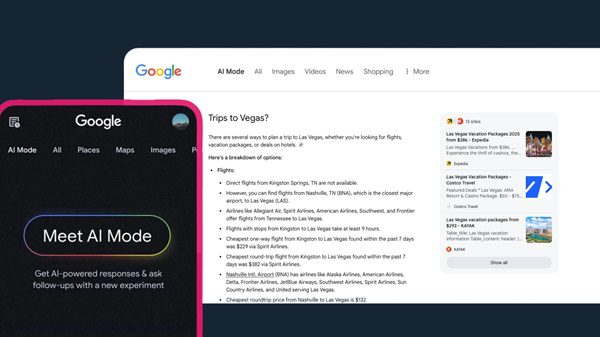
Propellic’s research shows that in Google’s AI Mode, more than half of bookings are now flowing directly to property owners and activity operators. Online travel agencies, once the default winners of search behaviour, capture less than 10 per cent.
The reason is not a mystery. AI prioritises experience signals, reviews, user-generated content, and first-person accounts. In other words, it favours proof over polish. Brands that sound real are trusted. Brands that sound like marketing copy are ignored.
Content Isn’t Too Short It’s Poorly Built
One of the industry’s favourite coping mechanisms has been to produce more content. Longer guides. Bigger hubs. Endless explainers.
AI has little patience for that.
In AI-driven search, content quality is judged less by length than by structure. Pages that are modular, scannable and organised around clear facts are far more likely to be extracted and cited. Hierarchy matters. Clarity matters. Getting to the point matters.
This is not about writing for machines. It is about removing clutter humans tolerated but never loved.
The Rise of Contextual Travel
Search behaviour has also become narrower and more personal.
Generic queries still exist, but growth has shifted to context-heavy, identity-driven searches: travellers looking for places that fit how they live, not how destinations describe themselves. Vinyl-listening hotels. Wellness retreats for single parents. Activity operators built around one very specific interest.
Local presence has become decisive. Propellic’s behavioural study of Google AI Mode found that nearly half of AI-led travel sessions include a click to a Google Business Profile. Brands that actively engage with customers locally rather than simply maintaining listings are rewarded with disproportionate visibility.
It is an old lesson resurfacing in a new form: relevance beats reach.
The Unfashionable Advantage: Technical Discipline
Much of what now determines visibility has nothing to do with creative ideas.
Brands with clean site architecture, lightweight JavaScript and accessible data consistently outperform those with visually impressive but technically bloated platforms. Booking engines that expose real-time availability through APIs, such as Ventrata, FareHarbor, Bokun, and Checkfront, are easier for AI to understand, compare and recommend.
Headless CMS frameworks offer flexibility, but without proper server-side rendering, they often underperform in AI-driven environments. What looks modern to humans can be opaque to machines.
In this environment, technical hygiene is not a backend concern. It is commercial infrastructure.
The Layer Most Brands Missed
Perhaps the clearest signal of the industry’s unpreparedness is the late arrival of Generative Engine Optimisation (GEO) into mainstream strategy.
Traditional SEO focused on rankings. GEO focuses on understanding. It asks whether AI systems can confidently identify a brand, what it offers, and when it should be recommended.
Brands that invested early in entity modelling, persona-level intent and structured, answer-ready content now dominate AI Overviews. Tours and multi-day operators benefit most, particularly when their products are clearly defined and consistently described.
The implication is uncomfortable but unavoidable: if AI cannot explain your business clearly, it will explain someone else’s instead.
2026: When AI Stops Asking and Starts Booking
By 2026, AI’s role will expand again from discovery to decision-making.
Search and advertising will move further away from keywords and closer to conversational intent. AI-native advertising, embedded directly into assistant responses on platforms such as ChatGPT and Gemini, will scale quietly and efficiently.
Measurement will become the new battleground. Brands that connect search, social, video, connected TV and offline data into unified frameworks will gain clarity that others lack. Video and CTV will no longer sit safely at the top of the funnel; they will be judged by their ability to convert.
Beyond that lie agentic AI systems that do not merely recommend trips, but plan and book them.
“In 2026, the brands that succeed will be the ones AI can understand, evaluate and confidently recommend,” says Brennen Bliss, CEO and Founder of Propellic. “AI is no longer just another channel. It is the gateway.”
The Familiar Ending
None of this should surprise an industry that has watched intermediaries rise and fall before.
The technology is new. The pattern is not.
Visibility is still earned through clarity. Trust is still built through proof. And those who wait for certainty usually arrive too late.
By the time many travel brands realise what has happened, the choices will already have been made for travellers, by systems that care only about answers, not brand stories.
by Soo James – (c) 2026.
Read Time: 7 minutes.
About the Writer.
 There’s nothing predictable about Soo James, and that’s precisely her charm. Of Malaysian descent, she planted academic roots at the University of New South Wales, majoring in Arts, before veering into the unlikeliest of places: IT. It mightn’t sound romantic, but somewhere between data strings and deadlines, Soo found a fascination with how people and words connect.
What began as a curiosity soon turned into a craft. Over time, her writing slipped effortlessly into travel blogs and lifestyle features, each piece marked by her dry wit and a mind that notices the small, telling details others might miss. She writes with a traveller’s eye and a local’s heart, grounded, observant, and quietly amused by the world’s contradictions. Today, at Global Travel Media, Soo’s words do what travel should always do: take readers somewhere new, even if only for a few minutes.











