


As Japan’s Nagano prepares to greet record numbers of Australian skiers and snowboarders for another hot winter season on the slopes, tourism officials are urging visitors to explore beyond the snowfields and resorts for a better understanding and appreciation of the region.
The popular prefecture, about 250kms north-west of capital Tokyo, is split into six distinct regions with each having their own characteristics, from the historic manmade sites to the ancient walking trails and natural beauty.
“Despite the surge of holidaying Australians each northern winter, Nagano is truly an all-year-round destination, and we can break new records by urging visitors to stay longer or return after winter during the autumn, spring or summer seasons,” said Helen Wong, Australian representative of the Nagano Tourism Organization.
“There is so much to see and learn across the prefecture’s regions, whether it be at the dinner table or on a trek along one of the ancient routes,” she said.
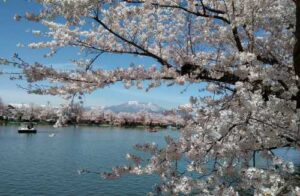
“Historic sites and breathtaking scenery go hand-in-hand wherever you explore.”
So popular is Nagano with Australians, recent figures released by the Nagano Tourism Organization had the Aussie market maintaining its spot at number two behind Japan’s neighbours Taiwan for time spent in the prefecture.
These statistics are for 2025 (until the end of August) with Australians spending 143,860 bed nights during the period, an increase of more than 28,000 on the previous record-smashing year’s figures and about 6000 ahead of the People’s Republic of China in third position.
Apart from the ever popular onsens and large ski resorts, Northern Nagano is renowned for its Snow Monkeys and the iconic Zenkoji Temple.
In Central Nagano, beyond the castle town of Matsumoto, are several natural wonders at the base of the Northern Japanese Alps. The pristine basin of Kamikochi, the pastoral wasabi growing district of Azumino, the Hakuba Valley and the spectacular Tateyama Kurobe Alpine Route are worth seeing.
The remaining four regions to visit are:
- Eastern Nagano, a natural oasis easily accessible from Tokyo via the Hokuriku bullet train.
- Suwa Region, where soaring mountains are mirrored in the waters of Lake Suwa and the foothills flourish in the colours of wildflower and other foliage. Taking a drive along the Venus Line ridge can be breathtakingly beautiful.
- Kiso Region, where the historic post towns along the ancient Nakasendo route are tucked away within the Kiso Valley.
- Southern Nagano, which extends across the Ina Valley flanked by the Japanese Alps. This region is famous for Takato Castle’s cherry blossoms and the easily accessible 2,600-metre Senjojiki Cirque. While the area boasts majestic scenery it also has a rich history and culture.











