

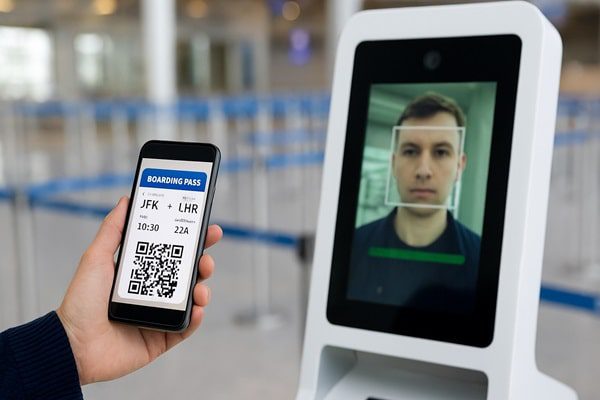
There was a time when travel began with a printed ticket and a polite conversation at the check-in counter. These days, most passengers would rather talk on their phones.
The International Air Transport Association (IATA) has released its 2025 Global Passenger Survey, and the result is a quiet revolution: travellers are running their entire journeys from their pockets, and many now prefer a face scan to a paper passport.
“Passengers want to manage their travel the same way they manage many other aspects of their lives, on their smartphones and using digital ID,” said Nick Careen, IATA’s Senior Vice President for Operations, Safety and Security. “As experience grows with digital processes from booking to baggage claim, the message is clear: they like it, and they want more of it. The caveat is trust, cybersecurity must be core to the end-to-end digital transformation of how we book, pay, and experience air travel.”
It is a rare moment when an aviation executive sounds like a philosopher, but Careen’s warning about trust rings true.
The phone takes the pilot’s seat.
According to IATA, 54 per cent of passengers now deal directly with airlines, most through mobile apps. Traditional websites still hold a third of bookings, but their share is slipping. Among travellers under 26, one in four uses an app for everything, from choosing a seat to ordering coffee at the gate.
Even payments are drifting away from plastic. Cards still dominate at 72 per cent, but that is down from last year’s 79. Digital wallets have risen sharply to 28 per cent, while instant systems such as IATA Pay are creeping into regular use.
Travellers are no longer content with a handful of confirmation emails; they expect their entire journey to unfold within a single device. Some 78 per cent say they want their phone to hold a digital passport, boarding pass and loyalty card—a personal travel concierge that never loses its luggage.
Electronic bag tags are catching on too, used by 35 per cent of passengers, up from 28 per cent a year earlier. The days of waiting for a sticker at the counter may soon join paper tickets in the museum of travel nostalgia.
Biometrics: the new passport stamp
Half of all passengers surveyed say they have used some form of biometric identification during their airport journey. Security, immigration and boarding are the most common stages. The appeal is obvious: shorter lines, fewer documents, less friction.
Of those who have tried it, 85 per cent were satisfied with the experience. And 74 per cent said they would willingly share biometric data if it spared them the ritual of presenting a passport or boarding pass.
Not everyone is ready. Roughly four in ten passengers who currently refuse to share biometrics say they would reconsider if privacy were better guaranteed. The technology is ahead of the paperwork, but not yet ahead of human caution.
Careen put it plainly: governments must begin issuing secure digital passports and enabling cross-border recognition. The convenience is within reach; trust will decide how quickly it arrives.
Different regions, different rhythms
The survey’s regional findings show that while travellers share similar ambitions, they move at different speeds.
-
Asia-Pacific passengers lead the digital charge. They book and pay on their phones, store boarding passes in digital wallets and embrace biometrics. Their satisfaction, curiously, is not the highest, perhaps the price of high expectations.
-
Africa values personal service. Many still book through airline offices or call centres, and satisfaction levels remain among the world’s highest. Visa bureaucracy, however, still tests their patience.
-
Europe remains cautious. Its passengers rely on airline websites, pay with cards, and are the least inclined to trade personal data for convenience.
-
North America prioritises efficiency: fewer layovers, faster boarding, minimal fuss. Yet North Americans rank near the bottom for satisfaction, hindered by deep privacy concerns.
-
Latin America and the Caribbean show enthusiasm for innovation once trust is earned; those who try biometrics tend to like them.
-
The Middle East continues to blend loyalty with digital enthusiasm, using mobile wallets, frequent-flyer integrations and biometric gates with equal ease.
The pattern is unmistakable: the world is heading in the same direction, but not everyone is running.
Whose boarding first?
Demographics tell another story.
Men are quicker to adopt airline apps and digital identification; women are more measured, placing faith in brands they trust. Younger passengers, those 26 and under, live comfortably in the digital realm, yet report the lowest satisfaction. They are, it seems, the most demanding customers of all.
For airlines, the message is unmistakable: one design no longer fits all. The traveller of 2025 may share the same sky, but not the exact expectations.
Three truths for the industry
The IATA findings carry three practical lessons for airlines and airports alike:
-
Put mobile first. Travellers now expect every function, payment, check-in, baggage tracking – to live on their phones. The mobile journey is no longer an add-on; it is the journey.
-
Build biometric confidence. Satisfaction is high, but only if passengers trust how their data is handled. Cybersecurity must be visible, not assumed.
-
Respect regional character. Technology succeeds only when it matches culture. What delights a traveller in Tokyo may unsettle one in Toulouse.
A quiet revolution in motion
The IATA survey confirms what most airport queues have been hinting at for years: the future of air travel will not be printed, stamped or signed. It will be scanned.
The smartphone has replaced the folder of travel documents. Biometrics are replacing identification. And for those who remember when air tickets came in triplicate, this digital ease is both marvellous and mildly disconcerting.
Still, there is something reassuring in the constancy of travel itself. Whether the journey begins with a boarding pass or a biometric blink, passengers remain driven by the same desires: to move freely, arrive safely and trust the system guiding them through the air.
That trust, as IATA gently reminds, is the true passport to the future of flight.












