

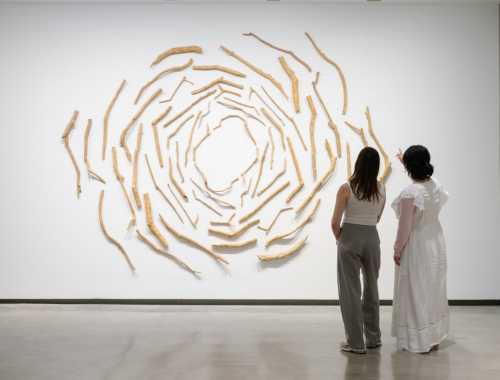
The Manchester Ship Canal, Sydney Harbour, and the waters of the Seine reveal their hidden histories in Yasmin Smith: Elemental Life, a new exhibition that has recently opened at the Museum of Contemporary Art Australia (MCA Australia).
Yasmin Smith: Elemental Life is the most significant exhibition to date for Australian artist Yasmin Smith (b.1984, Dharug Country/Sydney) running until Monday 8 June 2026.The exhibition brings together new and recent ceramic sculptural installations that explore the deep interconnections between human and environmental histories.
Yasmin Smith is known for her ambitious ceramic installations created through a combination of field research, community collaboration, and technical experimentation. Since 2014, Smith has developed a growing archive of site-specific glazes made by burning plant and mineral materials. These glazes serve as chemical records of place, offering what Smith describes as an “alternative knowledge system” for understanding landscapes.
Her work invites audiences to reflect on how we engage with the natural world and how the history of human and environmental histories is evident in natural materials.
As Smith notes, ‘I think it’s important to see there are other living things on this planet that have the ability to communicate information, the ability to absorb things and retain reservoirs of history. We can learn something that might help us be more closely connected to the Earth.’
Exhibition Highlights
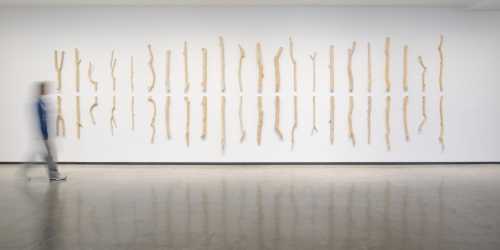
At the heart of the exhibition is Seine River Basin (2019), a monumental wall-based installation commissioned by Centre Pompidou, Paris, and acquired for the MCA Collection in 2020. Created during a residency in France, the work features ceramic replicas of tree branches collected from the River Seine and its tributaries, glazed using ash derived from the same trees. The installation evokes the mirrored forms of trees along a riverbank, with each glaze revealing the unique chemical makeup of its source environment.
The exhibition features the Australian premiere of two new works that continue Smith’s research into toxicity, pollution and mass extinction events, and how this might be articulated and understood through ceramic glazes and installations.
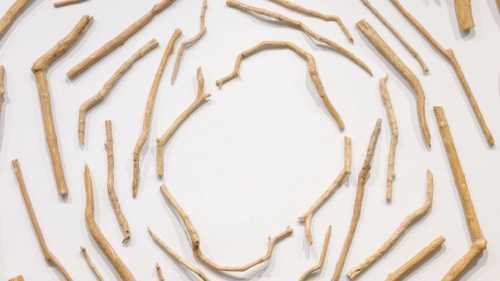
In Manchester Driftwood (2025), Smith presents ceramic sculptures made from branches collected in the Manchester Ship Canal, glazed with their own ash to reveal the chemical legacy of the Industrial Revolution. The colour and texture of the glazes reflect elements absorbed by the plants during their lifetimes—echoes of the site’s entwined ecological and human histories.
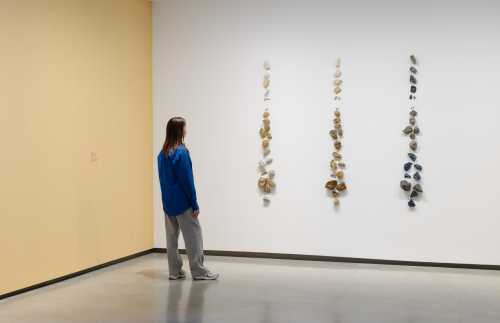
Chicxulub (2025) is a new work resulting from Smith’s collaboration with organic geochemist Professor Kliti Grice from Curtin University, Western Australia. Using glazes derived from 66-million-year-old core samples from the Chicxulub Crater in the Gulf of Mexico—the site of Earth’s fifth mass extinction—Smith demonstrates how extinction events can be understood both aesthetically and scientifically.
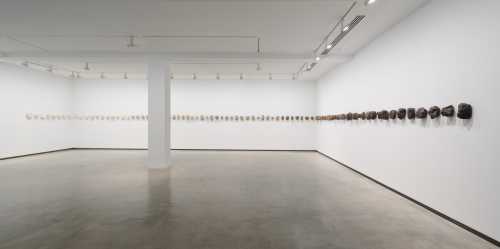
Drowned River Valley (2016–2018), first shown at the 21st Biennale of Sydney (2018), references Sydney Harbour’s geological formation and layered histories of salt production and maritime infrastructure.
The artist has created two site specific wall works especially for the exhibition, Yellow Block and Ash Grey, made with customised paints derived from Hawkesbury sandstone and coal ash from the Lake Macquarie region respectively.
Yasmin Smith: Elemental Life continues MCA Australia’s commitment to showcasing the work of Australian artists at all stages of their career. The exhibition has been curated by Jane Devery, MCA Senior Curator, Exhibitions and Manya Sellers, Associate Curator, Collection.
The Museum Contemporary Art Australia (MCA Australia) presents Yasmin Smith: Elemental Life on Level 1 Galleries, from 3 October 2025 – 8 June 2026.











