

For years, the humble serviced apartment was the travel world’s middle child, too homely for hoteliers, too polished for landlords. Now, it’s stepping into the spotlight, hair combed, tie straightened, and a valuation about to make even the flashiest city penthouse blush.
According to the newly released 2025 Global Serviced Apartment Industry Report (GSAIR), the global market is set to surge to a tidy £183.6 billion by 2030, a figure that would make most airlines wish they’d invested in spare keys and washing machines rather than new liveries.
The report, unveiled in London by Ariosi and the Travel Intelligence Network, reads like a handbook for the future of corporate travel. It paints a picture of an industry fuelled by a curious cocktail: Gen Z wanderlust, AI wizardry, and corporate relocation demand, shaken with a splash of new legislation and a twist of investment zeal.
The Return of the Corporate Suitcase
Remember when everyone swore they’d never commute again? The lure of a corner office or a company-funded stay in a stylish suite hasn’t faded.
The GSAIR notes an 8 per cent year-on-year increase in companies relocating staff to the UK as of April 2025. That corporate shuffle fills serviced apartments faster than a loyalty-card breakfast buffet.
The sector, worth £6.52 billion by 2033 with an 8.8 per cent annual growth rate, is increasingly where business meets comfort, part office, part home, and occasionally part pub. The global blended-travel market, meanwhile, is forecast to hit £636 billion by 2026. That’s a lot of briefcases rolling through lobby floors polished within an inch of their lives.
Investors Smell the Room Service
Money, as usual, has joined the party. The share of investors targeting serviced apartments has jumped from 24 per cent in 2024 to 27 per cent in 2025. That may sound modest, but in real-estate circles, that’s a stampede in handmade loafers.
Developers are now blurring the lines between co-living and hospitality, creating spaces where guests might stay for a night, a month, or a merger. It’s an idea so obvious that one wonders why it took this long: a rental that feels like a hotel, with Wi-Fi that actually works.
In London, Manchester, Sydney, and Singapore, hybrid projects are sprouting, such as café chains, offering “blended living” experiences. In short, no one knows whether to check in or sign a lease; that’s the point.
Gen Z: The New Lords of the Lounge
Gen Z has officially arrived, and they’ve brought their phones. To them, a serviced apartment isn’t accommodation; it’s a networked ecosystem. They want digital check-in, mood-lighting apps, voice-activated coffee machines and, preferably, an AI that knows their pillow preference.
As the Ariosi report notes, “the continuing maturation of Gen Z is accelerating demand for a digital-first serviced-apartment experience.” Translation: if you don’t have an app that syncs the heating to their Spotify playlist, you’re already out of date.
And they’re not wrong. The new traveller wants less formality and more frictionless living. The old reception desk may soon be as obsolete as hotel trouser-presses — though perhaps slightly more dignified.
AI: The Butler Who Never Sleeps
Enter Artificial Intelligence, hospitality’s new butler. The technology is quietly slipping into back-end systems, learning guest habits, predicting needs, and ensuring no one ever runs out of sparkling water again.
“Operators are investing in Gen-AI to enhance the guest experience,” the report says, “qualifying a more personalised stay.” Imagine a system that knows you’ll need late checkout before you do or suggests your favourite Thai place just as you ponder dinner.
Sceptics might say all this data makes travel soulless. On the contrary, says the industry: let AI handle the spreadsheets so humans can get back to pouring the wine and telling you which key opens the gym door.
When Regulation Knocks, Everyone Listens
Of course, no boom escapes the bureaucrats. Legislation, sustainability mandates, and traveller-safety directives are all tightening the screws on the sector.
What began as a compliance tick-box has matured into full-scale ESG reporting, risk-management frameworks, and carbon-accounting systems that could make an auditor’s heart flutter. For operators, it’s another reminder that being green isn’t just fashionable — it’s financially non-negotiable.
Geopolitics, too, keeps the mood sober. With global relocations rising, traveller safety and crisis-response planning are now part of the serviced apartment starter kit. In this game, flexibility isn’t a slogan; it’s survival.
Ariosi’s London Launch: The Talk of Holborn
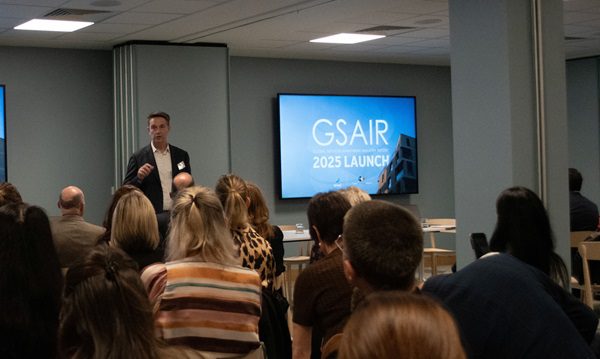
To launch the report, Ariosi gathered industry insiders at Citadines Holborn, London, for what might best be described as a who’s who of temporary living.
On stage were Tom Otley of Oury Clark Sustainability, Trine Oestergaard Stafford from House of Fisher, Ben Davis of Saxbury, and Steve Lowy, the ever-energetic CEO of AES & The Residence Apartments. Between them, they painted a portrait of an industry confident enough to joke about its growing pains and profitable enough not to mind.
A Critical Moment, Says Ariosi
Alistair Murray, Ariosi’s Chief Operating Officer, summed it up crisply:
“2026 represents a critical inflection point for corporate travel managers, relocation specialists and the serviced-apartment sector. Traditional accommodation must evolve at pace to meet the demands of a transformed workforce and increased regulation globally.”
Murray’s subtext was clear: the industry can no longer rely on outdated models or reporting.
“Several factors are bearing influence,” he continued, “from changing client expectations, employment models and emerging sectors to legislation, AI and shifting investment patterns. Flexibility will be the guiding principle heading into 2026.”
It’s the sort of warning that would have once sent boardrooms scrambling for consultants; now it just sends them searching for better Wi-Fi.
Where the Story Goes Next
Suppose the GSAIR is right, and it usually is. In that case, in the next five years, serviced apartments will move from niche to necessity, investors like stability, travellers like freedom, and corporations like cost control.
The modern serviced apartment isn’t just a stopover; it’s the new workplace, living room, and sometimes therapist’s couch of global mobility. For anyone who’s ever tried to write a quarterly report from a hotel bed, that’s progress.
The industry still has its quirks, and no one has yet solved why the hairdryer cord is always six inches too short, but make no mistake: this is where business travel is heading.
And if the walls could talk, they’d probably ask you to sign a long-term lease.
Read the full report: Global Serviced Apartment Industry Report 2025.
By My Thanh Pham
BIO:
 My Thanh Pham has worn more travel hats than most luggage racks could hold. After taking a course in travel and tourism, she found herself deep in the business of arranging itineraries across South-East Asia, matching travellers to temples, beaches, and the occasional night train, with a knack for making the complicated look easy.
Not content with life behind the desk, she joined a Vietnamese airline, juggling reservations one day and the frontline bustle of the airport the next. It gave her a ringside seat to the theatre of travel: the missed flights, the joyous reunions, and the endless stories that airports never fail to serve.
These days, My Thanh has swapped ticket stubs for a writer’s keyboard at Global Travel Media. Her words carry the same steady hand she once brought to bookings, guiding readers through the rich, unpredictable world of travel.











