

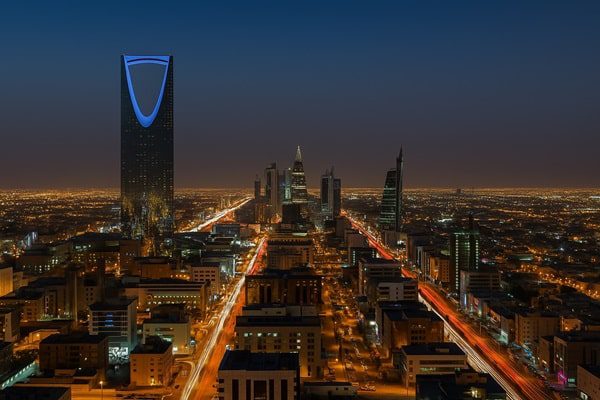
When Saudi Arabia rolls out the red carpet this November, it won’t just be for visiting dignitaries and tourism ministers. It will be for the world’s next great leap in global travel cooperation, the 26th UN Tourism General Assembly, hosted in Riyadh from 7 to 11 November 2025, under the banner “AI-Powered Tourism: Redefining the Future.”
For the first time in its half-century history, the United Nations’ specialised agency for tourism will convene in the Gulf Cooperation Council region — a symbolic and strategic nod to Saudi Arabia’s accelerating rise as a tourism heavyweight.
A Global Vote of Confidence
Saudi Arabia’s Minister of Tourism, H.E. Ahmed Al Khateeb, was quick to underline the occasion’s historic weight.
“We look forward to hosting the world’s leading organisation for tourism in a session that will redefine global action in this increasingly vital sector and beyond,” he said.
The gathering will unite over 160 member states, international organisations, and significant industry players, a roll-call that could make even Davos blush. The minister noted that being the first GCC nation entrusted to host such a session “underscores the global vote of confidence given to Saudi Arabia as a convener and a trusted platform for international dialogue on tourism.”
With the Kingdom now firmly positioned as a linchpin in global tourism diplomacy, Al Khateeb’s mission is clear: “to bring the world together, unite views, and foster international cooperation that capitalises on the growing tourism industry to advance the Sustainable Development Goals.”
Half a Century and a Bold New Chapter
As UN Tourism marks its 50th anniversary, the Riyadh assembly will look backward and forward, honouring five decades of collaboration while confronting the disruptive technologies reshaping how we travel.
At the heart of discussions lies a simple question: how can artificial intelligence serve, rather than supplant, the human heartbeat of tourism?
Four General Assembly plenary sessions, several committee meetings, and a thematic forum on the future of AI-driven tourism will seek to answer just that. Delegates will also witness the election of the next UN Tourism Secretary-General, a decision likely to influence global travel policy for years to come.
From Oil Fields to Global Footprint
Few nations have pivoted from hydrocarbons to hospitality with such velocity. Tourism now represents one of the key pillars of Saudi Vision 2030, the national blueprint for economic diversification.
“The Kingdom firmly believes in the transformative power of tourism,” Al Khateeb emphasised, “and its potential to enable comprehensive, sustainable development across economies and communities.”
Indeed, Saudi Arabia’s journey is a case study in reinvention. From once-restricted borders to record-breaking visitor growth and ambitious destination projects such as NEOM and AlUla, the Kingdom is betting on experience-driven travel, and the world is taking notice.
Riyadh Rising: The New Crossroads of Tourism Diplomacy
The timing couldn’t be more deliberate. Immediately following the General Assembly, Saudi Arabia will launch the inaugural TOURISE Summit (11–13 November), a new global platform designed to fuse tourism, technology, investment, and culture into one strategic conversation.
The summit, which brings together public and private sector leaders, aims to tackle global challenges, unlock opportunities, and set the agenda for a sustainable, equitable, and future-focused sector.
Hosting the supreme body of UN Tourism alongside TOURISE is more than logistical convenience; it is a statement of intent. Riyadh signifies its ambition to become the world’s next hub for cross-sectoral dialogue and multilateral cooperation, a modern crossroads where commerce meets culture and policy meets progress.
Why It Matters
The stakes extend far beyond ceremonial speeches and summit dinners. Today, tourism contributes roughly 10 percent of the global GDP and supports one in 10 jobs worldwide. With climate change, digital transformation, and shifting traveller behaviour reshaping the industry, the need for coherent global leadership has never been greater.
As the world’s airports fill once more and borders continue to soften post-pandemic, Riyadh’s hosting of the 26th session may prove a defining moment for the next 50 years of travel.
The Kingdom’s challenge and opportunity will be to show that ambition can coexist with sustainability and that innovation, even in an age of algorithms, must still have a human touch.
Final Word
In the sands of Saudi Arabia, where history meets high-speed modernity, tourism is no longer a sidebar to the national economy; it is the headline act. By hosting the 26th UN Tourism General Assembly and launching TOURISE, Riyadh is doing more than staging conferences; it is scripting the next chapter in the story of global travel.
And if the past 50 years have been about opening borders, the next 50 will be about opening minds.
By Susan Ng
 BIO:
BIO:
With the polish of an international hotel professional and the curiosity of a born storyteller, Susan Ng has worked across several leading hotels in varied, hands-on roles that taught her the rhythms of excellent service. She sharpened her voice off duty by writing for multiple blogs, quietly building a loyal readership. Now she’s doubling down on the craft, bringing hospitality’s real-world insights to the page with clear-eyed observations, warm humanity and a steady respect for detail. Expect practical, unpretentious pieces and impeccably turned out, much like the best-run hotels.











