

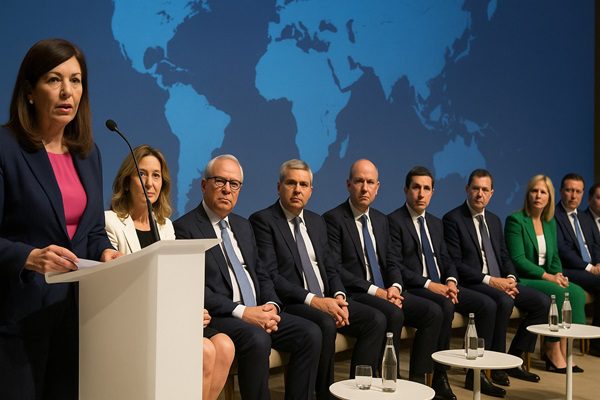
If there’s one thing Rome knows how to do, it’s hosting power gatherings. The Eternal City has seen its fair share of egos and ideals, from emperors to popes. This week, the 25th World Travel & Tourism Council (WTTC) Global Summit added its name to the rollcall, with ministers, CEOs and industry grandees crowding into the marble halls to decide how billions of travellers might move more freely in the years to come.
And unlike those Roman senators of old, the delegates weren’t there to sharpen daggers but to discuss competitiveness, sustainability, and that dream that so often feels just beyond reach: seamless travel.
Partnerships Over Platitudes
The summit’s opening volley came courtesy of Gloria Guevara, WTTC’s Interim CEO, and Italy’s own Daniela Santanchè, Minister of Tourism. Both drove the same point home with all the subtlety of a Vespa horn in rush-hour traffic: unless governments and private enterprise start pulling in the same direction, the sector risks going the way of the Colosseum, majestic, yes, but mostly ruins.
“Today’s Dialogue underlined the incredible value of bringing governments and industry together at the same table,” Guevara told the crowd, clearly tired of talk shops that end in glossy communiqués and little else.
Europe’s Eternal Balancing Act
Europe, naturally, took centre stage in the first session. After all, it’s still the world’s most visited region, drawing everyone from honeymooners in Paris to backpackers in Prague. But the speakers knew that resting on laurels is a luxury the continent can’t afford.
According to WTTC’s latest Economic Impact Report, Europe’s tourism engine is about to smash records: €2.6 trillion in GDP contribution in 2025, and 41.3 million jobs. Put simply, one in ten euros and one in ten workers are tied to tourism.
But growth isn’t guaranteed. The continent must wrestle with how to innovate without becoming a theme park, modernise while protecting its authenticity, and survive a governance labyrinth that would have baffled even Caesar.
Speakers swapped notes on pioneering sustainability schemes and innovative destination management, all while eyeing up competition from Asia and the Americas, which are rapidly learning to combine shiny infrastructure with irresistible experiences. Europe may still wear the crown, but plenty of challengers want it.
Seamless Travel: Easier Said Than Done
The second session tackled seamless travel, the elusive Holy Grail of tourism. Anyone who queued three hours at JFK or sweated over an e-visa application knows how far we are from the dream.
Yet optimism ran high. Delegates spoke passionately about tearing down the barriers that make travel a chore. Visas, border bottlenecks, and security checks that treat tourists like smugglers were all up for discussion. The buzzwords? Biometrics, digital IDs, e-visas, and integrated systems.
Imagine a world where a traveller’s journey is smooth from booking to baggage reclaim, where borders greet rather than grill, and accessibility isn’t an afterthought but a design principle. Delegates insisted that this is achievable if governments stop hoarding control and industries step up to deliver the tech.
The Roll Call: Heavyweights on Parade
The cast list was impressive enough to fill a Davos ballroom. From the private sector:
-
Greg O’Hara (WTTC Chair and Certares founder),
-
Manfredi Lefebvre d’Ovidio (Heritage Group/A&K Travel),
-
Gilda Perez Alvarado (Accor),
-
Simon Vincent CBE (Hilton),
-
Ellen Bettridge (Uniworld),
-
Zubin Karkaria (VFS Global),
and a dozen more names that carry serious weight in boardrooms.
Governments sent their own heavy hitters too: Malta’s Hon. Ian Borg, Türkiye’s Mehmet Nuri Ersoy, Japan’s Shigeki Murata, and Italy’s own parliamentary muscle. It was less “Who’s Who” than “Who Isn’t Here?”
Rome’s Setting, Rome’s Stakes
Holding the summit in Rome wasn’t just for the photo opportunities by the Trevi Fountain. Italy has long understood that tourism isn’t a side hustle; it’s the main show. The event drew backing from the Italian Ministry of Tourism, ENIT, the Municipality of Rome, and the Lazio Region. Heavy-hitter sponsors, from Trip.com Group to MSC Group, underlined how much is riding on the sector’s future.
More Than Words?
As with every summit, the question lingers: will these grand pronouncements trickle down into fundamental changes for the traveller stuck in immigration queues? Or will they fade like so many good intentions before them?
The delegates insisted this time was different. There was real candour in the room, an acknowledgment that without collective action, tourism’s golden goose could be cooked.
Rome has always been a city of contrasts, grandeur and grit, ambition and reality. This summit was no different. Optimism was high, but so were the stakes. If even half the promises made here survive the jetlag, then travellers worldwide might start to feel the benefits.
The Take
What lingers after Rome is not the staggering statistics but the urgency. The ministers and moguls may have parted with polite applause, but the undertone was clear: partnership is no longer a warm phrase to sprinkle in press releases. It’s survival.
Survival in tourism doesn’t happen in isolation. It happens when governments reduce red tape and businesses take responsibility. Rome provided the forum. The question is: Who will provide the follow-through?
By Bridget Gomez











