

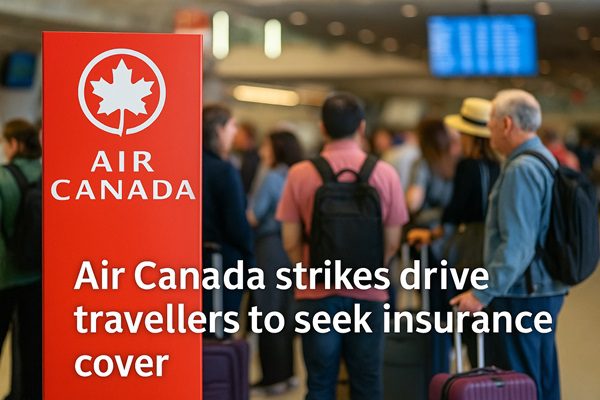
It’s been a rough week for half a million passengers caught in the global Air Canada strikes, and Australian travellers bore more than their fair share of the turbulence.
From 16 August, cabin crew walked off the job, and with more than 2,300 flights cancelled in four days, holiday dreams came crashing down faster than a cheap suitcase on a baggage carousel. Families with long-planned trips, honeymooners with prepaid resorts, and conference-goers with carefully booked itineraries suddenly found themselves grounded, stranded, or rerouting with wide-open wallets.
The reimbursement riddle
Air Canada has made a point of offering reimbursements for meals and accommodation. But there’s a catch: the offer applies only to those who booked directly with the airline. Those who used travel agents or online booking platforms? Tough luck. And with the airline bracing for a tidal wave of claims, even eligible passengers have been warned to expect delays of four to six weeks before a cent lands in their bank accounts.
In short: patience, paperwork, and plenty of out-of-pocket spending.
Enter the insurance cavalry.
This is where comprehensive travel insurance swoops in like a knight with a credit card. According to Natalie Ball, director of Comparetravelinsurance.com.au, this is precisely the scenario where travellers discover the real worth of cover.
“Many Air Canada passengers have been deemed ineligible for reimbursement through the airline because they booked through third-party agents,” Ball explains. “In addition, Air Canada’s reimbursement plan is unlikely to cover expenses caused by missed flight connections or non-refundable travel bookings.”
In plain English: the airline may cover your sandwich and a bed, but not your Bali villa or Tokyo conference ticket.
Ball adds that those with comprehensive cover purchased before the strike announcement are likely in safer hands.
“If you hold a comprehensive policy, you would likely be covered for any additional travel, accommodation and meal expenses incurred as a result of these strikes,” she says. “Importantly, missed flight connections and prepaid bookings and deposits may also be covered. Look out for mid- to higher-tier policies with a full suite of benefits in order to ensure your peace of mind.”
Timing is everything
The Canadian Union of Public Employees issued its 72-hour strike notice on 13 August, with the strike officially starting three days later. That timing matters enormously. Travellers who took out policies before or on 13 August are in the clear. Those who waited until after the notice? Unfortunately, they may find their claims grounded before take-off.
Ball stresses, “It’s essential to purchase travel insurance as soon as you make payments towards your trip.” Waiting until trouble strikes is, quite simply, too late.
Beyond the basics
The right policy doesn’t just cover refunds. It can extend to alternative travel if you’re trying to reach time-sensitive events such as weddings, funerals, conferences, or concerts. That could mean distinguishing between being stuck in Vancouver Airport or making it to Auntie’s big day in Paris.
Travel delay benefits also kick in after about six hours of limbo. That generally entitles travellers to daily allowances for meals and accommodation. In a world where airport sandwiches can cost more than a theatre ticket, that’s no slight relief.
And here’s the kicker: cheaper, bare-bones policies often exclude strikes and industrial action altogether. Ball’s advice? Don’t cut corners.
“Cheaper policies generally will not cover strikes, cancellations or delays. To avoid disappointment, we strongly recommend purchasing a comprehensive policy and doing so as early as possible. That way, travellers know they are protected when the unexpected happens.”
The takeaway
The Air Canada strikes are a timely reminder that in the unpredictable world of aviation, travel insurance isn’t an optional extra, it’s essential kit. With strikes, storms, and surprise disruptions all too common, travellers without cover risk far more than inconvenience.
For Australians plotting that next overseas escape, one lesson rings loud and clear: book your flights, yes, but buy your insurance first. Because the only thing worse than a cancelled holiday is footing the bill for it too.











