

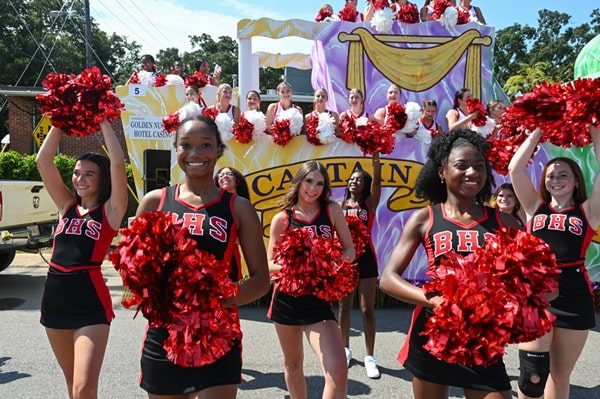
If ever there was a city that refused to be washed away, it’s New Orleans. Twenty years after Hurricane Katrina tore through Louisiana, drowning neighbourhoods, shattering lives and livelihoods, and testing the very soul of its people, the Crescent City is not only back — it’s booming.
Once known primarily for jazz, jambalaya and a good time on Bourbon Street, New Orleans is now as much a case study in urban rebirth and resilience as it is in food, music and Mardi Gras. And, as the city’s official tourism marketing body, New Orleans & Company points out, the city’s rebirth is as cultural as it is economic.
From a tourism nadir of just 3.7 million visitors in 2006, the year after Katrina, New Orleans roared back to host 19 million visitors in 2019, and again in 2024 after the COVID years, with visitors spending a record $10.4 billion. The local hospitality sector employs over 80,000 residents, pumping millions in tax revenue into schools, roads and public safety.
It is, in short, a comeback story that would make even the most cynical Wall Street operator dab away a tear.
A City Forged in Fire and Flood
The storm that rolled in on 29 August 2005 left scars that no ribbon-cutting ceremony could disguise. Nearly two thousand lives lost. Tens of thousands displaced. Whole neighbourhoods submerged. America’s TV sets filled with grim images of rooftops as temporary rafts.
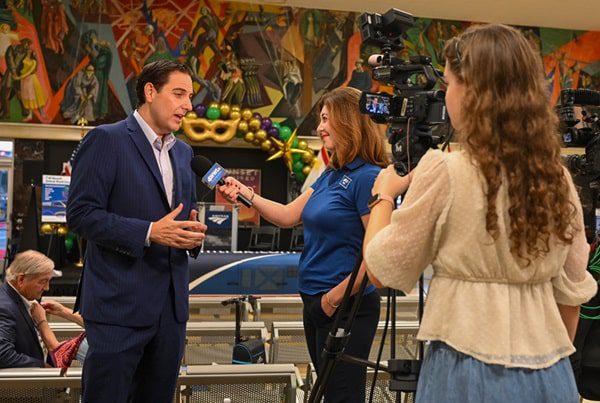
New Orleans voices resilience, celebrating rebirth as media capture the city’s revival.
Walt Leger III, President and CEO of New Orleans & Company, doesn’t mince words:
“The Katrina anniversary is traumatic for us as New Orleanians as we reflect on the nearly two thousand lives lost and the tens of thousands of people who lost their homes and everything they own. There was no blueprint for how to recover from a disaster of this magnitude, but persistence and determination guided our path. When some outsiders asked why we would even consider re-building or welcoming back visitors, New Orleans & Company and our partners executed one of the greatest turnaround stories in American history. We showed the world that tough times do not last, but tough people do.”
It’s hard to argue with him. Few cities have stared down brand destruction of such magnitude. In 2005 and 2006 alone, more than $2 billion in convention business evaporated, as the city’s image was tarnished globally. And yet — they rebuilt, rebranded, and reminded the world why this city is irresistible.
Tourism as Salvation
New Orleans’ survival depended on tourism, and the city knew it. Without visitors, the economy would have flatlined, and without conferences, hospitality jobs would never have returned.
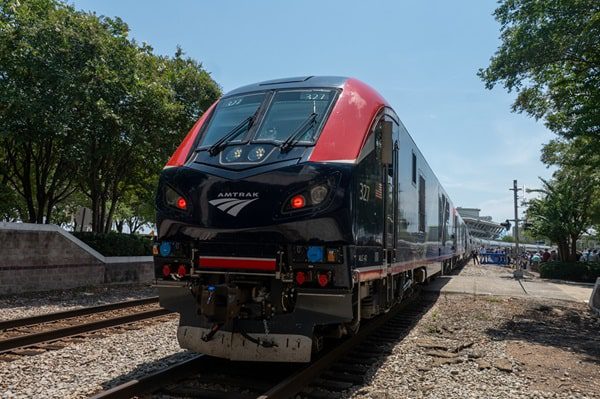
Amtrak’s Mardi Gras line powers ahead, linking Gulf Coast spirit with speed.
In the years following Katrina, the city rolled out a global PR campaign that was part charm offensive, part defiance, and wholly New Orleanian. The message? It’s safe to come back. We need you. And we’ve still got the gumbo.
That campaign didn’t just work — it became a model. Today, New Orleans shares its expertise with destinations recovering from disasters worldwide: wildfires in Hawaii, typhoons in the Philippines, Hurricane Sandy in New Jersey, and Hurricane Helene in North Carolina.
It also gave birth to something new: voluntourism. When the American Library Association and Maritz Travel brought conventions back to the city, their delegates didn’t just attend panels; they grabbed hammers and helped rebuild parks and libraries. That hands-on approach sparked a trend that still resonates in global tourism.
By 2024, New Orleans had cemented its position as a convention powerhouse. Named one of the top three convention destinations by Simpleview, the sector alone contributes over $2 billion a year in direct spending. Convention-goers, it turns out, spend more, stay longer, and spread their dollars deeper into the community than your average tourist.
Culinary Crown Jewels
For New Orleans, food is not just sustenance — it’s an act of cultural defiance. The rebirth of the city’s restaurants after Katrina became both symbol and sustenance.
In 2006, just months after the storm, local chef Susan Spicer led 20 New Orleans chefs at the James Beard Awards, cooking dishes that declared to the world: New Orleans cuisine lives. Fast-forward to 2024, and the city’s restaurants are again being showered with James Beard accolades: Jewel of the South was crowned Outstanding Bar, Dakar NOLA won Best New Restaurant, and the legendary Dooky Chase’s earned the America’s Classics award in 2025.
That last award matters. Dooky Chase isn’t just a restaurant; it’s an institution. Founded by the late Leah Chase, the “Queen of Creole Cuisine,” it fed both the body and the civil rights movement. Its walls are adorned with art by Black artists, and its tables host activists and visionaries.
If that weren’t enough, New Orleans also secured the Bocuse d’Or Americas Selection and the Pastry World Cup in 2024, culinary competitions often dubbed the “Olympics of food.” They’ll be back in 2026. Try getting that in Cleveland.
Awards, Accolades, and the Michelin Stamp
The past two decades have seen New Orleans climb league tables with gusto. Travel + Leisure readers voted it the #2 Favourite City in the US (2025), Time Out declared it the Best Food City in the World (2025), and AllClear named it the Most Walkable City on Earth (2024).
And in perhaps the ultimate sign of arrival, six New Orleans hotels earned a coveted One Key MICHELIN distinction in 2025. The Pontchartrain, Columns, Hotel Peter and Paul — names that now rub shoulders with Parisian grande dames and Tokyo luxury towers.
Full list? You’ll find it, naturally, on NewOrleans.com.
Built to Host: Sport as Spectacle
No city throws a party like New Orleans, and when it comes to sport, the town has turned hosting into an art form. Since 2005, it has welcomed Super Bowls, NCAA Finals, Sugar Bowls, NBA All-Star Games, WrestleManias, the College Football Playoff, UFC bouts, and even a Bassmaster Classic.
In 2025, New Orleans hosted its 11th Super Bowl, tying Miami for bragging rights. You’re doing something right if you can host WrestleMania and the SEC Gymnastics Championships with equal aplomb.
The tagline “Built to Host” isn’t marketing fluff; it’s a fact.
Riverfront Renaissance
If tourism was the lifeblood of New Orleans’ recovery, then the riverfront is now its showpiece.
Two projects stand out: Riverfront for All, a 2.3km stretch of public parkland connecting Crescent Park to Spanish Plaza; and the River District, a $1 billion mixed-use development stitching offices, apartments, cultural centres and green space alongside the mighty Mississippi.
Meanwhile, the Audubon Nature Institute has reinvented its Aquarium and Insectarium, making New Orleans the only city where you can admire sharks and beetles under one roof. (Bring the kids. Or the entomologists.)
Mega Investments: Hotels, Airports, and Cruise Ships
Katrina may have flattened much of the city, but investment flowed in like never before.
-
The Louis Armstrong New Orleans International Airport got a $1.01 billion terminal in 2019 and has since been crowned Best Airport in North America (ACI World) four years running.
-
The Caesars Superdome underwent a $560 million renovation in time for the 2025 Super Bowl.
-
The Ernest N. Morial Convention Centre, the sixth largest in the US, is midway through a $557 million facelift.
Cruising? Port NOLA set a record with 165,000 cruise passengers in March 2025, while Carnival, Norwegian, Royal Caribbean, Viking and American Cruise Line all call. Carnival even marked 30 years in the city in 2024.
Hotels? You can barely count them. The Roosevelt, Ritz-Carlton, Hyatt Regency, Four Seasons, Virgin Hotels, and the Dew Drop Inn have all undergone grand reopenings or chic launches. And in 2029, a 1,000-room Omni headquarters hotel will crown the Convention Centre precinct.
Flood Protection: The Wall That Worked
All of this would mean little without one essential piece: flood protection. The $14.5 billion Hurricane and Storm Damage Risk Reduction System, built by the US Army Corps of Engineers, now surrounds New Orleans in a veritable fortress of levees, floodwalls and gates.
When Hurricane Ida tested the system in 2021, it held. Two weeks later, the city hosted a major convention, restoring confidence.
As Leger puts it, “It instils confidence in residents, investors, visitors and customers that New Orleans is the most prepared community across the Gulf South, maybe in the nation, to weather future disasters.”
The Verdict: A City That Refuses to Quit
Twenty years after Katrina, New Orleans has proved not only that it can rebuild but also that it can reinvent itself.
It is a city where jazz still pours from French Quarter doorways, Creole gumbo still simmers in iron pots, and billion-dollar infrastructure, Michelin stars, and global conventions now share the same stage.
The city has learned to turn heartbreak into hospitality, tragedy into tourism, despair into determination.
And that, perhaps, is why New Orleans matters so much to the world.
By Jason Smith











