

Yes, 2025 has brought the long-awaited return of jet-setting professionals, with travel budgets thawing faster than a mid-winter steak on a Sydney barbecue. Employees are champing at the bit to meet face-to-face again, declaring travel helpful and essential for doing their jobs well. But as it turns out, enthusiasm alone doesn’t fill planes—clarity, coordination and a working credit card are still needed.
Enter SAP Concur’s latest Global Business Travel Survey, which spoke with 3,750 business travellers, 700 travel managers, and 600 CFOs across 24 countries, including our fair shores of Australia and New Zealand. The verdict? We’re flying again—but we’re doing it with the elegance of a wombat in a wind tunnel.
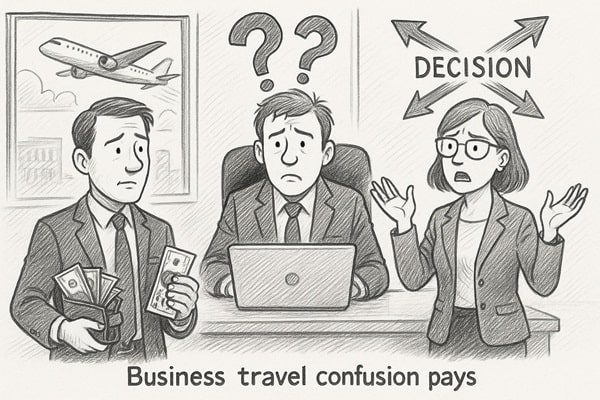
Who’s in charge? Well… everyone and no one.
Jonathan Beeby, Managing Director at SAP Concur ANZ, said, “Companies see stronger results when travel policies provide structure, reinforce compliance, and surface insights in real time. Stakeholders who understand how to plan, approve, and manage travel help programs operate more consistently and deliver both operational efficiency and strategic value.”
Sounds logical. Unfortunately, logic hasn’t booked a seat on this flight. According to the report, 69% of CFOs reckon they’re the captain of the travel ship, while 43% of travel managers disagree, believing they’re the ones at the helm. The rest? Still circling the tarmac in a holding pattern.
Even the actual travellers—those poor souls wedged in middle seats between two snorers—aren’t sure who’s calling the shots. About 36% think finance leads the way, another 36% back the travel team, but only 28% believe they have any influence. That’s right: the people who travel feel like extras on their journey.
Budgets reborn—but only just.
Make no mistake: corporate travel is officially “a thing” again in 2025. In ANZ alone, 99% of business travellers say they’re ready to pack their bags. And why wouldn’t they be? Some 94% believe travel is critical to their success, and nearly 40% say it improves their performance.
But don’t reach for that company credit card yet—because 84% say their organisations have recently cancelled or scaled back key trips due to budget constraints. CFOs, ever the pragmatists, believe over half of all travel could be replaced by Zoom or Teams. And you can bet that travel managers are chewing their pens nervously in the staff kitchen.
Employees reaching into their own pockets.
It gets worse. Without clarity and consistency, many employees are bridging the corporate gap with their wallets.
Globally, 85% of business travellers have shelled out personal funds to improve their experience. Whether it’s a comfier hotel room (38%), an extra night’s stay (35%), or avoiding the dreaded middle seat (30%), travellers are paying for a better journey.
Closer to home, younger Aussie and Kiwi workers are leading the charge. A whopping 93% of Gen Z and 88% of millennials in ANZ report dipping into their savings to avoid discomfort. And frankly, after enduring years of pandemic-era travel bans and webcam fatigue, who can blame them?
When well-being becomes a dealbreaker
In today’s climate, comfort isn’t a luxury—it’s a dealbreaker. The report found 90% of travellers globally would reject a business trip under certain conditions.
Their biggest concerns?
-
Safety risks (40%)
-
Health issues (38%)
-
Burnout (26%)
-
And for the aviophobes among us, 58% expressed discomfort with flying
In ANZ, 64% of Gen Z travellers feel uneasy about air travel, and nearly 1 in 5 would flat-out refuse a flight-based trip. So much for the fearless youth of tomorrow—seems they’re less about “Top Gun” and more about “No thanks, I’ll Zoom.”
So, what’s the solution?
According to SAP Concur’s Beeby, integration, flexibility, and trust are the answer.
“Leaders who want consistent adoption of travel policies across diverse teams need to build flexibility into their programs by combining clear policy guardrails with adaptable options that people trust and that scale with business needs,” he said.
And he’s not just talking fluffy corporate-speak. SAP’s new Concur Travel platform aims to bring sanity back into the picture by combining finance, policy and booking systems under one roof. That means fewer exceptions, better data, and less time chasing rogue receipts down the corridor.
“A connected approach also gives travel managers access to structured data, lets CFOs track performance, and helps employees make informed decisions while staying within policy,” Beeby explained.
The final boarding call
There’s no doubt about it—business travel in 2025 is alive and well, and dare we say, critical. However, companies need to sort out their internal squabbles and get their travel programs flying in formation if they want more than just airport selfies and seat upgrades.
Because in this new world, it’s not just about going places—it’s about knowing who’s steering the ship, paying for the fuel, and whether your staff even want to be on the plane.
Otherwise, it’s turbulence ahead.
If you’re a business leader struggling with the return to travel, it might be time to put away the spreadsheets and start listening to your people. Or better yet, give them a window seat, a clear policy, and a ticket that doesn’t come out of their pocket.
For full details, you can view the original SAP Concur report here:
📘 7th Annual Global Business Travel Research Report (SAP Concur)
By Jason Smith











