
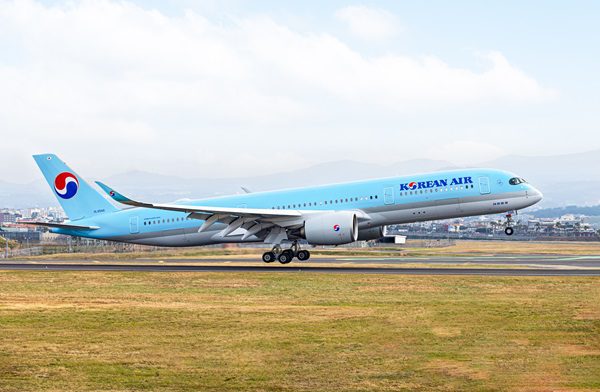
In a quarter where many might’ve expected Korean Air to gasp for oxygen masks, the carrier surprisingly held its altitude well. The Seoul-based airline has reported a solid, if not exactly sky-high, performance for the second quarter of 2025, demonstrating the kind of seasoned flight management you’d expect from an operator that’s been around since propellers were fashionable.
Revenue, the proper jet fuel of any airline, came in at an instead composed KRW 3.9859 trillion (approximately USD 2.94 billion)—down just a whisker (0.9%) from Q2 last year. But in an era of geopolitical turbulence, from trade wars to tariff tantrums, even holding course is no mean feat.
Where the seatbelt sign flickered was operating profit. That slipped by 3.5% year-on-year to KRW 399 billion (USD 294 million). Now, before anyone starts circling the crash carts, it’s worth noting the culprits: not fuel costs—those had the courtesy to drop—but rather the more grounded burdens of rising staff expenses and the ever-tedious depreciation.
Passengers: Fewer Bums on Seats, But No Panic on Board
Korean Air’s passenger division, often the darling of its earnings report, took a mild dip with revenue sliding 2% year-on-year to KRW 2.3965 trillion. However, it’s not all doom in the departure lounge. The airline skilfully played the off-season game, adjusting its routes with the precision of a conductor tuning a symphony. And when early May’s Golden Week rolled around in South Korea, demand soared like a 747 clearing runway 14.
In other words, there were fewer bums on seats, but clever network tweaks kept things financially tidy and avoided that awful airline affliction known as empty cabin syndrome.
Cargo: Batteries, Berries and Brains
Over in the cargo hold, things cooled slightly. Freight revenue dipped 4% year-on-year to KRW 1.0554 trillion. But rather than flying blind through the trade skirmishes triggered by U.S. tariff policies, Korean Air leaned into its more lucrative niches. High-value shipments such as semiconductors, batteries and solar cells were front and centre. Add a healthy dose of perishables—likely berries, beef and everything in between—and you have a recipe for sustainable yield even in volatile conditions.
Smart? Absolutely. It’s cargo with a conscience and a calculator.
Q3 Forecast: Sunny Skies, Full Cabins
Looking ahead, Korean Air’s forecast for Q3 reads like a weather report you’d want before your beach holiday: strong summer passenger demand, with revenue management firing on all cylinders. The airline plans to milk the northern summer peak with dynamic capacity adjustments, which is airline-speak for “let’s fill those planes to the brim, and then some.”
On the freight front, they’re not resting on their laurels either. Korean Air aims to keep its cargo operations nimble and responsive—an elegant way of saying they’re ready to change course faster than a food trolley dodging a turbulence pocket.
Half-Year Snapshot: A Bit of a Balancing Act
Zooming out to the half-year view, total revenue was up 1% year-on-year to KRW 7.9418 trillion (USD 5.86 billion). But that top-line improvement masked some turbulence further down the cabin.
Operating profit over the first six months dropped 12% to KRW 749.9 billion (USD 552.9 million), and net income also dropped 15% to KRW 589.1 billion (USD 434.3 million). Again, there is no need for alarm bells—this is just a gentle reminder that even strong flyers face economic crosswinds.
A Veteran Pilot in Choppy Skies
Korean Air has managed to stay admirably aloft for a legacy carrier navigating a world of budget upstarts, fluctuating oil prices, and unpredictable trade policy. While it may not be breaking the sound barrier regarding growth, it’s certainly not in for a hard landing.
With a strong summer ahead, stable revenue in the bank, and a solid strategy to dance around trade disputes, Korean Air seems to follow the golden rule of aviation: fly high, fly smart, and never forget to serve the bulgogi hot.