

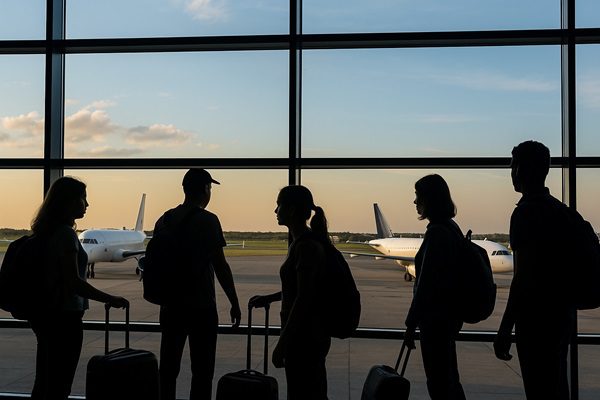
Despite a diplomatic pause between Israel and Iran, it seems the humble ceasefire is failing to pack its usual punch with the jet set. According to the Global Rescue Summer 2025 Traveller Safety and Sentiment Survey, the majority of globetrotters remain wary of venturing too close to geopolitical powder kegs — namely the Middle East, parts of the Mediterranean, and even some bits of Europe that have caught the crossfire of anxiety.
While the ink on the ceasefire agreement may be dry, the nerves of would-be adventurers are anything but. Nearly 80% of international travellers surveyed (a complete 78%, no less) admitted to harbouring some level of concern about how regional instability might throw a spanner in their travel plans between now and the end of 2025. And that’s despite the lack of missiles in the sky.
“Even after a ceasefire, the impact on traveller psychology lingers,” said Dan Richards, CEO of Global Rescue, speaking with all the solemnity of a man who’s seen one too many suitcases go unpacked. “People are weighing risk more carefully, and safety continues to drive travel decisions.”
Indeed, the current travel landscape appears less ‘pack and go’ and more ‘wait and watch’. While only 6% of survey respondents have outright cancelled or changed plans, another 12% are playing the long game — holding off on decisions until the regional forecast is less tempestuous. A striking 42% are avoiding certain countries altogether, while a solid 40% are sitting on the fence, fingers crossed that calmer tides will prevail.
For Australian travellers, official guidance can be found on the government’s SmartTraveller website, which offers real-time updates and travel advisories for destinations worldwide.
Women More Wary: Safety Perception Split Between Genders
One of the more compelling takeaways from the survey is the clear divide between the sexes. While men may bravely wander into a political storm with the confidence of an under-packed backpacker, women are showing greater caution — and arguably more common sense.
A complete 35% of female travellers described themselves as “very concerned” about safety in the region, nearly double the 19% of men who said the same. More than half of the women surveyed (52%) actively avoid certain countries, compared to 39% of men. And when it comes to delaying decisions? Sixteen percent of women are biding their time, versus 11% of men.
And in a twist of bravado or perhaps blind optimism, 22% of men claimed they weren’t worried at all, compared to 9% of women.
“Ceasefires help reduce immediate risk, but they don’t erase long-standing safety perceptions,” Richards noted. “Women, in particular, remain highly aware of how geopolitical instability can affect their safety abroad.” And who could blame them? The world, after all, is no stranger to broken truces.
Global Concern: Americans, Aussies, and Everyone In-Between
This isn’t just a stateside phenomenon, mind you. Travellers across the globe — be they from Boston, Brisbane, or Brussels — are keeping a wary eye on the region.
Among American respondents, 23% said they were “very concerned”, and 56% were “somewhat concerned” about current affairs. Their overseas cousins? Much the same, with 23% also “very concerned” and 55% “somewhat concerned”. Not exactly a cheerful outlook over the in-flight glass of cabernet.
Regarding dodging destinations, 43% of Americans are sidestepping certain countries, compared to 38% of international respondents. Interestingly, non-U.S. travellers are likelier to say the conflict won’t affect their choices (15% versus 11%). Perhaps it’s a European stoicism or the seasoned resilience of Aussies who’ve weathered flight cancellations, airport strikes and airborne peanuts for decades.
To stay informed, U.S. travellers are encouraged to consult the U.S. State Department Travel Advisories — especially when flying into potentially volatile regions.
Security Memberships Surge: Peace of Mind Now a Paid Subscription
If there’s one sector quietly thriving amid the unease, it’s the private travel security industry. Global Rescue has reported a 26% jump in security membership purchases for 2025, compared to the same period in 2024. And the week of June 16 to June 22 was a veritable bonanza, up 41% year-on-year.
“Travellers are no longer willing to risk being caught unprepared in a conflict zone,” said Richards, who also moonlights on the U.S. Travel and Tourism Advisory Board (a job title that makes even customs officers nod respectfully). “They want the ability to make a single phone call and have a team of security professionals mobilised to help them. That’s exactly what a Global Rescue security membership provides.”
In other words, forget roulette — travel now comes with backup plans, emergency lines, and personnel trained to extract you from sticky spots quicker than you can say “missed connection”.
Final Boarding Call: Travel Isn’t Dead — But It’s More Cautious
While the airspace between Tel Aviv and Tehran may be a little clearer, the atmosphere in travellers’ minds remains cloudy. Safety has become the silent passenger on every flight, boarding early, sitting beside you on the train, and quietly influencing the itinerary.
If this survey confirms one thing, peace on paper doesn’t immediately translate to peace of mind.
So, if you’re planning a jaunt through Europe, the Mediterranean or the Middle East in 2025 — check your flights, passport, insurance, and maybe, just maybe, your SmartTraveller.gov.au subscription while you’re at it.
By Jill Walsh











