

 Melbourne has a brand-new heartbeat—and it pulses to the rhythm of Seoul. With the unveiling of Australia’s first traditionally crafted Korean totem poles, the Victorian capital has officially welcomed a bold, soul-stirring new precinct: Koreatown, proudly planted in the city’s iconic Healeys Lane.
The three-metre-high jang seung—stoic wooden sentinels steeped in centuries of Korean folklore—now stand watch over this culinary and cultural sanctuary, marking the official declaration of Koreatown as Melbourne’s latest multicultural marvel. It joins a proud roster that includes Chinatown, the Greek Quarter and Little Italy—each a chapter in the city’s evolving tale of global belonging.
And what a tale this latest chapter is.
Commissioned by the Consulate-General of the Republic of Korea and lovingly hand-carved by Korean Master Artisan Jong-yeon Kim, these majestic totems are more than ornamental. They are symbolic guardians, traditionally stationed at village entrances in Korea to ward off evil spirits and welcome good fortune. Now, they’re positioned to become the most Instagrammed newcomers to Melbourne’s laneway scene since the first flat white was served at Degraves Street.
“Officially unveiling the Jang Seung at Koreatown fills me with so much jabusim—pride,” said Lord Mayor Nick Reece, the sentiment delivered with sincerity and a subtle nod to the Korean lexicon. “Our growing Korean community is a vital ingredient in the successful melting pot of multicultural Melbourne.”
One can hardly argue. Melbourne’s Korean population—over 2,500 within the municipality and more than 25,000 across Victoria—has grown from humble origins to a dynamic force shaping the city’s food, arts and business landscape.
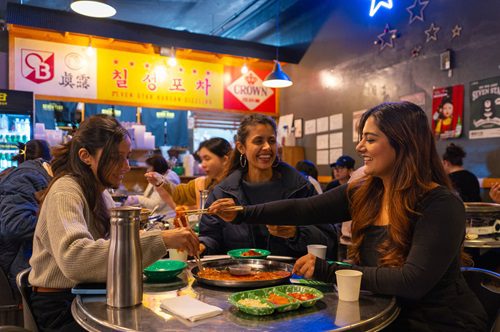
What began organically—Healeys Lane sprouting Korean eateries, bubble tea bars and K-beauty retailers—has now been given the city’s official blessing. Koreatown is no longer just a nickname whispered among foodies in the know. With Melbourne City Council’s formal recognition and a dose of civic pride, it is a bona fide precinct.
The Consulate’s involvement speaks volumes. In the words of Consul-General Changhoon Yi, “The unveiling marks not just a physical landmark but a celebration of cultural harmony and shared identity.” Such collaboration reminds us that diplomacy isn’t only conducted in grand halls and press briefings—it also takes place in laneways, food courts, and street corners alive with laughter, kimchi, and the scent of gochujang.
And there’s more on the horizon. According to the Council’s draft Budget for 2025–26, an impressive $150,000 has been earmarked to explore and develop additional “pocket precincts” across Melbourne’s urban tapestry. Among the ideas? A ‘Little India’ and a Docklands seafood district—proof that Melbourne intends to expand its multicultural menu, far from resting on its laurels.
Cr Kevin Louey, who helms the City Economy and Business portfolio, said it best: “Koreatown will not only support the growth of Korean-owned businesses but also establish a vibrant destination that celebrates Melbourne’s multicultural identity, attracts visitors and drives economic activity.”
It’s a sentiment that reflects not just local policy but global trends. Cities like Los Angeles, New York, Toronto, and Sydney have long flown the Koreatown banner. Melbourne now rightfully joins their ranks, its newly minted precinct serving everything from sizzling bulgogi to stories of migration, resilience, and intergenerational pride.
Tourism will also benefit. According to Tourism Australia data, a record 90,000 Aussies visited South Korea in 2022–23, with the K-wave tsunami showing no signs of retreat. Korean culture—whether in the form of BTS, Parasite, or fermented cabbage—is now firmly entrenched in Aussie appetites.
And Melbourne’s Koreatown? It’s poised to become a launchpad for cultural discovery. A place where Korean students, entrepreneurs, chefs and creatives can not only do business but share stories, dreams and dumplings. A precinct where a quick bite turns into a conversation, and a laneway stroll becomes a lesson in history, community and belonging.
The Jang Seung, carved with meticulous reverence and now rooted in Melbourne soil, is more than wood and tradition. They are declarations, invitations, and a reminder that identity, like a city, is never static—it’s something sculpted, shared, and sometimes blessed by the ancestors.
As visitors pause beneath the totems for a happy snap—perhaps whispering a quiet annyeong haseyo—they join a broader narrative. One that bridges continents and generations, it links Melbourne’s modern cityscape with a thousands-of-year-old heritage.
So the next time you find yourself meandering the maze of Melbourne’s laneways, follow the scent of sesame oil and slow-cooked galbi. Let the carved eyes of a jang seung meet yours. And step into a precinct where Seoul meets soul, right in the heart of Healeys Lane.











