

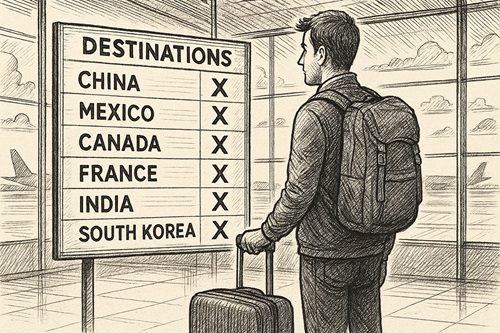
 In an era where diplomacy is the new visa stamp, global travellers increasingly vote with their passports, and particular destinations feel the chill. A growing wave of concern over America’s fallout in foreign policy has led many would-be explorers to sidestep countries they fear may not roll out the welcome mat for US citizens.
The latest Spring 2025 Traveler Sentiment and Safety Survey, conducted by the ever-vigilant team at Global Rescue, has uncovered a revealing and rather sobering truth: US travellers, once seen as globe-trotting ambassadors of the free world, now often find themselves second-guessing their holiday plans—not because of flight prices but because of fear of being judged, unwelcome, or worse, misunderstood abroad.
Leading the list of destinations that Americans are now actively avoiding?
China. No surprise there. Nearly 46% of respondents said they would miss the Middle Kingdom, citing geopolitical tension and a frostier-than-usual diplomatic climate. In a move that once would have seemed unthinkable, Mexico followed with 32%, steering clear, despite its idyllic beaches, famed hospitality, and tequila-soaked tourist routes just south of the border.
More eyebrow-raising is the inclusion of Canada, that famously polite, maple-syrup-scented neighbour. 25% of those surveyed expressed unease about heading north, highlighting the depth of the current perception shift, even amongst traditional allies.
France (18%) and India (17%) rounded out the top five, with more minor but still notable figures opting to avoid the UK (12%), South Korea (11%), and Taiwan (15%).

Dan Richards is standing in the operations room.
“This is a clear signal that travellers are attuned to the ripple effects of international policy,” noted Dan Richards, CEO of Global Rescue and a member of the US Travel and Tourism Advisory Board at the Department of Commerce.
And it’s not just a blip. The sentiment appears to have solidified. Seventy-two percent of respondents said they still expect Americans to be viewed more negatively abroad in 2025, a figure unchanged since the beginning of the year. Richards called it what it is: “not just a diplomatic issue—it’s a traveller safety and experience issue.”
Once upon a time, a postcard-perfect destination and affordable airfare were enough to lure Americans abroad. But now? The global mood has shifted. Travellers are weighing more than travel insurance and currency conversions.
“They’re considering how they’ll be perceived. Will they feel safe? Welcome? Or like walking diplomatic incidents?” Richards explained. “Perceived hostility or cultural friction is becoming a deciding factor—and that creates a new challenge for travel professionals, policymakers and tourism boards alike.”
Indeed, the survey’s implications stretch beyond individual itineraries. They paint a broader picture of trust, perception, and the ever-fragile ties between politics and tourism. For an industry that hinges on the universal allure of discovery, cultural warmth and cross-border connection, such shifts in sentiment could shape travel trends for years to come.
Global Rescue is the heart of the report, a Boston-based firm revered for its role as the invisible safety net behind many a Fortune 500 exec, daring adventurer, and even government team. Founded in 2004, the company doesn’t just provide emergency evacuation or medical repatriation—it anticipates crisis, maps it, and calmly ushers clients out of its path. Their long-standing alliances with elite institutions like Johns Hopkins’ Emergency Medicine Division of Special Operations and Elite Medical Group lend credibility to their warnings—and weight to their data.
In the travel sector, perception is reality. When over 70% of seasoned travellers voice anxiety over being unwelcome, it’s not an anecdotal whisper—it’s a drumbeat. Whether that leads to quieter cafés in Paris, emptier ski lifts in Whistler, or a slower queue at the Taj Mahal remains to be seen. But for now, the message is loud and clear.
If tourism is the world’s most human industry, then how we feel when crossing borders matters more than ever.
By Alison Jenkins











