

 In a move that sends an unmistakable signal to the global travel market, Club Med has announced a sweeping restructuring of its Asia-Pacific operations, effective 1 May 2025. The pioneering name in premium all-inclusive travel is merging its three regional business units into two—East & South Asia and Pacific (ESAP), and China—in a bold bid to deepen its strategic roots across the region and usher in a new era of profitable growth.
Far from a bureaucratic shuffle of titles and territories, the reshuffle is a deliberate strike of the corporate spade into fertile ground. It’s a blueprint for expansion that preserves the original “One APAC” spirit of collaboration while sharpening focus on distinct regional opportunities.
“This move opens a new chapter for Club Med in Asia Pacific,” said Henri Giscard d’Estaing, President of Club Med. “By tailoring our regional structure around the unique strengths of China and ESAP, we are well-poised to accelerate our expansion with a strategic focus. With empowered leadership and a shared glocal vision, Club Med now has even more agility to seize opportunities in key markets.”
ESAP: Stronger, Smarter, Ready to Soar
The ESAP region has been on a tear. Post-pandemic recovery has morphed into full-scale momentum, fuelled by loyal clientele, a deluge of new customers, and an operational upswing across star performers like Hokkaido and Phuket. From the transformation of Club Med Phuket—now home to Asia’s first Family Oasis—to the highly anticipated debut of Club Med Borneo in Malaysia, the region isn’t just bouncing back; it’s reinventing the game.
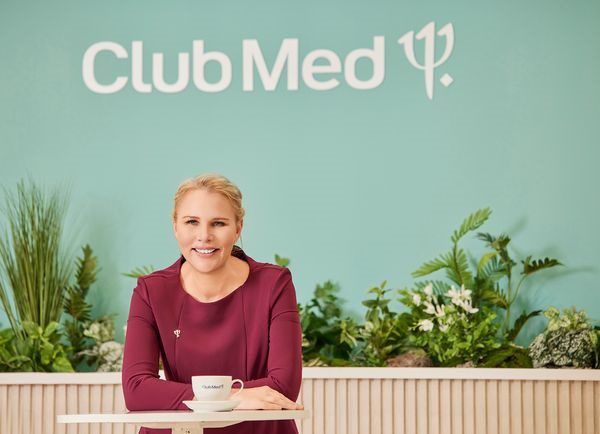
Rachael Harding, the newly appointed CEO of the consolidated ESAP unit, is guiding this expansion. Reporting directly to Gregory Lanter, the Deputy CEO of Club Med, Harding will oversee the region’s commercial and resort operations with a laser focus on deepening brand presence, enhancing the guest journey, and driving healthy margins across markets.
“This business transformation empowers us to scale with greater purpose and precision,” Harding said. “With a refreshed leadership structure, a robust resort pipeline and stronger regional integration, we are advancing our ability to deliver elevated, seamless guest experiences.”
Meet the New ESAP Power Players
There’s no shortage of horsepower in Harding’s new-look pit crew. Club Med has stacked the deck with seasoned professionals to steer this newly unified ship:
- Cindy Beleau takes the reins as VP of Revenue Management APAC. Her mandate? Modernise pricing using digital tools and AI to sharpen competitive edge.
- Sandrine Rossi, a 20-year veteran of resort strategy and operations, will assume the role of VP of Operations and Product.
- Anastasiya Kulish assumes leadership of Japan Resort Operations, aiming to entrench Club Med’s mountain resort dominance in Hokkaido.
- Michelle Davies, formerly General Manager Pacific, expands her oversight to include new ESAP markets.
- Olivier Monceau now leads the burgeoning Meetings & Events division alongside his Singapore and Malaysia portfolio.
- Finance and HR, the twin engines of any well-run operation, are entrusted to Jerome Ferrie and Arezki Haddad, respectively.
With this leadership arsenal, ESAP’s trajectory is less about recovery and more about conquest. Harding’s team isn’t just holding the fort; they plan to build several more.
China: The Sleeping Dragon Fully Awake
Club Med China is far from playing catch-up on the other side of the Great Wall. It’s already the group’s second-largest market, with over 260,000 guests welcomed in 2024 alone. The brand’s Chinese journey, which began with a single resort in Yabuli in 2010, now includes five Premium All-Inclusive Resorts, four Joyview properties, and two Urban Oasis locations.
The appetite is growing, and Club Med intends to feed it.
Andrew Xu will continue as CEO of Club Med China and serve as Deputy CEO of Club Med globally, overseeing finance. Under his stewardship, the brand has expanded its appeal among upwardly mobile families and active couples while doubling down on premium service and inbound tourism.
Xu’s China operation, sharp-eyed and nimbly run, exemplifies how regional specificity can power global ambition.
The Big Picture: One Brand, Two Engines
This bifurcated model—ESAP and China—doesn’t fracture Club Med’s Asia strategy; it supercharges it.
By entrusting the reins of leadership to two highly capable hands, the company moves with a kind of agile duality. Both units can customise their strategic playbooks to their territories’ cultural and commercial nuances, yet remain harmonised under the greater APAC umbrella.
Importantly, this isn’t Club Med retreating into regional silos. On the contrary, it showcases corporate maturity: recognising that Asian success requires cohesion and autonomy. The ‘glocal’ vision spoken of by d’Estaing isn’t a catchphrase; it’s the guiding star.
What Comes Next?
Expect more property launches, deeper market penetration, and an intensified digital transformation push—especially in revenue modelling and consumer engagement.
The company appears unafraid of tectonic shifts as Club Med’s Asia-Pacific adventure enters its next act. It’s embracing them, engineering them, and yes, even enjoying the ride. For travellers seeking curated, seamless, and culturally attuned holidays—and for the tourism industry watching closely—this is one leadership shake-up worth packing a suitcase for.
By Michelle Warner











