


 In a rousing call to arms, the Pacific Asia Travel Association (PATA) has unveiled a sweeping report that may well define the future of travel in the Asia-Pacific. Launched amid the grand halls of Istanbul at the PATA Annual Summit 2025, the report doesn’t mince words—tourism is facing a talent crunch that could stall the region’s soaring recovery.
Titled The Evolving Tourism Workforce: Human Capital Development in APAC, the study is the brainchild of PATA member and travel consultancy Pear Anderson. Drawing on voices from government, industry, academia, and youth sectors, the report strikes a delicate balance between sobering reality and actionable optimism. It’s not just a wake-up call—it’s a masterclass in what must happen next.
“This timely report comes at a pivotal moment,” said PATA CEO Noor Ahmad Hamid, offering both gravitas and clarity. “As a new and younger generation enters the workforce, the tourism industry must re-establish its footing. The findings are more than insightful—they are essential for the long road ahead.”
And what findings are they?
From Skill Gaps to Sector Silos
Among the key challenges identified, the inability to attract new talent is at the forefront. Staff turnover continues to run rampant. Skills gaps—particularly in sustainability and digital literacy—are widening. Alarmingly, there’s a growing mismatch between workforce development policies and the sustainability goals that modern tourism demands.
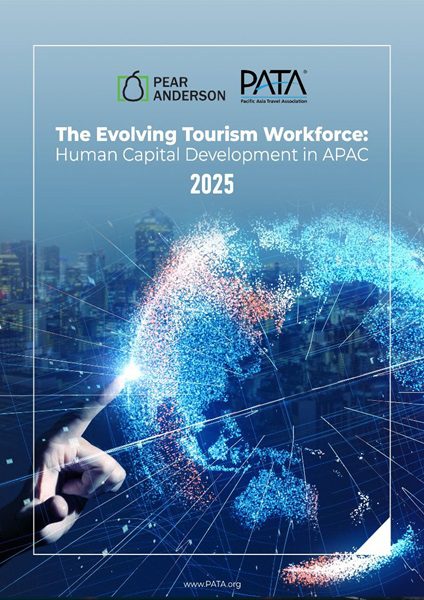
PATA’s 2025 report charts a bold new path for tourism’s talent revival across Asia Pacific.
Worse still, says the report, is a communication breakdown. Education providers are sending out graduates with high hopes and polished CVs, only for them to run headfirst into an industry that doesn’t quite know where to put them.
“There’s a persistent misalignment,” said Hannah Pearson, Director of Pear Anderson, who helmed the year-long research project. “Our findings suggest the public, private, academic and youth sectors are not only speaking different languages—they’re working off different maps.”
Bridging the Divide
One of the report’s more intriguing insights is its call for structured dialogue across all sectors. This isn’t about another think tank—this is about ensuring that policy doesn’t outpace practicality. That dreams of sustainable development don’t drift into fantasy simply because no one told the HR department.
The research, which involved exhaustive interviews, candid surveys, and fieldwork across the region, lays out clear recommendations. Chief among them: align training with market needs, rethink collaboration models, and, critically, prepare young professionals not just with skills, but with realistic expectations.
As Pearson put it during the summit session, “Unlocking Potential: Insights from PATA’s Latest Human Capital Report,” tourism is now at a turning point.
“We are at a crossroads,” she said, never one for fluff. “There’s great opportunity in APAC, but it hinges on how we develop, empower, and value our people today—not tomorrow.”
Heart and Purpose, Not Just Policy
Perhaps the most stirring message comes not from spreadsheets, but from spirit. The report highlights the passion and purpose that drives many tourism workers—their love of culture, people, and service. But, it cautions, that very passion makes them vulnerable to burnout and exploitation if industry reform doesn’t keep pace.
PATA’s leadership is urging its members—spanning more than 650 organisations across 100 countries—to heed the call. Hamid himself stressed the importance of turning these insights into action.
“We hope this report inspires industry leaders to rethink training and development models,” he said. “It’s time to initiate new collaborations, retool outdated strategies, and build a more adaptable, future-ready workforce.”
The Road Forward
The study was initiated in January 2024 and represents one of the most exhaustive audits of the tourism workforce in APAC to date. And it couldn’t have landed at a more critical juncture. With the region poised for a travel resurgence, thanks to booming middle-class demand and renewed airline connectivity, the only thing that may stop the momentum is a lack of people to power it.
This, the report argues, is not just a workforce issue. It’s a future-of-tourism issue.
For those interested in the full 70-page report, it is available free of charge at PATA’s official research portal.
Ultimately, the message is clear: invest in people, or risk stalling an entire industry’s renaissance.
By Kevin Hall – Istanbul











